A trolley jack is a wheeled hydraulic lifting tool used to raise one corner or end of a vehicle off the ground. Axle stands are the fixed metal supports that then hold the car up. The jack does the lifting; the stands do the holding. Neither is designed to stand in for the other, and mixing up their jobs is how cars fall.
What is a trolley jack actually for?
A trolley jack is a mobile hydraulic ram on wheels, built to raise a vehicle high enough to work underneath it, change a wheel, or reach the underside for inspection. It is a lifting device, not a support device — its job ends the moment the car is high enough.
The wheels let it roll under the car and travel slightly as the saddle rises, which matters because the vehicle’s suspension moves as weight comes off it. A fixed jack that couldn’t roll would either bind or drag the car sideways as it lifted. That rolling action is also why a trolley jack needs a flat, solid surface — a soft or sloped driveway lets the base shift under load.
What are axle stands actually for?
Axle stands are static, load-bearing supports that hold a raised vehicle in position once the jack has done the lifting. They have no hydraulics and cannot move under load — that rigidity is exactly why they are safer to work under than a jack.
A trolley jack is a sealed hydraulic system, and any seal can, in principle, weep or fail slowly under sustained load. Axle stands have no seal to fail. Once the car’s weight is resting on solid steel legs rather than a column of pressurised fluid, the jack can be lowered clear and used for its actual job: lifting, not holding.
Why not just leave the car on the jack?
Leaving a car resting on a trolley jack alone means its entire weight depends on one hydraulic seal and one small lifting point holding under constant pressure, with nothing backing it up if that seal lets go even slightly.
A trolley jack that creeps down a little overnight, or under someone’s weight while they work, is common enough that most manufacturers explicitly warn against using the jack as the sole support. The fix is always the same one: lift with the jack, support with stands, and only then get underneath.
How does a trolley jack actually lift a car?
A trolley jack uses a hand pump to push hydraulic fluid into a cylinder, extending a piston that raises the saddle and the car with it. Pumping the handle moves a small volume of fluid each stroke; a release valve lets that fluid return so the jack lowers under control.
The mechanical advantage comes from hydraulics rather than from the length of the handle, which is why a trolley jack rated for a given weight can be pumped by hand without the effort scaling up with the vehicle’s weight. What does scale is speed — long-reach and low-profile jacks trade some lift height or lifting force for the ability to slide under a lower car.
What do the weight and lift-height figures on a jack actually mean?
The rated capacity on a trolley jack describes the maximum load it is designed to lift safely at its lowest, strongest point of travel — not an average or a typical figure, and not something to approach casually. The lift-height range describes how far the saddle travels from fully lowered to fully raised.
Capacity matters more than it might look, because the figure needs to comfortably exceed the actual weight resting on that corner of the car, not just the vehicle’s total weight divided by four. Front and rear axle loads are rarely equal, and a jack picked only from a vehicle’s overall weight can be lifting closer to its limit than the number suggests. The vehicle’s handbook, not the jack’s box, is the place to confirm approved lifting and support points — this is one area where the manufacturer’s documentation genuinely outranks general advice.
Where should the jack and stands actually go under the car?
Trolley jacks and axle stands both need to sit on a manufacturer-approved lifting point — reinforced sections of the chassis or sill built to take concentrated load, not the floor pan, an exhaust, or a suspension arm.
A jack or stand placed on the wrong spot can crush thin metal, deform a sill, or simply slip off as the car settles. Vehicle handbooks usually mark these points, sometimes with a small notch or arrow pressed into the metal. Wheel chocks on the wheels that stay on the ground, and the handbrake set, matter just as much as the lift point itself — a car can roll even while partly raised.
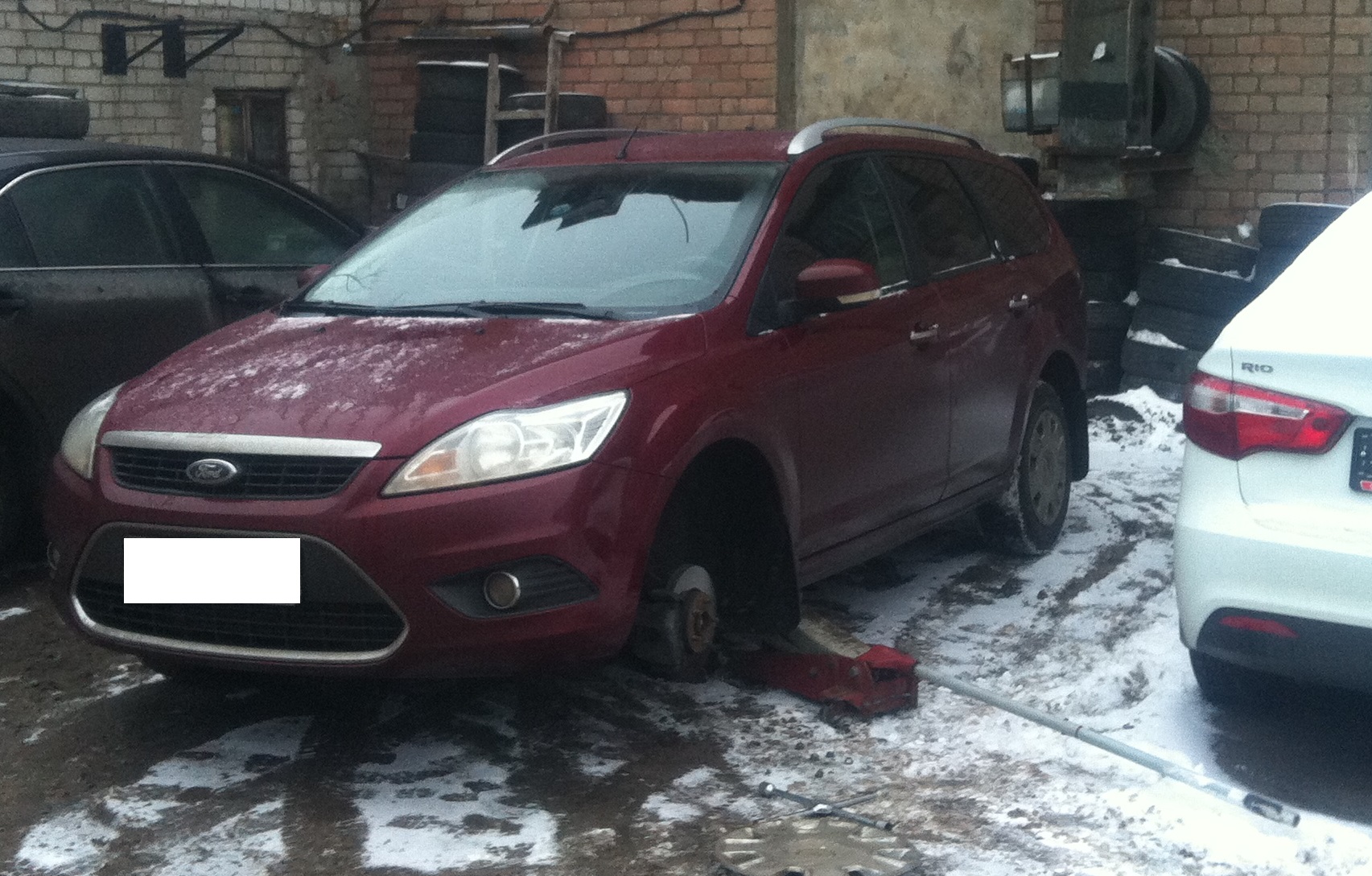

What actually goes wrong when a car isn’t supported properly?
Most incidents under a car come from the same handful of causes: a jack placed on an unapproved point that gives way, a jack used as the only support, a car that rolls because the handbrake wasn’t set or the wheels weren’t chocked, or ground that isn’t flat and solid enough to take the load.
- Working on gravel, grass, or a sloped drive instead of level concrete.
- Lifting with the jack but never transferring weight onto stands.
- Placing a stand on a point that isn’t rated to take the load.
- Leaving the transmission in neutral with no wheels chocked.
None of these are exotic failures — they are ordinary shortcuts that remove the margin the equipment was designed around. Sturdy footwear and gloves that don’t obstruct grip are sensible while working underneath; a tidy floor free of trailing leads and loose tools also reduces the chance of a slip near a raised car, which is part of a wider case for why a tidy workshop cuts injuries in the first place.
What should you check before buying a trolley jack or axle stands?
The comparison that actually matters is rated capacity against the heaviest axle load likely to be lifted, lift-height range against the lowest car in the household, and stand height against the jack’s minimum clearance so the two can actually be used together.
Beyond that, weight and portability trade off against stability — a compact jack is easier to store but often has a narrower base, which matters more on uneven ground. Stands with a wide, splayed foot resist tipping better than a narrow pin design. As with most workshop equipment, it helps to think in terms of what a spec actually changes rather than which number looks biggest; the general approach to reading specifications is covered in the buying and comparing section, and a used trolley jack or set of stands is worth the same scrutiny covered in what’s worth buying new versus fine second-hand — a seal or weld that’s had a hard life isn’t always obvious from the outside.
What else usually comes out during a jack-and-stands job?
Getting a wheel off almost always means breaking loose wheel nuts that were torqued on tightly, which is where a long-handled bar earns its place — the difference it makes over a standard ratchet is explained in what a breaker bar is for and when it’s actually needed. Whether that job calls for a socket, a spanner, or a ratchet ring depends on the fastener and the clearance around it, which is worth understanding before buying — see socket vs spanner vs ratchet ring.
Once the wheel goes back on, the nuts need tightening to a specific figure rather than “as tight as it’ll go,” and that’s a job for a torque wrench rather than guesswork — covered in what a torque wrench is and why it matters on a car. Between jobs, a jack and stands take up real floor space and are worth planning for properly rather than left wherever they land — see the workshop and storage section for how people actually organise that. And because working under a car carries a genuine, if manageable, risk of a trapped limb or a cut hand, it’s worth knowing in advance what should be in a workshop first aid kit, and reviewing the wider safety and PPE basics before starting.
Does a trolley jack and axle stands replace a proper vehicle lift?
No — a trolley jack and axle stands are for raising one corner or end of a car for wheel changes, inspection, and short jobs, not for the kind of sustained, whole-car elevation a two-post or four-post lift provides in a professional workshop.
For anything beyond routine home maintenance — extended work with the car fully off the ground, or jobs that need access from all sides at once — a proper lift or a professional garage is the safer route. This article, like the rest of Find Tool, is written by hobbyists and researchers rather than trained mechanics or licensed tradespeople, and nothing here substitutes for the vehicle handbook or professional guidance on structural or safety-critical work.
Find Tool publishes general information, not professional advice. Power tools, mains electricity and workshop machinery are genuinely dangerous, and the safe settings, guards and procedures differ between models — always follow the manual and the markings on the tool in front of you rather than a general guide. Never remove or defeat a guard or safety feature. Anything involving fixed wiring, gas or structural work belongs to a qualified tradesperson. Wear the eye, ear and respiratory protection the task calls for.
Featured image: Photo by Vitaly Barsov, source, CC BY-SA 3.0