Accuracy on a tape measure means how closely the printed markings match the true distance being measured, and how consistent those markings stay along the whole blade, over time, and after the hook has taken some knocks. It is not a single number stamped on the case — it is a mix of manufacturing tolerance, hook condition and how the tape is read.
Why don’t all tape measures measure exactly the same?
Every tape measure is a manufactured object, and manufacturing always has some tolerance. The steel blade is stamped or etched with marks, the case is molded, and the hook is riveted on separately. Small variations creep in at each stage. A cheap tape and an expensive one from the same shelf can both be “accurate enough” for stud spacing, yet measurably different from each other over a long run.
This is why two tapes rarely agree to the last hair on a long measurement, even when both are in good condition. The differences are usually tiny at short distances and become more noticeable the longer the run, because any small error in the blade repeats itself along its length.
What is a tape measure’s “accuracy class”?
Manufacturers grade tape measures against recognised standards that set how far the printed scale is allowed to drift from the true distance. Tighter classes are used for tapes aimed at trades where dimensional consistency matters most, while looser classes are perfectly workable for general carpentry, DIY and rough layout.
The class rating and the standard it’s tested against are usually printed on the case or in the product documentation rather than advertised loudly on the packaging. If a specific tolerance figure matters for a job — commercial fit-out, cabinetry runs that need to match across a room, or anything going for inspection — that’s a case for checking the manufacturer’s own published specification for that model rather than assuming one tape behaves like another.
Does the hook at the end affect accuracy?
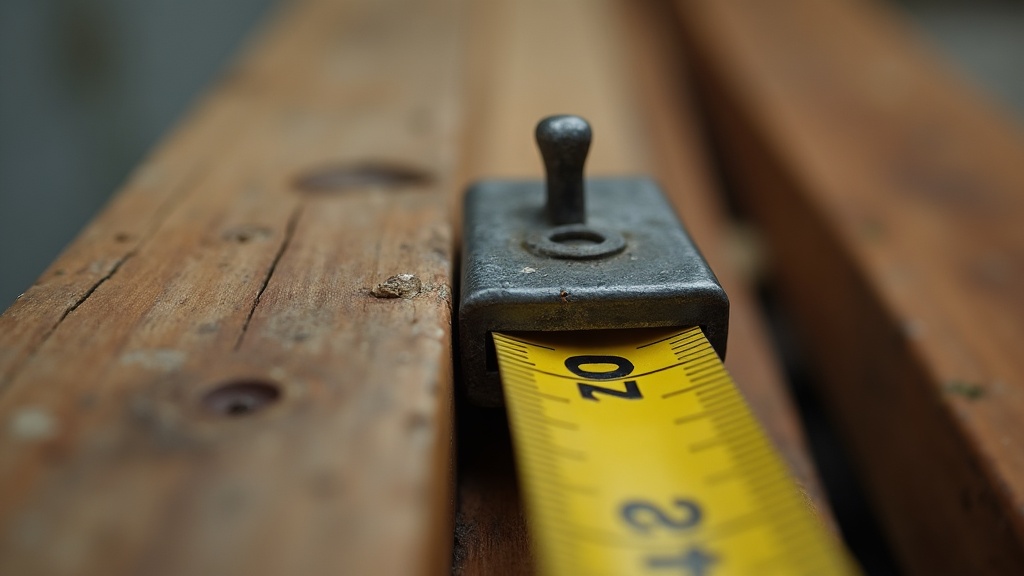
Yes, and it’s the single biggest source of real-world error. The end hook on a quality tape is deliberately made with a small amount of play — it slides slightly in or out depending on whether you’re measuring an outside edge (pushing against something) or an inside edge (hooking over something). This “true zero” design compensates for the hook’s own thickness so both types of measurement read correctly.
That sliding joint is also the first thing to wear or bend. A hook that’s been dropped, bent back, or has years of grit worked into the rivet slot stops moving cleanly, and the tape starts reading consistently long or short. This is a mechanical fault, not a printing error, and it’s the reason a tape that measured accurately when new can drift years later without any change to the markings themselves.
What causes a tape measure to drift out of true over time?
Wear at the hook rivet is the most common cause, but it isn’t the only one. A blade that’s been kinked, nicked, or has had the coating scraped off in one spot can flex slightly differently at that point. Repeated hard retraction can also stress the blade near the case opening over a long service life.
None of this usually shows up as a dramatic error. It tends to appear as a small, consistent offset — everything measures a shade long, or a shade short — which is exactly the kind of error that’s easy to miss until two tapes are compared side by side, or a cut piece doesn’t quite fit where a marked line said it should.
How much accuracy do you actually need?
For most home workshop tasks — framing a stud wall, cutting shelving, laying out a fence panel — the accuracy built into any reasonably well-made tape measure is more than enough. The bigger source of error in ordinary work is usually the person reading the tape, not the tape itself: parallax from reading the scale at an angle, rounding to the nearest visible mark, or letting the blade sag over a long unsupported span.
Accuracy starts to matter more as tolerances get tighter — cabinet doors that need to line up, multiple pieces cut to the same length that will sit side by side, or work that has to match dimensions set out with a separate tool. In those cases, consistency between measurements matters as much as absolute accuracy: using the same tape for every mark on a job, rather than switching between two different tapes, removes one variable entirely.
For layout work where a tape’s slight give in the blade isn’t wanted at all, tools like a combination square or a marking gauge are often the better choice for transferring a short, precise dimension rather than a long tape measurement.
How can you check a tape measure’s accuracy at home?
A simple comparison test tells you a lot without needing lab equipment:
- Hook two tapes over the same fixed edge and lay them alongside each other on a flat surface, reading off the same distance on both.
- Check the hook for visible bend, and confirm it slides slightly in its slot rather than being seized or loose to the point of wobbling.
- Measure the same known-length item — a length of stock, a doorway — several times with the same tape and see whether the reading repeats.
- Look closely at the printed marks near the start of the blade, since that section takes the most wear from the hook sliding back and forth.
None of this proves a tape meets a formal accuracy class, but it will catch the practical problems — a bent hook or a blade that’s stretched or damaged — that cause most real-world measuring errors.
What should you compare when buying for accuracy?
Blade material and coating affect how well the markings resist wearing off and how the blade behaves under tension, but they don’t guarantee a tighter tolerance on their own. A wider, stiffer blade holds itself out straighter over a longer unsupported reach, which matters more for practical accuracy on long measurements than most people expect — a thin blade that sags in the middle is being measured along a curve, not a straight line.
Hook design is worth handling in person if possible: check that it moves freely but isn’t loose, and that it’s fixed with rivets rather than a flimsier method that will wear quickly. Beyond that, published accuracy class and standard reference (where a manufacturer states one) is the only figure worth comparing directly between two tapes — case size, belt clip design and blade length are convenience features, not accuracy features. The buying tools guide covers how to weigh up specification claims like this against what a job actually needs, and the buying guides archive has more on reading manufacturer specifications generally.
Does accuracy matter more for some trades than others?
Trades that fit multiple components together — cabinetry, joinery, anything with repeat pieces cut to match — feel tape accuracy and hook wear more than trades measuring rough dimensions like fencing or decking. Even within a home workshop, the same principle applies: a shelf unit built from several cut pieces benefits from one well-maintained tape used consistently, more than from switching between whichever tape is closest to hand.
For a broader look at how measuring and layout tools relate to each other, the measuring & layout archive covers related topics, and the tool guide hub explains how measuring kit works alongside the power and hand tools it’s used with. Readers comparing tape measures against other layout options may also find the comparisons archive useful for working through trade-offs between tools rather than just specifications.
Find Tool publishes general information, not professional advice. Power tools, mains electricity and workshop machinery are genuinely dangerous, and the safe settings, guards and procedures differ between models — always follow the manual and the markings on the tool in front of you rather than a general guide. Never remove or defeat a guard or safety feature. Anything involving fixed wiring, gas or structural work belongs to a qualified tradesperson. Wear the eye, ear and respiratory protection the task calls for.
Related reading
What Does a Torque Wrench Actually Measure?.
Featured image: Photo by 多多123, source, CC BY 4.0
