A portable workbench is a folding worktable with adjustable jaws that clamp material for sawing, drilling, routing or gluing. It is good for holding awkward or irregular pieces steady in a small or temporary space. Its limit is mass and rigidity — it cannot match a fixed bench for heavy planing, chiselling or sustained precision work.
What is a portable workbench good for?
The core idea is simple: two jaws set into a folding leg frame open and close like a wide vice, gripping a board, sheet, pipe or frame from underneath or the side. Most models fold flat for storage and open in seconds, which is why they turn up in garages, vans, and flats without a dedicated workshop.
They earn their keep on jobs where the material itself is awkward rather than heavy: a door that needs trimming, a sheet of plywood being cut to size, a length of skirting being mitred, a bracket being drilled on site. The jaws hold the piece at a workable height without a second pair of hands, and the open frame lets a jigsaw or circular saw pass through the gap without cutting into a solid table.
How does the clamping system actually work?
Most portable workbenches use two independent jaw halves, each mounted on a screw or lever mechanism, with round bench dogs or pegs that slot into holes along the top. Turning the handle closes both halves evenly, or one side can be wound in further to hold a tapered or angled piece.
The pegs let you support a sheet flat across the jaws rather than gripping it from the edge, which matters when cutting large panels — the material rests on the pegs instead of hanging unsupported past the clamp line. Reading the fold-out instructions that come with a specific model is worth the five minutes it takes, because jaw travel, maximum clamping width and peg spacing vary between brands and are not interchangeable assumptions.
What jobs suit a portable workbench well?
It performs best where the job is short, the material is manageable by one person, and the tool doing the cutting or drilling is handheld rather than benchtop.
- Cutting sheet goods to rough size before finishing them on a more rigid surface
- Holding a door, shelf or length of timber steady for a jigsaw, circular saw or hand saw
- Clamping pipe, box section or angle for drilling or filing
- Supporting glue-ups where light, even pressure is enough
- Working on site, in a driveway, or anywhere a fixed bench cannot go
For an idea of how a handheld circular saw or track saw pairs with this kind of support, the comparison at circular saw vs track saw explains what changes when the saw guides itself along a rail rather than being freehand over a clamped board.
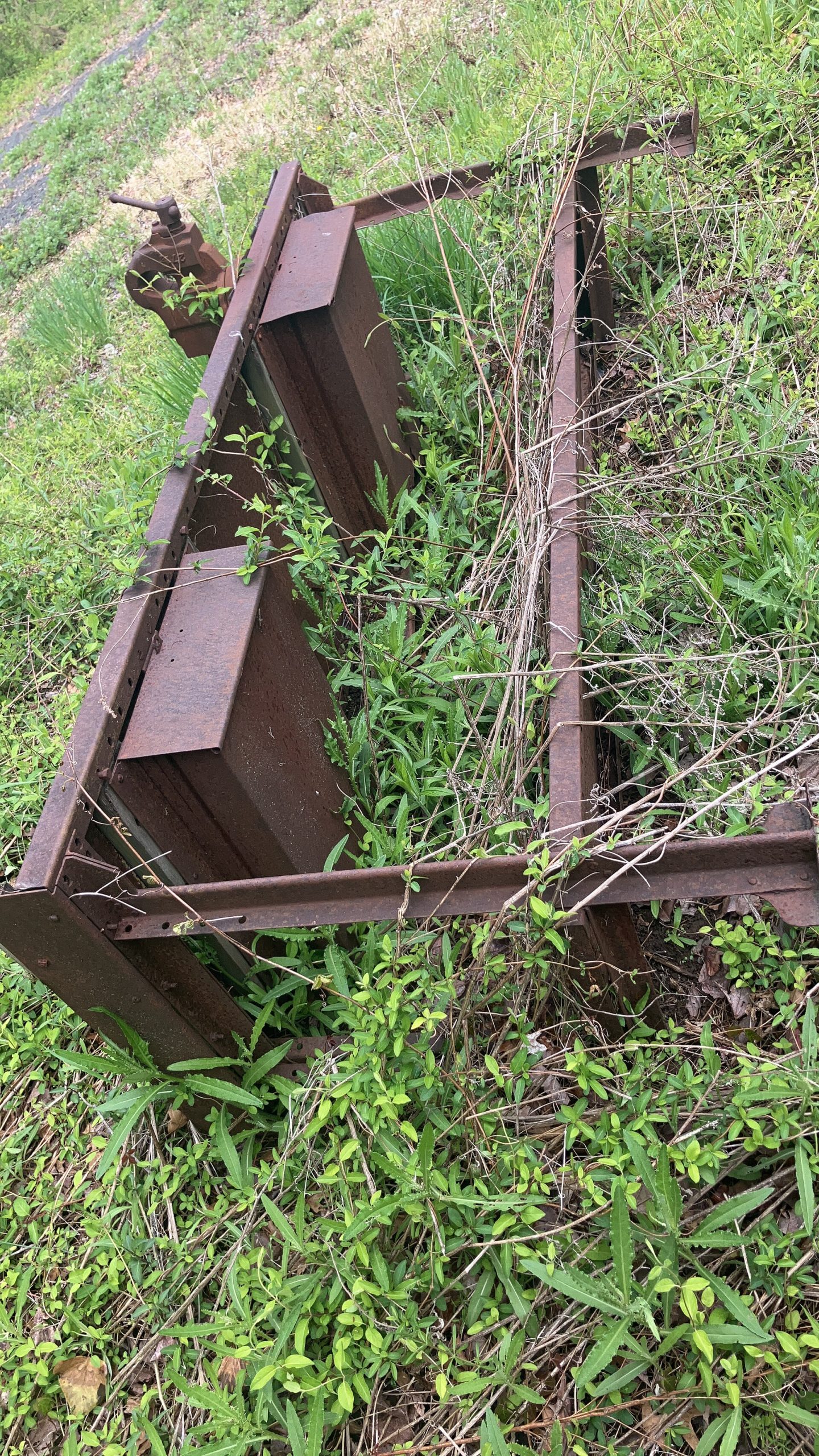
Where does a portable workbench fall short?
The same folding legs and lightweight frame that make it portable also make it flex under load. Push a hand plane hard across a board clamped in one, and the whole bench can rock or walk across the floor. Pare a mortise with a mallet and chisel, and the vibration travels straight through the thin top instead of being absorbed by mass, the way it would on a heavy fixed bench.
It is not built for:
- Sustained hand-tool work like planing, chiselling or hand-sawing joinery, where a rigid, heavy bench keeps the workpiece still
- Precision assembly that depends on a dead-flat, unmoving reference surface
- Holding very heavy or very large stock securely — jaw width and clamping force are limited
- Standing in as a permanent workstation for a stationary power tool such as a bench grinder or drill press, which need their own solid, bolted-down base
If a job is fighting the bench rather than being supported by it, that is usually the sign it belongs on a different surface, not that the technique needs forcing through anyway.
Does it replace a table saw or bench vice?
No. A portable workbench holds material for a handheld tool; it does not guide a blade or provide the mass and stability of dedicated equipment. It is a support surface, not a substitute for a table saw, mitre saw or a proper vice bolted to a solid bench.
A table saw or mitre saw is built around a fixed table, a controlled feed path and its own guarding, and choosing between the two for a given cutting job is covered in mitre saw vs table saw: which problem does each solve. A bench vice, by contrast, is bolted to a rigid bench and designed to take real clamping force and repeated impact — see what a bench vice is used for in automotive work for how differently that tool is loaded compared with a folding jaw. A portable workbench sits between the two: better than working on the floor or a pair of trestles balanced on bricks, but not a replacement for either purpose-built machine.
What should you check before buying one?
Rather than chasing a single headline figure, compare how the bench behaves under the kind of load it will actually see.
- Jaw opening and clamping width — matters for how large a panel or how thick a section it can grip without the jaws running out of travel
- Frame stability — how much the legs splay or the top flexes when weight is applied off-centre, which is hard to judge from a spec sheet and easier from handling one in person
- Top surface material — some tops are solid enough to take light drilling or occasional sawing directly into them without ruining a good bench elsewhere
- Folded size and weight — relevant if it needs to fit in a car boot or be carried up stairs regularly
- Peg and dog compatibility — whether accessories like clamps or extension arms are sold for that specific model
The broader habits for comparing tool specifications without being steered by marketing numbers are covered in the buying tools guide, and how a workbench fits into the rest of a small workshop’s footprint is discussed in how a small garage workshop should actually be laid out.
What PPE and safety habits matter when using one?
A portable workbench does not add its own hazard, but it changes how safely a handheld tool can be used, so the same precautions that apply to that tool still apply here.
- Eye protection whenever a saw, drill or router is cutting material clamped in the jaws — offcuts and dust are thrown upward and sideways, not just downward
- Hearing protection for any sustained sawing or routing session, particularly with power tools running for more than a few minutes at a time
- A dust mask or proper respirator rated for fine dust when cutting MDF, hardwood or anything containing silica-based fillers, since a folding bench in a garage or driveway rarely has the dust extraction a fixed shop setup would have
- Checking that the jaws are fully closed and locked before starting a cut — a workpiece that shifts mid-cut is a common cause of kickback and blade contact with handheld saws
- Keeping the bench on a level, solid floor before clamping anything, since an uneven floor lets the frame rock exactly when steadiness matters most
The full picture of what a given power tool needs in terms of guarding, technique and PPE is set out in its own manual, and the manual always takes priority over general advice. Broader safety and PPE guidance for the workshop is grouped at Safety & PPE.
Is a portable workbench worth having alongside a fixed bench?
Yes, as a companion rather than a replacement. A portable workbench covers the jobs a fixed bench cannot reach — outdoors, on site, in a space too small for permanent furniture — while a solid bench still handles precision joinery, sustained hand-tool work and anything needing real mass underneath it.
For a workshop that has neither yet, the wider category of options for holding, cutting and storing work is covered across Workshop & Storage and Power Tools, both useful starting points before deciding which piece of equipment actually solves the problem at hand.
Find Tool publishes general information, not professional advice. Power tools, mains electricity and workshop machinery are genuinely dangerous, and the safe settings, guards and procedures differ between models — always follow the manual and the markings on the tool in front of you rather than a general guide. Never remove or defeat a guard or safety feature. Anything involving fixed wiring, gas or structural work belongs to a qualified tradesperson. Wear the eye, ear and respiratory protection the task calls for.
Related reading
The Tool Guide, What Is a Creeper and What Makes a Good One?, What Does Workshop Temperature Do to Tools and Materials?.