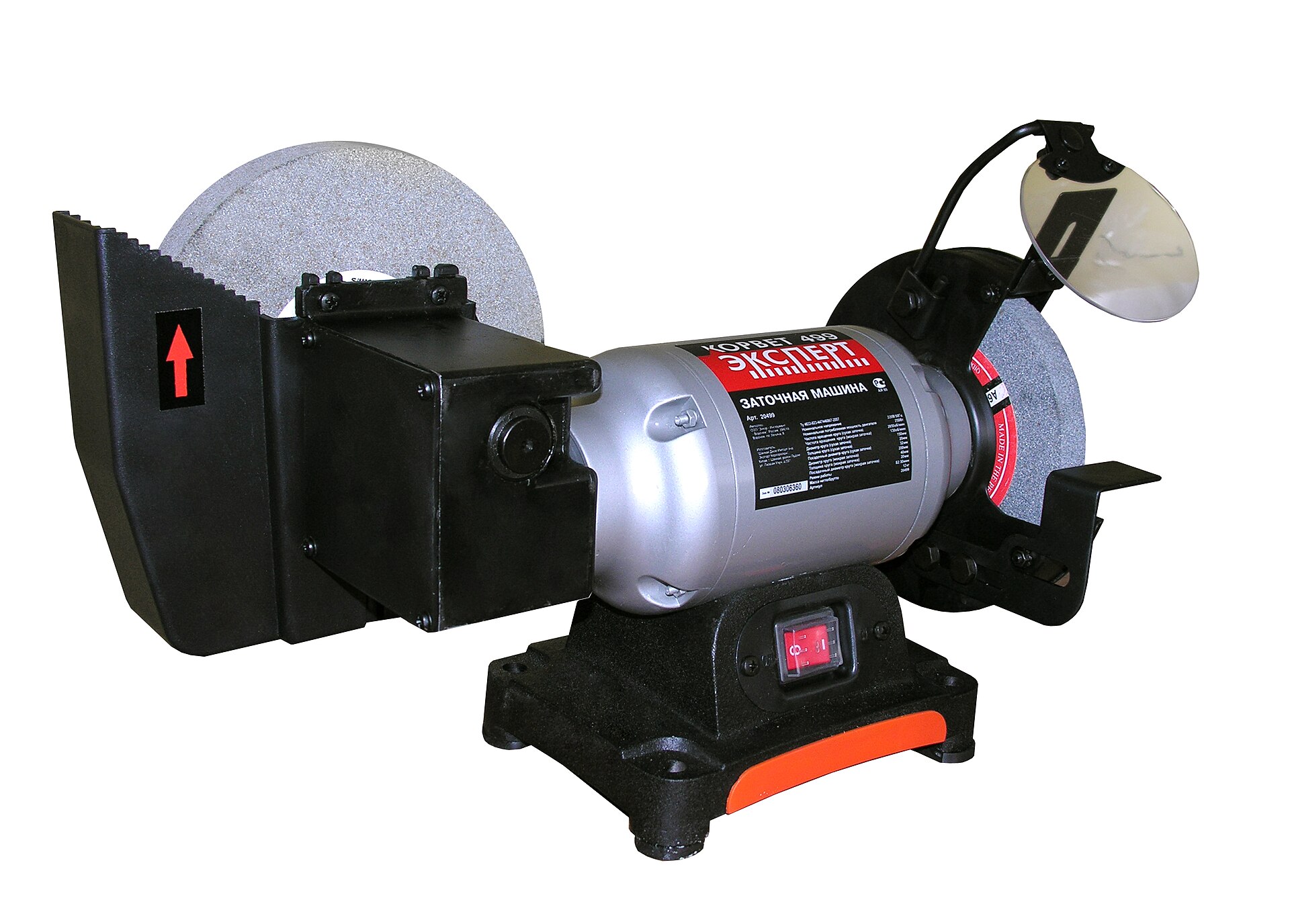
A bench grinder is a stationary motor with an abrasive wheel (or two) mounted on each end of its shaft, used to sharpen edge tools, shape and deburr metal, remove rust or old finish, and clean up welds. It sits on a bench or stand and the workpiece is brought to the spinning wheel, not the other way round.
What jobs does a bench grinder actually do well?
A bench grinder earns its bench space on a short list of repetitive metalworking jobs rather than one specific project. It is the tool most home workshops reach for when an edge has gone dull, a bolt end needs squaring off, or a piece of scrap metal needs a rough shape knocked into it before finer work begins.
- Sharpening lawn mower blades, chisels, garden shears and axes
- Restoring the point on twist drill bits
- Deburring cut metal edges after sawing or drilling
- Grinding down welds, rivets or bolt heads flush
- Removing rust, scale or old paint from small steel parts
- Shaping small metal parts freehand, such as tapering a rod
It is a shaping and sharpening tool for metal, not a finishing tool. Work usually leaves a bench grinder rougher than it needs to be for a final surface, and a separate stone, file or polishing step often follows.
What are the two wheels typically used for?
Most bench grinders carry two wheels of different grit, one on each side of the motor, so the operator can move between rougher shaping and finer sharpening without changing anything. A coarser wheel removes material quickly; a finer wheel refines the edge left behind.
Some owners fit one side with a wire wheel instead of an abrasive stone, which changes the job entirely — from grinding metal to cleaning rust, scale and old finish off a surface without removing much base metal. That is a genuinely different task, and the difference between a fixed wire wheel on a bench grinder and a rotary wire wheel on a handheld tool is worth understanding before buying either. There’s more on that trade-off in the comparison of a wire brush versus a rotary wire wheel.
Whatever combination of wheels is fitted, the eye shields and wheel guards that come with the machine are there because the wheel spins fast enough to throw sparks and grit in a straight line toward the operator’s face. They stay in place for every pass.

How is a bench grinder different from a rotary tool or angle grinder?
A bench grinder is fixed in place and the workpiece moves to it; a rotary tool or angle grinder is handheld and moves to the workpiece. That distinction decides which one suits a given job far more than raw power does.
A bench grinder is better for repeatable, controlled work on smaller pieces you can hold in two hands and rest against a tool rest — sharpening a chisel at a consistent angle, for example. A handheld rotary tool is better suited to detail work, engraving, or grinding in places a fixed wheel cannot reach, which is covered in more depth in the guide to what a rotary tool is genuinely good at. An angle grinder, by contrast, is built for cutting and grinding on large or fixed workpieces — the opposite arrangement to a bench grinder.
What should never be ground on a bench grinder?
A bench grinder is built for metal. It should not be used on wood, plastics, or anything that can melt, smear or clog the wheel, and it is not the tool for grinding materials that produce fine airborne dust hazardous to breathe, such as stone or masonry, unless the wheel and machine are specifically rated for that material.
Softer non-ferrous metals like aluminium can also clog a standard wheel and are usually better handled with a dedicated wheel or a different tool entirely. If in doubt about whether a material or wheel combination is appropriate, the machine’s manual and the wheel’s own markings are the reference, not habit or guesswork.
What safety gear does bench grinder work actually require?
Bench grinder work throws sparks, hot grit and occasionally small wheel fragments, so eye protection rated for impact is essential every time the machine runs, even for a quick touch-up. A face shield adds protection against grit reaching the lower face, and the motor noise over any extended session is loud enough to justify hearing protection too.
Loose sleeves, gloves, and anything that can be caught by a spinning wheel or wire brush have no place near the machine — the wheel does not distinguish between a workpiece and a cuff. A steady grip with bare or close-fitting hands, held against the tool rest, is what keeps the work under control. The broader reasoning behind that is covered in the archive on safety and PPE.
The tool rest and wheel guards fitted to the machine are part of how it is meant to be used, not an optional extra to work around. They keep the workpiece supported at a consistent distance from the wheel and keep sparks and fragments directed away from the operator. If a particular job feels awkward with the guards in place, that is a sign to change the technique, use a jig, or reach for a different tool — not to adjust the guard out of the way.
What settings and guards matter, and where do the numbers come from?
The tool rest gap, the wheel speed rating, and the guard positions on a bench grinder are all set by the manufacturer for a reason, and they vary by model. A wheel rated for a lower maximum speed fitted to a faster machine, or a tool rest left too far from the wheel face, both create real hazards rather than theoretical ones.
Rather than guessing at a safe gap or an acceptable wheel speed, the manual that came with the specific machine and the markings printed on the wheel itself are the only reliable source. That documentation always outranks general advice, because grinder models differ enough that a number that is safe on one machine may not be on another.
Bench grinder or sharpening stones — which suits the job?
A bench grinder removes metal quickly and is well suited to restoring a badly damaged or very dull edge, or to shaping a bevel from scratch. Sharpening stones work more slowly, give finer control over the final edge, and are usually the better choice for maintaining an edge that is already close to sharp.
Many home workshops use both: the grinder for the occasional heavy repair, stones for routine touch-ups. The full comparison of when each tool actually suits the job is laid out in bench grinder versus sharpening stones.
What should you compare when buying a bench grinder?
Wheel diameter and motor power both affect how much material a grinder can remove and how large a workpiece it can comfortably handle, but the number on the box matters less than what it is being compared against for a specific job — a machine built for occasional sharpening of garden tools does not need the same capacity as one intended for regular metal fabrication.
Worth comparing before buying:
- Wheel diameter and whether replacement wheels for it are easy to source
- Whether the tool rests and eye shields adjust easily and lock securely
- Motor mounting — a solidly built base vibrates less at speed
- Whether one side can be swapped for a wire wheel if that dual use is wanted
- Available bench or stand space, since the machine needs to be fixed down, not held
The general reasoning behind comparing specifications rather than chasing the biggest number is covered in the tool buying guide, and the wider archive of buying and comparing articles goes into similar trade-offs across other tool categories.
Where does a bench grinder fit in a home workshop?
In a modest home workshop, a bench grinder tends to sit alongside other fixed metalworking gear rather than replacing any hand tool outright. It complements a vice used for holding parts steady during filing or fitting — a task covered in the guide to what a bench vice is used for — and it belongs on the same short list of stationary machines that need a secure, purpose-fitted spot rather than a shelf.
Anyone weighing up a bench grinder against other power tools for a first workshop setup can find a broader view of how different machines are categorised and compared in the power tools archive.
Find Tool publishes general information, not professional advice. Power tools, mains electricity and workshop machinery are genuinely dangerous, and the safe settings, guards and procedures differ between models — always follow the manual and the markings on the tool in front of you rather than a general guide. Never remove or defeat a guard or safety feature. Anything involving fixed wiring, gas or structural work belongs to a qualified tradesperson. Wear the eye, ear and respiratory protection the task calls for.
Featured image: Photo by Артём В., source, CC BY-SA 4.0