Chainsaw use genuinely requires cut-resistant leg protection (chaps or trousers rated for chainsaw work), a helmet with an integrated visor or a separate face screen, ear defenders, gloves with a reinforced left hand, and boots with cut-resistant panels and good grip. None of these are optional extras — they address specific, well-documented ways chainsaws injure people, and a saw’s built-in safety features work alongside them, not instead of them.
Why does chainsaw use need more than just gloves?
A chainsaw removes material fast, at high chain speed, and the most serious injuries happen in a fraction of a second — during kickback, when the chain catches an ankle during a cut, or when small debris is thrown toward the face. Ordinary work gloves and safety glasses were never designed for a moving chain; chainsaw-specific PPE is built and rated for that exact failure mode.
The reason this matters more with a chainsaw than with most other power tools is speed of onset. There is often no time to react once something goes wrong, which is why the protection has to already be in place before the first cut, not reached for afterward. For background on the mechanism itself, see what chainsaw kickback actually is and what causes it.
What does chainsaw-rated leg protection actually do?
Chainsaw chaps or trousers contain layers of long, loose fibres that are designed to pull free and jam the drive sprocket the instant a moving chain contacts them, stopping the chain almost immediately. They do not make legs “cut-proof” against a lingering or repeated contact — they buy the fraction of a second that separates a graze from a deep laceration.
This protection only works if it is worn correctly and covers the area a chain is actually likely to reach — typically the front and sides of both legs, not just one. A saw held or angled differently than usual, or a cut taken from an unusual stance, changes where contact is most likely, which is one reason technique and stance matter as much as the garment itself.
What eye and face protection does a chainsaw need?
Chainsaw work throws wood chips, dust, sawdust and occasional splinters of bark toward the face, often at close range and from an unpredictable angle. A full mesh visor or a solid face screen, usually fitted to a helmet, is standard because it covers more of the face than glasses alone and does not fog the way some safety glasses can during sustained cutting.
Safety glasses on their own are commonly used underneath a mesh visor, because mesh stops larger debris but a small amount of fine dust can still pass through the weave. For more on what an eye protection rating is actually certifying, see what an eye protection rating actually means.
Why does hearing protection matter for chainsaw work?
Chainsaw engines run loud and close to the ear for sustained periods, well past the noise level and duration where hearing damage becomes a real risk rather than a theoretical one. Ear defenders — usually built into the same helmet as the visor — are worn for the whole session, not just during the loudest cuts.
Hearing loss from tool noise is cumulative and does not announce itself the way a cut does; damage builds up gradually and is not reversible. What noise level makes ear protection necessary covers how that threshold is judged in practice.
Is a dust mask or respirator needed for chainsaw work?
Chainsaw dust is mostly wood particles and bar oil mist rather than fine mineral dust, so full respiratory protection is less central here than with sanding or masonry work — but a simple dust mask is still worth having for dry, dusty timber, and standard care applies whenever sawdust builds up in an enclosed space such as a shed or garage.
The difference between a basic dust mask and a proper respirator is explained in dust mask vs respirator: what’s the difference, and how filter ratings are graded is covered in what an FFP or N95 rating actually covers.
What hand and head protection does a chainsaw need?
Gloves for chainsaw work usually have a reinforced back on the left hand, since that hand is closer to the bar tip and the area most exposed during an incident. A snug fit matters as much as the material — loose gloves can catch on branches or on the saw itself, and can also make it harder to grip the front handle properly.
A dedicated helmet is standard rather than a bump cap, both because it carries the visor and ear defenders together and because it protects against falling branches and deadwood overhead, which is a genuine and frequent hazard during tree and hedge work.
What footwear is appropriate for chainsaw work?
Chainsaw boots combine a cut-resistant panel across the front of the foot and lower shin with a steel or composite toe cap and a sole designed for grip on uneven, often wet or bark-covered ground. Ordinary work boots or trainers lack the cut-resistant layer entirely and do not address the specific way a chainsaw injures a foot — a glancing contact near ground level.
Stable footing also reduces the chance of a stumble that brings the running saw closer to the body, which is a real contributor to incidents that on paper look like “the saw slipped.”
Does loose clothing actually matter around a chainsaw?
Yes — anything loose, hanging or frayed can catch on a branch, a running chain, or the saw’s own moving parts, pulling a hand or arm toward the cutting edge before there is time to react. This is the same underlying hazard that applies to rotating tools generally, covered in why loose sleeves and gloves matter around rotating tools, and it applies just as much outdoors with a chainsaw as it does at a bench.
Snug-fitting, close-woven clothing without dangling drawstrings, scarves or loose cuffs is the safer default, and it should be worn under any chainsaw chaps rather than in place of them.
What built-in safety features does the saw itself provide?
Most modern chainsaws include a chain brake that stops the chain in response to kickback or a manual trigger, along with a reduced-kickback chain and bar design intended to lower the chance of a violent kickback in the first place. These features are part of the saw’s engineering and are there to work alongside PPE — never as a substitute for it, and never as something to disable to “make a cut easier.”
How the chain brake and related interlocks are tested, adjusted and checked is set out in the manufacturer’s manual for that specific model, and that documentation always takes precedence over general guidance. If a cut feels awkward with these features engaged as designed, the answer is a different technique, a different stance, or a different tool — not bypassing what the saw was built with.
How does bar length affect the equipment and technique needed?
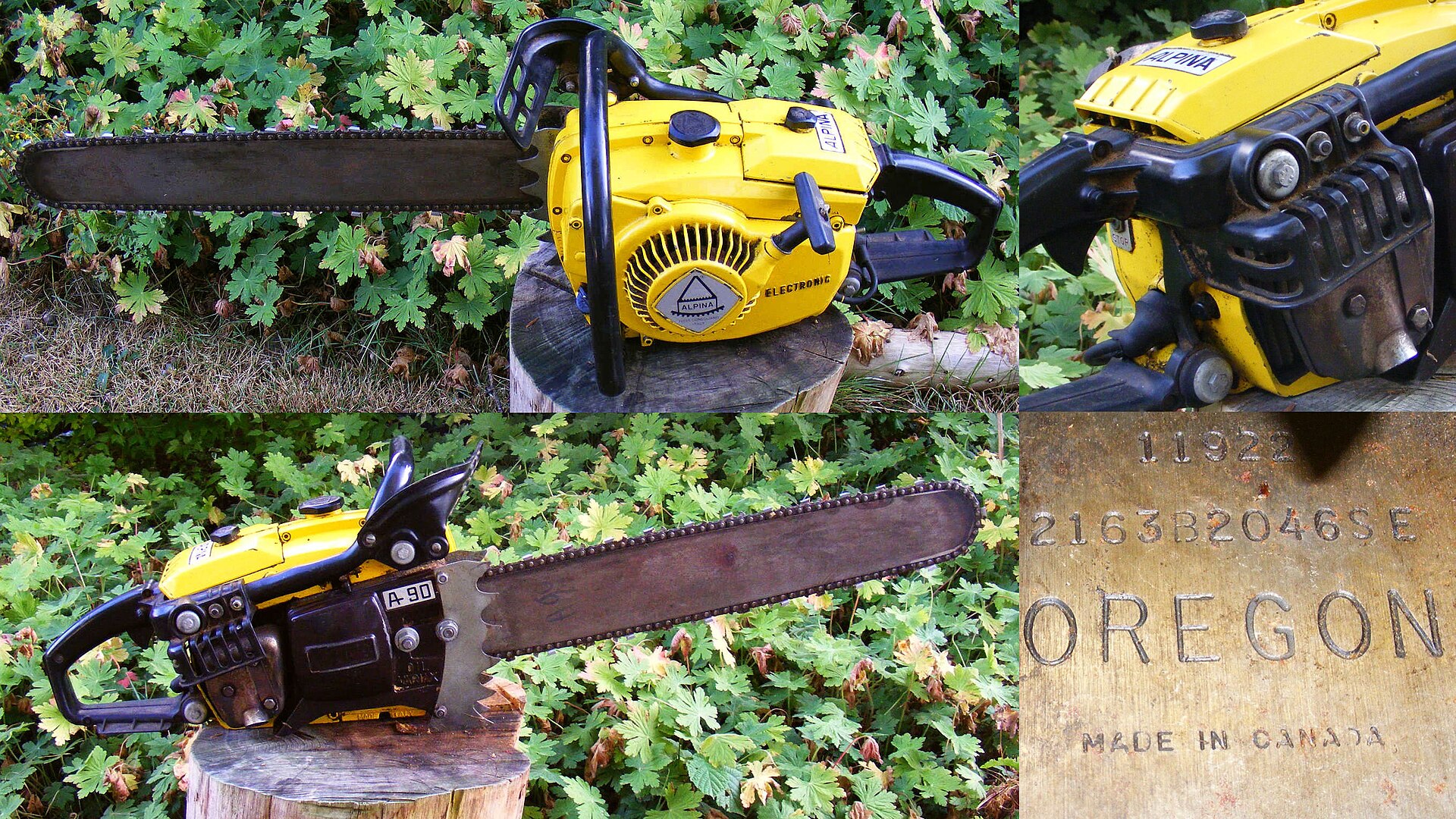
Longer bars reach further into a cut but also increase the length of chain that can contact material unexpectedly, which changes the working distance a user needs to keep and the awareness required around the bar tip. Choosing a bar length that matches the actual timber being cut, rather than the longest one available, is part of managing risk before a single piece of PPE is put on.
The trade-offs involved are covered in what a chainsaw’s bar length actually limits, which is worth reading alongside kickback behaviour since the two are closely related.
What else belongs in the kit before starting?
A basic first aid kit kept within easy reach of the work area — not left in a shed or a car — is standard practice for any chainsaw session, given how quickly a minor injury can become serious if treatment is delayed. What that kit should actually contain is covered in what should be in a workshop first aid kit, and the same principle extends outdoors to garden and tree work.
Fuel, bar oil and a means of starting and stopping the saw safely are also part of the setup, and for two-stroke petrol saws it helps to understand the engine type being handled; see what a two-stroke engine is and why some garden tools still use one.
How should this equipment be chosen and checked before buying?
Chainsaw PPE is typically sold rated for a category of use, and matching the rating to the type of cutting actually being done — light garden pruning versus felling or larger timber — is a genuine trade-off rather than a marketing detail. Comparing certification, fit and coverage matters more than price alone, and general guidance on how to weigh specifications against real use is set out in the buying tools guide hub.
Wider background on how power tools and their safety systems actually work is available in the tool guide hub, and the full spread of PPE topics — from hearing protection to dust ratings — sits in the Safety & PPE archive. For chainsaw use specifically alongside other outdoor power equipment, the Garden & Outdoor category covers related tools and their own safety considerations.
None of this equipment is interchangeable with general workshop PPE. A dust mask meant for sanding, gloves meant for handling timber, or glasses meant for a bench grinder are not built for what a chainsaw specifically throws at a user, and treating chainsaw PPE as a distinct set — checked and worn as a complete kit every time — is what actually reduces the risk this tool carries.
Find Tool publishes general information, not professional advice. Power tools, mains electricity and workshop machinery are genuinely dangerous, and the safe settings, guards and procedures differ between models — always follow the manual and the markings on the tool in front of you rather than a general guide. Never remove or defeat a guard or safety feature. Anything involving fixed wiring, gas or structural work belongs to a qualified tradesperson. Wear the eye, ear and respiratory protection the task calls for.