The sensible order is: measuring and marking tools first, a small core of hand tools next, safety gear bought alongside every purchase rather than after it, and power tools added one at a time as an actual job needs them. Buying power tools before that foundation usually means duplicate spending and unused kit later.
What should come before any power tool at all?
Measuring and marking tools come first, because almost every job — hand or power — starts with an accurate line. A tape measure, a try square, a marking gauge and a decent pencil cost little and get used on day one, long before a drill or saw is needed.
This isn’t about buying gadgets. It’s about being able to trust a cut line before committing a saw to it. The measuring and layout tools people reach for most are simple, mechanical, and rarely go wrong if looked after.
A cheap tape measure or square that reads slightly off will make every later cut slightly off too, so it’s worth understanding what accuracy actually means before buying. See what accuracy means on a tape measure and how to check a try square for what to look at before trusting either one.
Which hand tools actually get used every week?
A small set of hand tools — a claw hammer, a couple of screwdrivers, an adjustable spanner, pliers, a utility knife and a basic chisel — covers most early jobs. These are the tools reached for before any power tool is switched on.
It’s tempting to buy a large boxed set early on. A smaller set of tools that are actually the right size and shape for the work at hand tends to serve better than a large set padded with things that never get used. The hand tools archive covers the reasoning behind specific choices, from screwdriver tip types to the difference between pliers, pincers and nippers.
Chisels deserve a mention on their own, because a cheap one that won’t hold an edge is worse than not having one. Understanding why a chisel needs a flat back and what a chisel’s bevel angle is for helps when comparing options rather than just buying whatever’s cheapest.
What safety gear should be bought alongside the first tools, not after?
Eye protection, hearing protection for anything loud and sustained, and a basic respirator for dust should be bought at the same time as the first tools that create those hazards — not added later once a habit of skipping them has formed.
Eye protection matters from the very first time a hammer, chisel or drill is used, because flying debris doesn’t wait for a power tool to appear. Hearing protection becomes relevant once anything loud and sustained is running for more than a few minutes. Fine dust — from sanding, cutting MDF, or working with hardwood — is a separate hazard again, and worth taking seriously from the start rather than after a cough develops.
- What an eye protection rating actually means
- What noise level makes ear protection necessary
- Dust mask vs respirator: the real difference
- Why MDF dust is treated differently from softwood dust
A basic first aid kit belongs on this early list too. See what should be in a workshop first aid kit for what’s actually worth having on a shelf before it’s needed. The wider safety and PPE archive is worth a browse before any power tool purchase, not after.
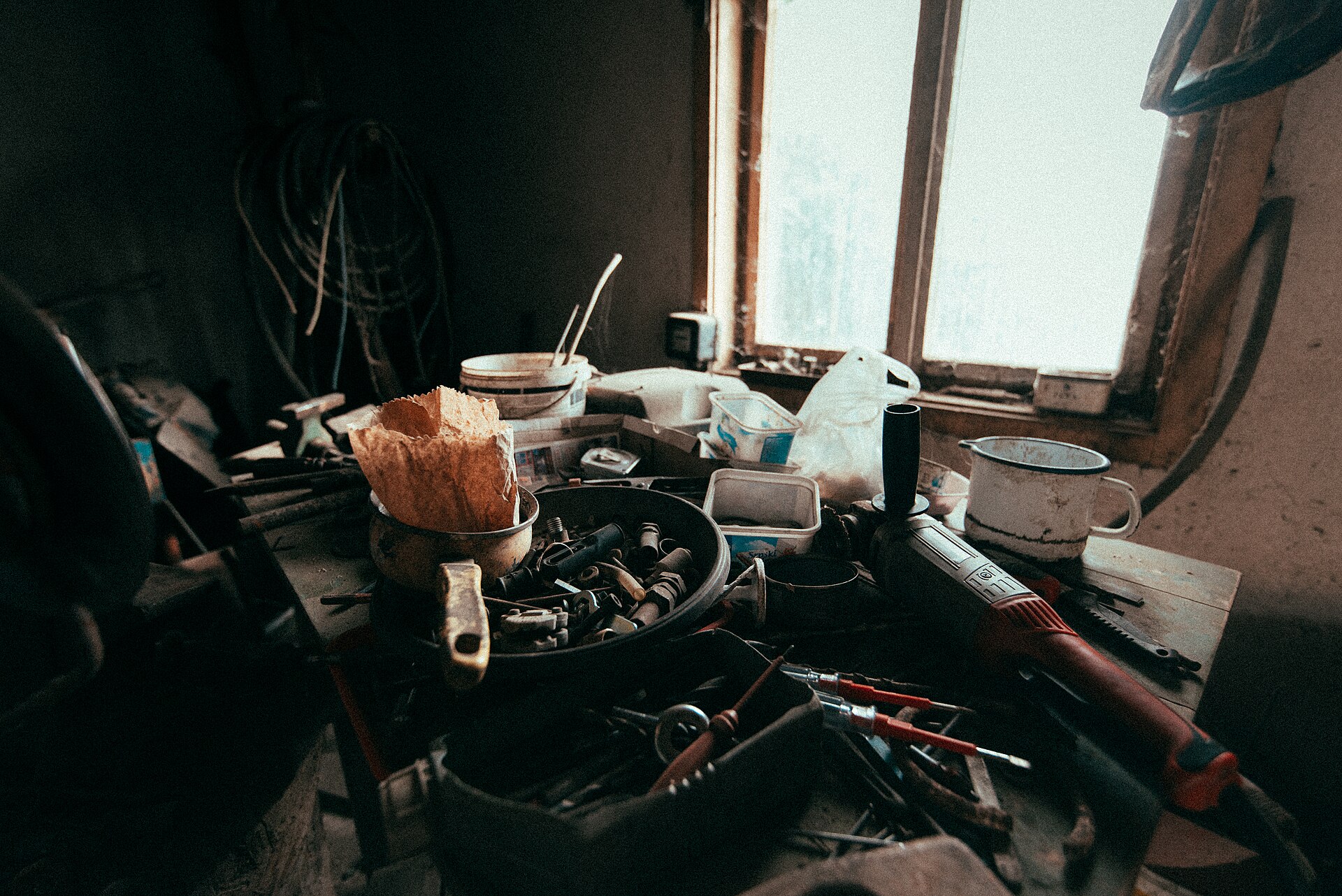

Which power tool should be bought first?
For most first workshops, a drill/driver is the first power tool worth buying, because it covers the widest range of early jobs — assembly, pilot holes, driving screws — without needing a dedicated space or a fixed mains circuit.
A drill is forgiving to learn on and useful almost immediately. What follows it depends entirely on the kind of work being done: someone building furniture will want a saw next, someone doing general repairs might reach for a jigsaw or a random orbital sander instead. The power tools archive covers how each type actually works before comparing specific models.
Whatever the second purchase is, it’s worth checking what a dead-man switch does and why every powered tool that spins or cuts is built with one — see what a dead-man switch is and why power tools need one.
What comes after the first power tool?
After a drill, most people add either a saw for cutting material to size or a sander for finishing it — whichever matches the jobs actually being done, rather than whichever looks most impressive on a shelf.
This is also the point where battery platform matters, if cordless tools are the plan. Buying a second tool on the same battery system as the first avoids duplicate chargers and batteries, but it also locks in future purchases to that brand. What a battery platform commitment actually costs is worth reading before the second cordless tool is bought, not after three of them are.
Any tool with a blade — saw, router, planer — brings guards, riving knives and kickback into the picture. These aren’t optional extras to work around; they’re part of how the tool is meant to be used safely, and the tool guide hub explains what each one actually does before a first cut is attempted.
Where does storage and maintenance fit into the order?
Basic storage — a shadow board, a tool roll, or simply a dry shelf away from damp — belongs early, because tools left loose in a bag or on a damp floor degrade faster than the money spent on them justifies.
This doesn’t need to be elaborate. A dry space, a way to keep blades and bits from knocking against each other, and a habit of wiping tools down after use go a long way. See how tools should be stored to stop them rusting and what a shadow board actually improves for what’s worth setting up before the toolkit grows any larger.
A tidy space also has a direct safety benefit, not just a tidiness one — see why a tidy workshop cuts injuries.
What’s worth buying second-hand early on, and what isn’t?
Hand tools with no motor or battery — squares, clamps, chisels, planes — are often good value second-hand, since they have no electrical parts to fail and can usually be checked and sharpened. Power tools with batteries or motors carry more risk buying used, unless they can be tested running first.
Second-hand can stretch a first-toolkit budget a long way, but it pays to know what to check before handing over money for anything with a motor. See what to check before buying a used power tool and the broader what’s worth buying new vs fine second-hand for the reasoning behind each category.
Does the order change if the goal is one specific project rather than a general toolkit?
Yes — if the goal is a single project, such as building a shed or fitting a kitchen, the order should follow that project’s actual sequence of jobs rather than a generic list, buying only the tool needed for the next step.
Building toward a specific outcome tends to produce a leaner, more useful toolkit than buying speculatively. It also avoids the common trap of owning several tools bought “just in case” that never get used. The buying tools guide hub and buying and comparing archive are worth checking before each purchase, project-based or not, since the same questions about specifications, warranties and value apply whether the toolkit is being built slowly or all at once.
Find Tool publishes general information, not professional advice. Power tools, mains electricity and workshop machinery are genuinely dangerous, and the safe settings, guards and procedures differ between models — always follow the manual and the markings on the tool in front of you rather than a general guide. Never remove or defeat a guard or safety feature. Anything involving fixed wiring, gas or structural work belongs to a qualified tradesperson. Wear the eye, ear and respiratory protection the task calls for.
Featured image: Photo by Shixart1985, source, CC BY 2.0