A heat gun is used well beyond paint for shrinking tubing and shrink wrap, softening adhesives and stickers, bending plastic sheet or pipe, freeing stuck fasteners, thawing small frozen sections of plumbing, and speeding the drying of fillers and finishes. It works anywhere controlled, directed hot air helps without an open flame.
What else is a heat gun actually good for?
Away from stripping old paint, a heat gun earns its keep on jobs that need localised, adjustable heat rather than a flame or an oven. That covers electrical work like shrink tubing, packaging and moving jobs involving shrink wrap, plastic forming, adhesive removal, and freeing parts that have seized from rust, old sealant or dried grease.
The common thread is control. A heat gun lets you warm one small area, watch it change, and stop before it scorches, melts too far, or catches fire. That’s the advantage over a blowtorch, and it’s why the tool shows up in so many unrelated corners of a home workshop.
How does a heat gun actually work?
A heat gun pulls in room air, passes it over an electric heating element, and pushes it out of a nozzle at a chosen temperature and airflow speed. There’s no flame and no combustion gas involved — just moving hot air, which is why it behaves so differently from a torch.
Most models offer at least two settings, and many offer a dial or digital display for finer control. Higher output heats material faster but also raises the risk of scorching, melting through, or igniting something nearby. Lower settings are slower but more forgiving on delicate plastics, adhesives, and finishes. Which setting suits a given job is something the tool’s own manual and the material’s own guidance should confirm — this is not something to guess at from general advice.
For background on how tool motors and controls are built generally, the tool guide hub covers the mechanics in plain terms.
Can a heat gun shrink tubing and shrink wrap?
Yes — this is one of its most reliable non-paint jobs. Heat-shrink tubing used to insulate wire joins, and shrink wrap used for packaging, pallet loads, or covering boat and outdoor furniture, are both designed to contract evenly under gentle, even heat.
- Wide, low nozzle attachments spread heat evenly over tubing so it shrinks without scorching on one side.
- Slow, steady passing of the nozzle beats holding it in one spot, which is how burn-through happens.
- Cable and wire work should stay well clear of any live circuit — heat-shrinking insulation on a joint you’ve made yourself is very different from working on fixed household wiring, which is licensed-trade territory.
Is a heat gun useful for adhesives, stickers, and old flooring?
Yes. Warm adhesive softens and loses its grip, which makes a heat gun genuinely useful for removing vinyl decals, old shelf-liner, stubborn price stickers, and even some vinyl floor tiles and their backing adhesive.
The technique is patience rather than force: warm a small section, test whether it lifts easily with a plastic scraper, and move on rather than pushing straight through with heat alone. Pushing a metal scraper hard against a heated, softened surface is how surfaces get gouged or fingers get burned on hot residue.
Old adhesives and old vinyl can sometimes contain materials nobody wants heated aggressively indoors, so keeping the area ventilated and working in short bursts rather than constant blasting is the safer approach.
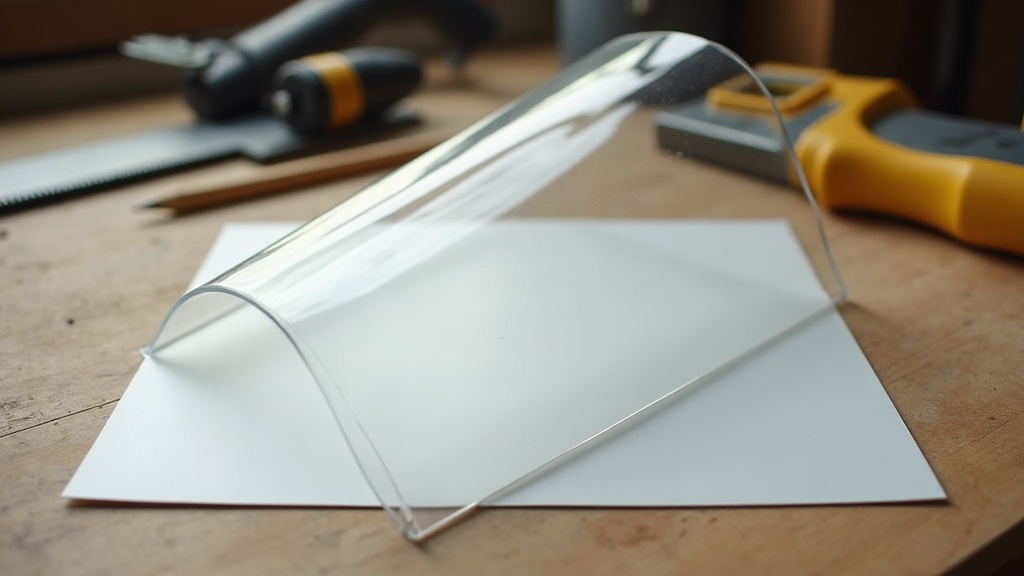
Can a heat gun bend or shape plastic?
Yes, within reason. Acrylic sheet, PVC edging, and some rigid plastics soften enough under even, moving heat to bend along a straight line or reshape gently, which is useful for small repairs, jigs, and craft projects.
This is not the same as reshaping structural plastic pipework or anything connected to a gas or pressurised system — that kind of plumbing and gas work belongs with a licensed professional, not a home heat-gun project. For hobby-scale acrylic or trim work, keep the nozzle moving, support the plastic so it doesn’t sag unevenly, and let it cool fully before handling.
Can a heat gun loosen stuck screws, bolts, or rusted parts?
Often, yes. Heat applied to a rusted nut or a stuck screw head causes the metal to expand slightly, which can break the grip of rust or old thread-locking compound enough for a wrench or driver to turn it.
A few practical limits matter here:
- Nearby plastic, rubber seals, paint, or wiring can scorch or melt before the metal itself gets hot enough — check what’s around the fastener first.
- Fuel lines, fuel tanks, and anything near flammable residue are not a heat-gun job.
- Let hot metal cool before touching it directly; a heat gun can leave metal hot well after the airflow stops.
Can a heat gun thaw frozen pipes?
It can help thaw an exposed, accessible section of pipe carrying water, moving the airflow along the pipe rather than holding it on one spot, which avoids sudden pressure building in a fully blocked, fully sealed section.
This only applies to visible domestic water pipework you can reach safely — never near a gas line or gas fitting, never inside a wall cavity where you can’t see what’s actually there, and never as a way to avoid calling a plumber for anything that looks structural or is behind fixed pipework. If there’s any doubt about what a pipe carries or where it runs, that’s a job for a licensed tradesperson, not a guess with a heat gun.
What about drying, curing, or reviving finishes?
A heat gun can gently speed the drying of wood filler, wax, and some adhesives, and it can help re-flow candle wax, crayon marks, or old wax finishes so they lift more easily from a surface.
Manufacturer instructions for fillers, epoxies, and finishes usually specify whether extra heat is even appropriate — some cure chemically and gain nothing from warm air, while others do benefit from a gentle assist. The product’s own label and data sheet outrank any general shortcut here.
What PPE does heat-gun work actually need?
Heat guns don’t throw debris the way a grinder or saw does, but they do throw genuine burn risk and, with some materials, fumes worth taking seriously.
- Eye protection for any job involving softened adhesive, melting plastic, or scraping — softened material can spatter, and old finishes can flake.
- Respiratory protection and ventilation when heating old paint, aged vinyl, certain adhesives, or plastics — heating these materials can release fumes that are unpleasant or worse to breathe, especially in an enclosed space.
- Heat-resistant surface awareness — a heat gun’s nozzle and the surfaces it’s been aimed at stay hot after the trigger is released; a stable, heatproof rest for the tool between passes matters as much as gloves.
The safety and PPE section covers how to match protection to a specific job rather than reaching for one generic answer.
How is a heat gun different from a hair dryer or a torch?
A hair dryer moves air at a much lower temperature and isn’t built for sustained close-range use on materials — it will struggle or fail on anything a heat gun handles easily. A torch uses an open flame and burns fuel, which brings in combustion, ventilation, and fire-risk considerations that a heat gun’s electric hot-air stream doesn’t carry in the same way.
That difference is exactly why a heat gun suits jobs like shrink tubing and adhesive softening so well: enough heat to do the job, without an open flame in the mix. For comparisons between other tool types that get confused with each other, the comparisons section works through the differences plainly.
What should you compare when choosing a heat gun?
The differences that actually matter for a home workshop are fewer than the spec sheets suggest.
- Number of heat/airflow settings — more steps mean finer control between “too gentle” and “too aggressive” for delicate jobs like shrink tubing.
- Nozzle attachments included — wide fan nozzles for even shrinking, cone nozzles for pinpoint work, reflector nozzles for pipe work. What’s included changes what the tool can do out of the box.
- Corded versus cordless — a cordless heat gun trades unlimited runtime for portability, and its battery’s voltage and amp-hour rating shape how long it runs at higher heat settings; the guide to volts and amp-hours explains what those figures actually tell you.
- Stand and cool-down design — a stable rest and a cool-down mode (fan running with heat off) reduce the chance of the nozzle resting against something it shouldn’t.
None of these determine which model is “best” — they determine which tradeoffs suit the jobs you’ll actually use it for. The buying tools guide and the wider buying guides section go through how to weigh spec differences like these without chasing numbers that don’t change real performance. For how a heat gun sits alongside other tools in a general power tool collection, the power tools section is a useful next stop.
Find Tool publishes general information, not professional advice. Power tools, mains electricity and workshop machinery are genuinely dangerous, and the safe settings, guards and procedures differ between models — always follow the manual and the markings on the tool in front of you rather than a general guide. Never remove or defeat a guard or safety feature. Anything involving fixed wiring, gas or structural work belongs to a qualified tradesperson. Wear the eye, ear and respiratory protection the task calls for.
Related reading
What Is a Rotary Hammer, and When Hammer Drills Fall Short, What Is a Sacrificial Fence? A Plain-Language Guide, What Is an Electric Brake on a Saw, and How It Works.
Featured image: Photo by Jmdestefanis, source, CC BY-SA 3.0
