A random orbital sander is for finishing: smoothing surfaces, removing light scratches, and prepping wood or filler for paint or a clear coat without leaving marks. A belt sander is for stock removal: stripping old finish, flattening warped boards, or taking a door down fast. Most home workshops end up needing both, for different stages of the same job.
What does a random orbital sander actually do differently?
A random orbital sander spins its pad in a small circle while also moving it back and forth off-centre, so no single grain of abrasive travels the same path twice. That randomised motion is what stops it leaving the visible swirl marks that a simple circular sander produces.
Because the pattern is random, the sanding marks it does leave are hard to see even across the grain, which is why it is the standard choice before staining or clear-coating. It removes material slowly and evenly, which makes it forgiving of a slightly heavy hand but poor at fixing a badly out-of-flat surface quickly.
Most random orbital sanders take round hook-and-loop discs in a range of grits, and many have a dust port that connects to a shop vacuum or dust extractor. That connection matters more than it sounds, since sanding dust is fine and gets airborne easily.
What does a belt sander actually do differently?
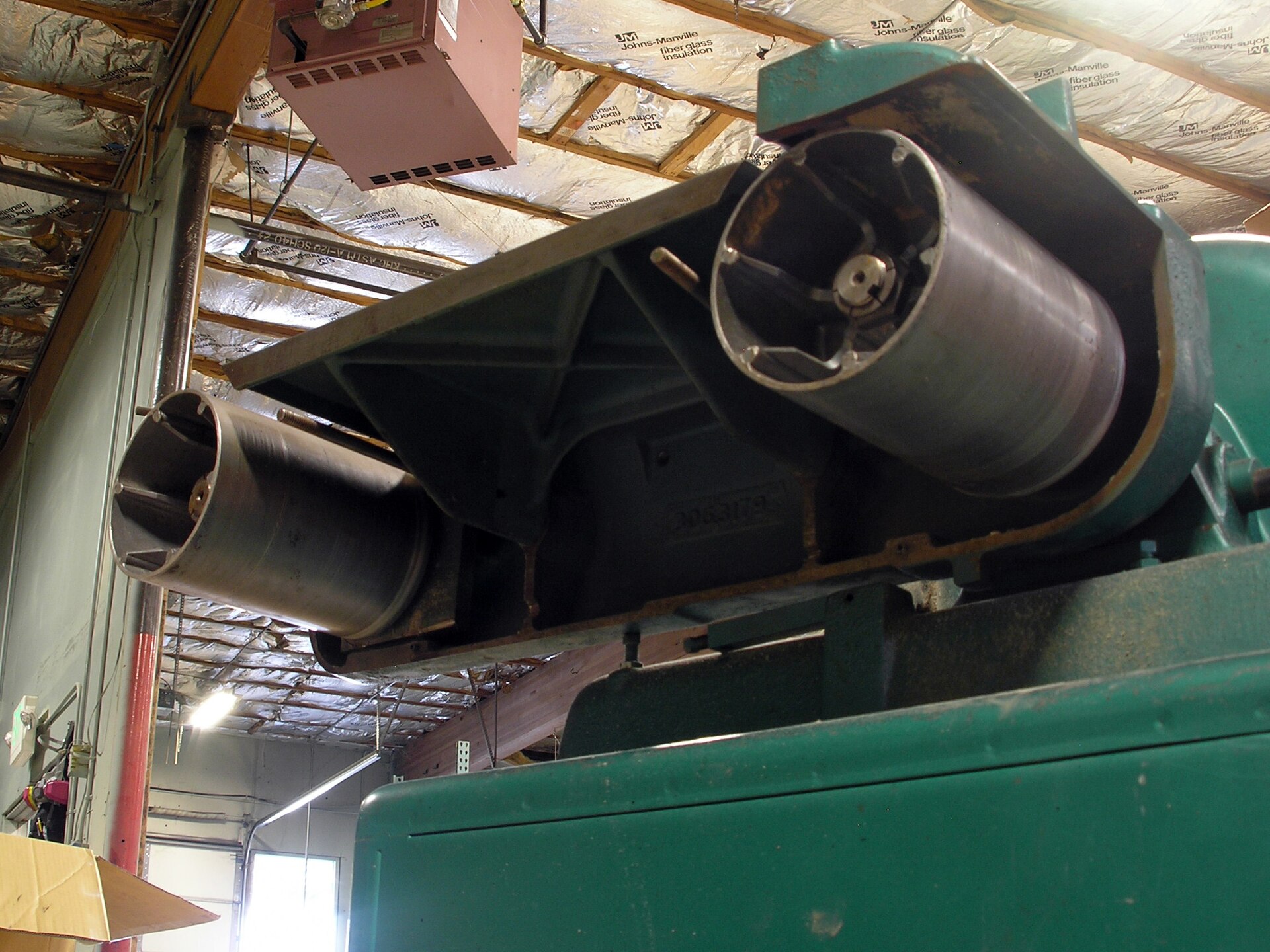
A belt sander runs a continuous loop of abrasive over two rollers, driven in one direction at speed. It removes material fast and in a straight line, which makes it good at levelling a rough or warped surface, stripping thick old paint or varnish, or knocking a door down to fit a frame.
That speed is also the risk. A belt sander can dig a visible trough into soft wood in a few seconds if it is allowed to sit in one spot, tipped onto an edge, or run across the grain on a finish piece. It rewards a steady, moving hand and a clear sense of where the belt is pointed at all times.
Belt width and length vary by model, and belts wear out and need replacing — check your machine’s manual for the belt size and tracking adjustment it takes, since these are model-specific and getting them wrong causes belts to run off the rollers.
Which one should be used first on a rough board?
On a genuinely rough or warped board, the belt sander goes first to remove twist, cup, or heavy surface damage and bring the board close to flat. The random orbital sander follows to remove the belt’s own marks and bring the surface to a finish-ready state.
Skipping straight to a random orbital sander on a badly out-of-flat board means a lot of time spent chasing a surface that never quite evens out, because the tool is designed to smooth, not to level.
Going the other way — using only a belt sander and skipping the finishing pass — usually leaves faint belt marks that only show up once a finish is applied and the light catches the surface at an angle.

Which one is better for furniture and fine finishing?
For furniture, cabinet doors, and anything that will be varnished, oiled, or painted with a visible sheen, the random orbital sander is the right tool for the final stages. Its swirl-free finish is what makes a stained tabletop look even rather than blotchy under raking light.
A belt sander is rarely used on finished furniture surfaces at all, except for aggressive stripping of old finish on a piece that will be heavily re-sanded afterwards anyway. Its aggressive, directional cut is the wrong tool for a surface that needs to look consistent.
Fine furniture work also tends to move through a sequence of grits on the random orbital sander, from coarser to finer, rather than jumping straight to a fine grit — each step removes the scratch pattern left by the one before it.
Which one is better for floors, decking, and doors?
Belt sanders (and larger floor sanders, which work on the same principle) are the standard tool for levelling floorboards, decking, or a door that needs material removed to fit an opening. The job is about removing enough wood to correct a real physical problem, not about achieving a swirl-free finish at that stage.
Once the levelling is done, a random orbital sander (or a floor edger with a similar random pattern) usually finishes the surface before any stain or sealant goes on, for the same reason it finishes furniture: it hides the sanding itself.
Decking sees a mix of both, depending on condition — a belt sander for boards with cupping or old finish that needs stripping back hard, a random orbital sander for boards that just need a light refresh between coats.
Do they need different dust extraction?
Both throw fine dust, but a belt sander throws it faster and in larger volume because it removes more material per pass. Sanding dust from any species is a respiratory irritant, and dust from MDF and some hardwoods carries additional concerns that are worth understanding before working with either regularly — see why MDF dust is treated differently from softwood dust.
A dust mask is not the same thing as a respirator, and the right choice depends on what is being sanded and for how long — the difference is explained in dust mask vs respirator: what’s the real difference, and what an FFP or N95 rating actually promises is covered in what does an FFP or N95 rating actually cover.
A dust extractor connected to the tool captures dust before it becomes airborne, which is a meaningfully different job from a shop vacuum simply cleaning up afterwards — see the safety and PPE archive for more on dust and noise protection generally.
What PPE does sanding actually need?
Eye protection matters with a belt sander in particular, since a snapped or slipping belt can throw debris, and both tools kick up dust that should not go in the eyes during extended sanding sessions.
Hearing protection is worth using for any sustained sanding session — both tools run long enough at a loud enough level that hearing protection is worth having on hand rather than treated as optional. What noise level actually calls for it is explained in what noise level makes ear protection necessary.
A properly rated respirator or dust mask matters most when sanding for long stretches, sanding old paint of unknown composition, or working with MDF or hardwood dust — treat it as part of the job rather than an afterthought.
What should be compared before buying either one?
For a random orbital sander, pad size and whether it takes standard hook-and-loop discs affects how easily and cheaply abrasives can be replaced later. Dust collection quality varies noticeably between models and is worth comparing directly rather than assuming all ports perform the same.
For a belt sander, belt size determines what replacement belts cost and how easy they are to find locally, and a front handle or auxiliary grip that suits the user’s hand matters more in practice than headline power figures. What a tool’s weight changes in actual use over a long session is worth reading before choosing between a heavier, more stable machine and a lighter one — see what a tool’s weight actually changes in use.
Corded models remain common for both sander types because sanding sessions tend to run long, and battery life becomes a real limitation before the job is done — the trade-offs are covered in corded vs cordless: what actually decides it. Broader guidance on comparing specifications that matter against ones that are just marketing sits in which tool specifications are marketing, not useful and the wider buying tools hub.
Is one of them enough for a first workshop?
A random orbital sander covers more everyday jobs for most home workshops — furniture, small repairs, prepping for paint — and is usually the first one bought. A belt sander earns its place once flattening, stripping, or fitting jobs come up regularly enough to justify a second, more aggressive tool.
Anyone building a first toolkit from scratch may find it useful to see how a sander fits into a sensible buying order alongside other essentials, covered in what order should a first toolkit actually be bought in. For a one-off flattening job — a single door, a small batch of reclaimed boards — renting a belt sander can make more sense than buying, as discussed in what renting rather than buying makes sense for.
Both tools benefit from routine care between uses — clearing dust from vents, checking pads and belts for wear, and storing them somewhere dry. General maintenance habits that extend a power tool’s working life are covered in the tool care and maintenance archive, and broader background on how sanders and other power tools work sits in the tool guide hub.
Find Tool publishes general information, not professional advice. Power tools, mains electricity and workshop machinery are genuinely dangerous, and the safe settings, guards and procedures differ between models — always follow the manual and the markings on the tool in front of you rather than a general guide. Never remove or defeat a guard or safety feature. Anything involving fixed wiring, gas or structural work belongs to a qualified tradesperson. Wear the eye, ear and respiratory protection the task calls for.
Featured image: Photo by simonov, source, CC BY-SA 2.0