Outside a woodshop, a bandsaw is most often a metal-cutting machine — used in garages, fabrication shops and maintenance workshops to cut steel bar, pipe, angle and tube to length. Butchers and food processors use a different style of bandsaw entirely, and the same continuous-loop-blade principle also works on plastics, foam, cork and rubber.
What is a bandsaw actually doing, regardless of the material?
A bandsaw drives a continuous loop of toothed blade around two or three wheels, so the cutting edge moves in one direction at a steady, constant speed. That’s different from a reciprocating or circular saw, where the blade stops and reverses, or spins as one solid disc. The steady, narrow blade is what lets a bandsaw follow curves, cut thick sections cleanly, and run with relatively little vibration compared to other saws doing a similar job.
That basic mechanism doesn’t care whether the material is oak, mild steel, PVC pipe or a beef shank. What changes between applications is the blade’s tooth geometry, the band speed, and how the machine is built to hold and feed the material — not the underlying idea.
How is a metal-cutting bandsaw different from a woodworking one?
Metal-cutting bandsaws run much slower and use blades with finer, harder teeth designed to shear metal rather than tear through fibrous wood grain. Many are built horizontally, with the blade lowering onto stock clamped in a vice, rather than vertically with the workpiece pushed by hand.
A woodworking bandsaw pushes a wide, coarse-toothed blade through timber at relatively high speed, because wood cuts easily and the priority is often a smooth curved cut. A metal-cutting bandsaw does the opposite: it runs slow, because cutting steel generates heat and blunts teeth quickly if the band moves too fast for the material and tooth pitch. Many horizontal metal bandsaws also feed themselves under gravity or a controlled hydraulic arm, lowering the blade onto clamped stock rather than relying on the operator to push material through by hand.
Because the two jobs are so different, a machine sold for one is rarely a sensible substitute for the other. Manufacturers publish blade speed ranges, tooth counts and clamping capacities specific to their own machine, and that documentation — not a general guide like this one — is what should decide blade choice and settings for a particular saw.
What jobs does a bandsaw do in automotive and fabrication work?
In garages and small fabrication shops, a bandsaw is typically used to cut steel bar, angle iron, box section, tube and pipe to length before welding, drilling or machining. It’s a rough-to-size tool that produces a cleaner, straighter cut than an angle grinder with a cut-off disc, and with far less sparking and noise.
Typical jobs include:
- Cutting exhaust pipe, bracket stock or box section to length before fabrication
- Trimming bolts, studs and threaded rod that are too long for a job
- Cutting round bar or flat stock down for custom brackets, jigs and repair parts
- Sizing aluminium extrusion for enclosures, guards or fixtures
A bandsaw doesn’t replace a bench vice for holding work steady during filing, drilling or fitting — those are separate jobs with separate tools, and the two often sit side by side in the same workshop. Anyone setting up a small metalworking or automotive corner benefits from reading about what a bench vice is actually used for in automotive work, since holding stock securely is what makes any subsequent cutting or filing safe and accurate.
Where do butchers and food businesses use bandsaws?
Food-industry bandsaws are purpose-built machines used to portion meat and bone into cuts, using blades and guarding designed for that specific, regulated environment. They are not the same equipment as a workshop bandsaw repurposed for food, and they fall under food-hygiene and food-safety regulation rather than general workshop guidance.
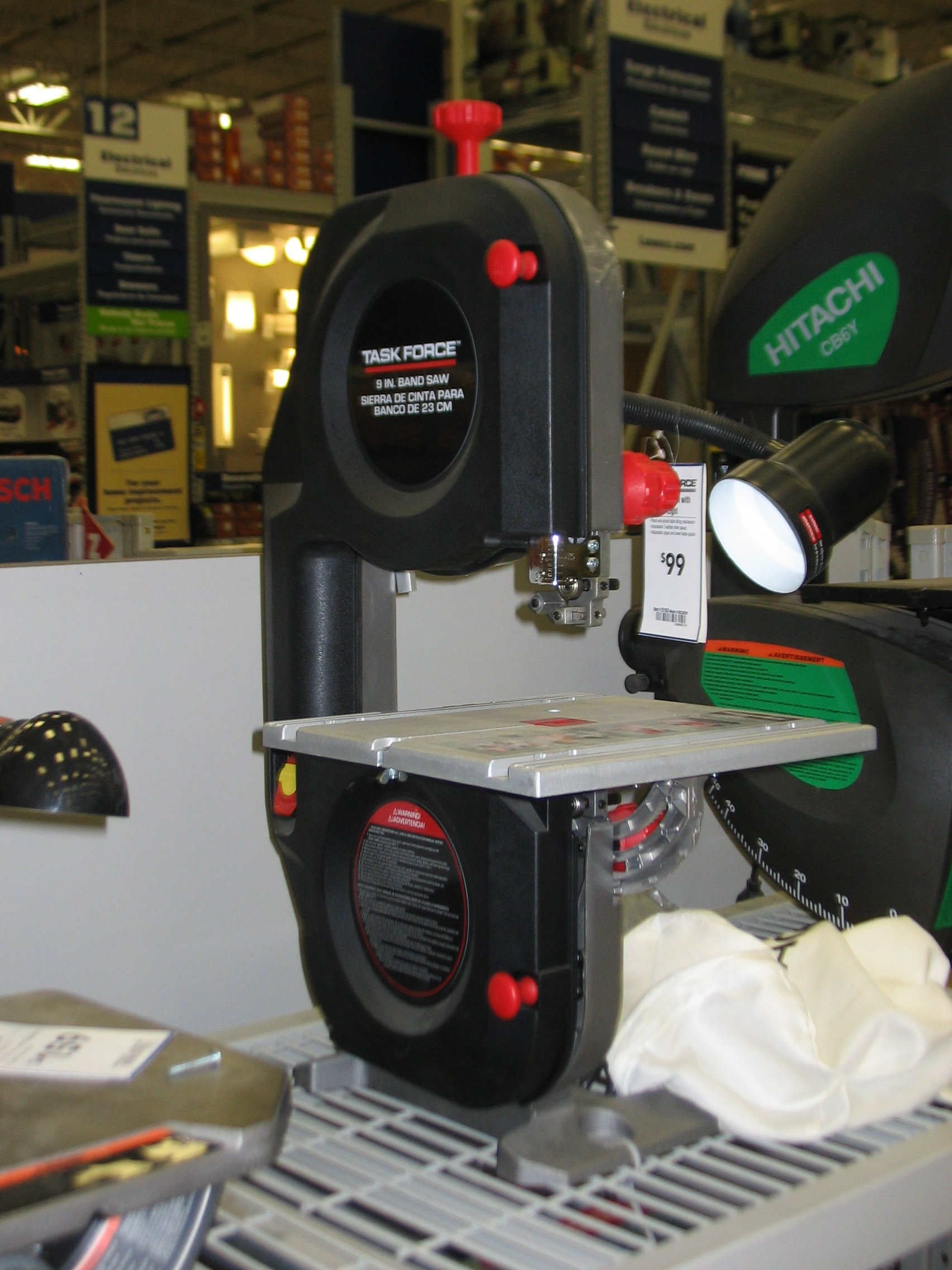
These machines look broadly similar to a vertical woodworking bandsaw — a loop blade running around wheels, a table, a fence — but everything about the build is different: the blade metallurgy resists moisture and repeated washdown, the frame and guarding meet food-hygiene standards, and the whole machine is designed to be stripped down and sanitised between uses. This is a genuinely separate category of equipment, run by trained operators under food-safety rules, and it’s mentioned here only to explain why a domestic or hobby bandsaw should never be treated as suitable for cutting meat, bone or anything destined for a plate.

Can a bandsaw cut plastic, foam or other soft materials?
Yes — bandsaws are commonly used on acrylic, PVC, dense foam, cork, rubber and similar materials, provided the blade’s tooth count and the feed speed suit the material. Soft or brittle materials often need a different tooth pitch than either wood or metal to avoid melting, chipping or grabbing.
Plastics like acrylic and PVC can melt at the cut edge if the blade runs too fast or the teeth are too fine for the thickness, which then causes the blade to bind and the material to grab. Dense foam and cork, by contrast, usually cut cleanly with a fairly coarse blade at moderate speed, similar to wood. Model-making, sign-making, packaging and insulation work all use bandsaws for these materials, often on the same vertical-style saw used for wood, simply with a different blade fitted for the job. Whatever the material, the blade choice and feed rate that suit a specific saw are set out in that machine’s own manual — not guessed from a general rule of thumb.
What blade choice actually changes across these materials?
Blade choice changes tooth pitch, tooth shape and blade material, all of which affect how cleanly a given material cuts and how much heat builds up at the cutting edge. Matching the blade to the material is one of the biggest factors in getting a clean cut and a blade that lasts.
Broadly:
- Coarser teeth cut faster through soft, thick material but leave a rougher edge
- Finer teeth give a smoother cut and suit thin or hard material, but clog more easily in soft material
- Bimetal or carbide-tipped blades are made for the abrasion and heat of cutting metal
- Skip-tooth or hook-tooth patterns are common on wood and thick plastics, where fast chip clearance matters
None of this replaces the manufacturer’s own blade and speed recommendations for a specific machine. A saw’s manual and its markings are written for that exact combination of motor, wheel diameter and blade tension range, and they outrank any general description of “what usually works.”
What PPE does bandsaw work need?
Bandsaw work throws off chips, swarf and fine dust depending on the material, and running a metal-cutting bandsaw is loud enough over time to need hearing protection. The specific PPE needed depends heavily on what’s being cut.
- Eye protection is needed whenever material is being cut, since metal swarf, plastic chips and wood dust are all thrown from the blade and table.
- Hearing protection matters for any extended session on a metal-cutting bandsaw or a shop running for long stretches, since sustained machine noise adds up over a working day.
- Respiratory protection becomes important when cutting fine dust-generating materials — MDF, hardwood, and especially anything containing silica such as certain composite or stone-backed materials. Fine metal swarf and plastic dust also warrant a properly fitted mask rather than none at all.
- Snug-fitting clothing and no loose sleeves or gloves near the moving blade, since a rotating band can catch loose fabric in the same way any other moving-blade machine can.
Guards, blade covers and any interlocks fitted to a bandsaw are there because the blade is exposed above and below the table during a cut; they should stay in place and adjusted to the workpiece rather than removed or bypassed for convenience. The Safety & PPE section covers PPE selection for dust, noise and eye hazards in more depth, and a shop vacuum won’t substitute for proper capture on fine or hazardous dust — the difference is explained in shop vacuum vs dust extractor: what changes for fine dust.
Is a bandsaw the right tool, or is something else better?
A bandsaw is the right choice for straight cuts through thick or dense stock and for curved cuts in sheet material, but a jigsaw, angle grinder or hacksaw may suit a single quick cut better, especially where the workpiece can’t be brought to a stationary machine. The deciding factors are the material’s thickness, whether the cut needs to be a curve, and whether the work is portable or fixed to a bench.
For curved cuts specifically, the trade-offs between a bandsaw and a handheld jigsaw are worth understanding before buying either: jigsaw vs bandsaw for curves: what changes covers where each tool actually wins. For a broader look at how bandsaws and other power tools work mechanically, the tool guide hub is a useful starting point, and anyone comparing bandsaw types before buying should look at the buying guide hub for what specifications are worth weighing against price. Readers working mainly in a garage or fabrication setting may also find the automotive category useful for related tools and techniques that come up alongside metal-cutting bandsaw work.
Whatever the application, the manufacturer’s manual for a specific bandsaw remains the final word on blade selection, speed settings and clamping capacity — this article explains what those choices affect, not what number to dial in.
Find Tool publishes general information, not professional advice. Power tools, mains electricity and workshop machinery are genuinely dangerous, and the safe settings, guards and procedures differ between models — always follow the manual and the markings on the tool in front of you rather than a general guide. Never remove or defeat a guard or safety feature. Anything involving fixed wiring, gas or structural work belongs to a qualified tradesperson. Wear the eye, ear and respiratory protection the task calls for.
Featured image: Photo by Jomegat, source, CC BY-SA 3.0