A bench grinder removes metal fast to reshape a damaged or badly worn edge, or to reset a bevel angle. A sharpening stone removes metal slowly and precisely to put a fine, controlled edge on a tool that is already close to right. Most sharpening routines use both — grinder for shaping, stone for finishing.
What is a bench grinder actually for?
A bench grinder is for reshaping metal, not for the final edge. Its spinning abrasive wheel removes material quickly, which makes it the right tool for restoring a chipped or rounded-over bevel, correcting a badly skewed edge, or resetting the whole angle on a tool that has been ground back too many times by hand.
That speed is also its limitation. A bench grinder generates heat quickly at the edge, and heat is the enemy of a hardened tool. Push too hard, hold a chisel or plane iron against the wheel too long in one spot, and the temper can be drawn right out of the steel, leaving a soft, blue-tinted edge that will not hold up in use. This is one reason a grinder is best treated as a reshaping station, used briefly and with a light touch, rather than the place where the final cutting edge is created.
Bench grinders are also the standard tool for jobs stones cannot touch: reshaping the point on a twist drill bit, dressing a lawnmower blade, or knocking a burr off a badly damaged edge before it ever sees a stone. For background on why a drill bit stops cutting cleanly in the first place, see why do drill bits stop cutting.
What is a sharpening stone actually for?
A sharpening stone is for producing and maintaining a fine, controlled cutting edge. Stones remove metal slowly, under hand control, which is exactly what is needed to put a consistent bevel and a crisp edge on a chisel, plane iron, knife or gouge without overheating the steel or taking off more metal than necessary.
Because the process is slow and low-heat, a stone lets the user feel what is happening at the edge — where pressure is landing, whether the bevel is flat, whether a wire edge (burr) has formed along the far side. That feedback is very hard to get from a spinning wheel. It is also why stones are the standard tool for routine touch-ups between full re-grinds: a few minutes on a stone can bring a slightly dulled edge back to sharp long before it needs reshaping.
Grit is the main variable that decides what a stone can do at any given stage — a coarse stone shapes, a fine stone polishes. For a full explanation of how grit numbers translate into cutting behaviour, see how does a sharpening stone’s grit actually work.
Is sharpening the same as honing?
No. Sharpening generally refers to creating or restoring the bevel and edge geometry, while honing refers to the fine, final refinement of that edge — often on a much finer stone or a strop. The two terms get used loosely, but the distinction matters when deciding what tool a job actually needs.
A bench grinder sharpens in the broad sense: it establishes or corrects the bevel. A fine stone, and often a leather strop afterwards, hones that bevel into a genuinely keen edge. The full breakdown of where one stage ends and the other begins is covered in honing vs sharpening: what’s the difference, and the role of a strop specifically is explained in what is a strop and what does it actually do.
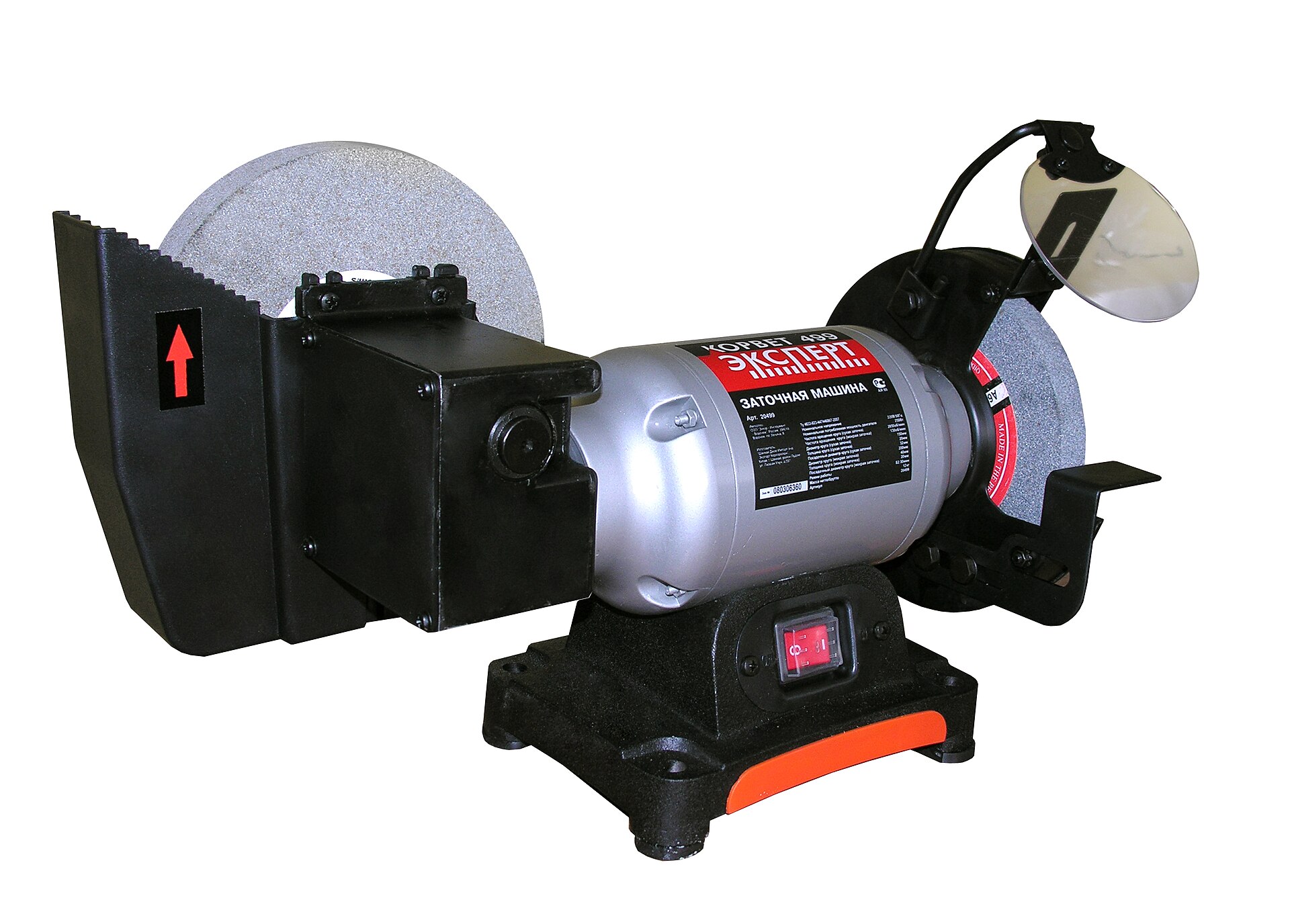

Why do woodworkers use both a grinder and stones?
Because each one solves a different stage of the same job. A chisel that has been dropped, chipped, or ground down to an uneven bevel over years of stone-only touch-ups needs metal removed quickly and evenly — a job for the grinder. Once the bevel is flat and true again, the stones take over to bring that bevel to a working edge.
Used this way, the grinder is an occasional, corrective tool and the stones are the everyday maintenance tool. A well-kept edge tool might go years between visits to the grinder while being touched up on stones regularly. The bevel angle itself is not arbitrary — it is chosen for the job the tool does, and understanding why it matters helps explain why reshaping it on a grinder is not something to do casually. See what is a chisel’s bevel angle for for more on that trade-off.
Which jobs genuinely need a grinder?
- Restoring a chipped or badly rounded bevel on a chisel, plane iron or gouge
- Correcting an edge that has drifted out of square or developed an uneven angle
- Reshaping the cutting geometry on a twist drill bit
- Removing significant damage — nicks, rust pitting, or a badly mangled edge — before fine sharpening begins
- Dressing edges on garden and lawn tools where a precise fine edge is less important than a serviceable one
In every case, the grinder does the rough work, and something finer finishes the job.
Which jobs are better left to stones alone?
- Routine touch-ups on a chisel or plane iron that is already sharp but has lost its keenness
- Fine woodworking edges where the last few thousandths of the bevel decide how cleanly the tool cuts
- Kitchen and pocket knives, where heat control and a consistent angle matter more than speed
- Any tool where the steel is thin, small, or easily overheated
A stone-only approach takes longer per session but gives far more control, which is exactly what these jobs need.
What PPE does bench grinder work actually need?
Eye protection is non-negotiable at a bench grinder. The wheel throws sparks and fine metal particles directly toward the face, and a single stray fragment can cause serious eye injury in an instant. Safety glasses rated for impact, not ordinary spectacles, are the minimum. What that rating actually covers is explained in what does an eye protection rating actually mean.
Hearing protection matters too if grinding sessions run for more than a few short bursts, since the motor and wheel noise is sustained rather than momentary. The point at which noise becomes worth protecting against is covered in what noise level makes ear protection necessary.
A bench grinder is a rotating tool, and loose sleeves, dangling gloves, or a hanging drawstring can catch on the wheel in a way that is very hard to release once it happens. This is worth understanding before standing at any grinder for the first time — see why loose sleeves and gloves matter near rotating tools. Fitted, close-cutting work gloves and no dangling cuffs are the safer choice, and any specific guarding or rest adjustments on a particular grinder should follow that machine’s manual rather than general habit.
Sharpening stones carry far less risk — no spinning wheel, no sparks — but wet stones and metal filings still make for a slippery, gritty bench, so a clear working area and a stable stone holder are worth setting up properly rather than balancing a stone on a folded rag.
How should a home workshop set this up?
Most home workshops do not need a dedicated grinding station and a full stone collection from day one. A sensible starting point is one or two stones covering a coarse and a fine grit, used for regular maintenance, with a bench grinder added later once there are enough edge tools in circulation that occasional reshaping becomes a recurring need rather than a one-off.
Chisels are a good example of a tool that rewards this staged approach — a flat, true back is just as important to a clean edge as the bevel angle, and neither the grinder nor the stone can fix a poor edge on its own if the back has never been properly flattened. See why do chisels need a flat back for why that step gets skipped so often and what it costs when it does.
Storage and layout matter here too — stones that sit loose in a drawer chip and crack, and a grinder bolted to an unstable bench transmits vibration into every cut. Broader guidance on setting up a workshop so tools stay in good condition lives in the Tool Care & Maintenance archive, and general buying considerations for sharpening equipment and other workshop kit are covered in the buying guide hub.
So which one actually suits the job?
If the edge is damaged, badly rounded, or needs its whole bevel angle reset, that is a grinder job, done briefly and with a light touch to avoid overheating the steel. If the edge just needs to come back to sharp, or needs a final fine polish after grinding, that is a stone job. Most well-kept tools spend far more time on stones than at the wheel — the grinder is the occasional correction, not the everyday routine.
Related reading
how power tools, hand tools and measuring kit actually work, Hand Plane vs Electric Planer: What Does Each Do Better?, Jigsaw vs Bandsaw for Curves: What Actually Changes?, What to Check Before a Tool’s Warranty Runs Out
Find Tool publishes general information, not professional advice. Power tools, mains electricity and workshop machinery are genuinely dangerous, and the safe settings, guards and procedures differ between models — always follow the manual and the markings on the tool in front of you rather than a general guide. Never remove or defeat a guard or safety feature. Anything involving fixed wiring, gas or structural work belongs to a qualified tradesperson. Wear the eye, ear and respiratory protection the task calls for.
Featured image: Photo by Артём В., source, CC BY-SA 4.0