A drill spins a bit to bore holes or drive light screws. An impact driver adds rapid rotational hammer blows to drive long screws and bolts without stalling. A hammer drill adds forward-hitting blows to bore into brick, block and concrete. Each tool trades smooth control for extra force in a different direction.
What does a standard drill actually do?
A standard drill (often called a drill/driver) spins a chuck at a chosen speed and stops delivering torque through a clutch once resistance builds. It is built for control: drilling clean holes in wood, plastic and thin metal, and driving screws where you want to feel the tool stop rather than keep hammering.
Most have a keyless chuck that grips round-shank bits and hex driver bits, a two-speed gearbox (low speed/high torque for driving, higher speed for drilling), and an adjustable clutch numbered from low to high. The clutch is the part people misunderstand most: it is not a power setting, it is a slip point. Set it low and the chuck stops turning once a screw meets a set resistance, which is what stops you from stripping a screw head or sinking a fastener too deep in soft material.
A standard drill is the right tool when the job is mostly about placement and finish — pilot holes, shelf brackets, flat-pack furniture, small hinges — rather than raw driving force.
What does an impact driver do differently?
An impact driver holds the bit still under load, then delivers short bursts of rotational hammering when resistance rises, instead of stalling or twisting your wrist. That lets it drive long screws, lag bolts and deck fixings that would bog down a standard drill, with far less kickback felt at the handle.
Two things set it apart mechanically. First, the chuck is a quick-release hex collet, not a keyless chuck — it only accepts hex-shank driver bits, not round-shank drill bits. Second, there is no adjustable clutch. Torque control instead comes from trigger pressure and, on many models, a speed/power setting dial, so driving a fastener is more about technique and feel than a preset stopping point.
That lack of a clutch is exactly why an impact driver is a poor substitute for precision work. It excels at repetitive, high-torque fastening — decking, fencing, subfloor screws, bolts — where the goal is getting the fastener fully home quickly, not controlling exactly where it stops. For a closer look at how these two tools overlap and where people mix them up, see the comparison of a cordless drill vs driver.
What makes a hammer drill different from both?
A hammer drill looks like a standard drill but adds a hammer action that punches the bit forward and back, thousands of times a minute, while it spins. That combination of rotation and forward impact is what lets a masonry bit break up brick, block or concrete rather than just spinning uselessly against it.
The hammer action is usually a switch on the tool body, separate from the speed and clutch settings, and it can normally be turned off so the tool behaves like an ordinary drill for wood or metal. Many hammer drills also accept SDS-style bits with a locking shank rather than a conventional round-shank bit, which handle the repeated impact without slipping in the chuck.
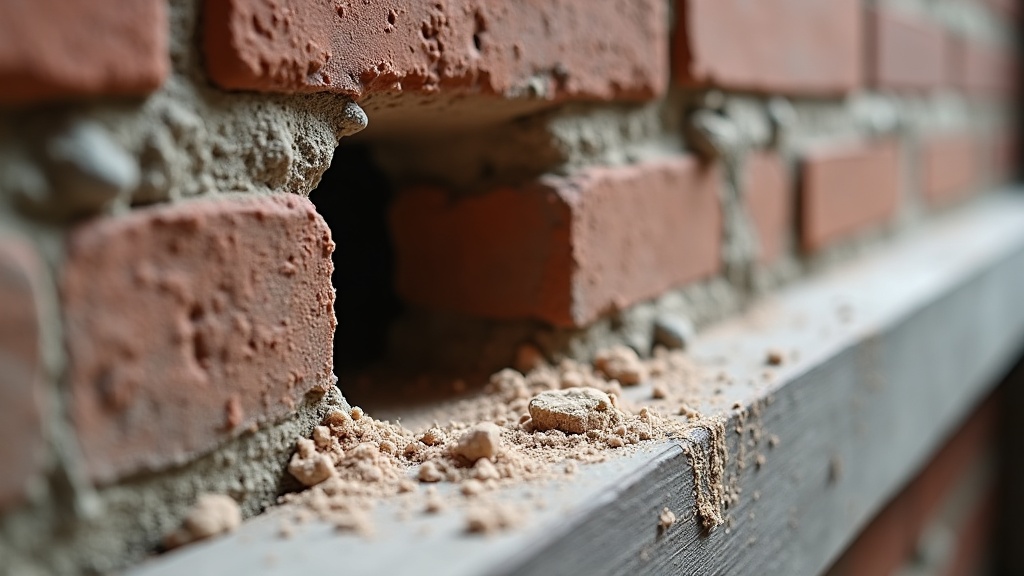
A hammer drill is worth reaching for specifically when the material is masonry: fixing a shelf bracket into brick, running a cable clip into block, or setting an anchor into a concrete slab. For wood, plastic or metal, the hammer action adds nothing useful and just adds vibration.
How do I tell which one I actually need for a job?
Match the tool to what the material is doing to the fastener or bit, not to what tool happens to be nearest. The three questions below cover most home jobs.
- Is this mainly about placing something accurately and stopping cleanly? Use a standard drill/driver.
- Is this a long screw, bolt or lag fastener going into dense timber, decking or framing, where a standard drill stalls or cams out? Use an impact driver.
- Is the material brick, block, stone or concrete? Use a hammer drill, ideally with the correct masonry bit for that material.
Jobs often need more than one tool in sequence — drilling a pilot hole with a standard drill, then driving the screw with an impact driver, for example. Owning one “do everything” tool is less useful in practice than understanding which action a job actually calls for.
Can one tool replace the others?
Not reliably. Each tool is built around one mechanical trade-off, and pushing it outside that role usually costs you accuracy, fastener condition, or wear on the tool. A rough substitute is sometimes fine for a single job; it is not a plan for a workshop.
An impact driver can bore a hole in soft wood with a hex-shank bit in a pinch, but the hammering action makes it hard to control depth and finish. A standard drill can drive a screw, but without enough torque it will stall, strip the screw head, or cam out of a driver bit before the fastener seats. A hammer drill with its hammer action left on will chew up wood and metal rather than cutting them cleanly, and used on delicate materials it can crack or split them.
If you are trying to decide which single tool to add to a modest home workshop first, it usually comes down to what you do most: general fixing and flat-pack work favours a standard drill/driver, deck and outdoor building work favours an impact driver, and anyone regularly fixing things into brick or block benefits most from a hammer drill.
What should I compare when buying one of these?
Focus on how the tool will actually be used rather than headline numbers. Voltage and battery platform matter more than a single torque figure, because a higher-voltage tool on a battery system you already own is often more useful than a marginally more powerful tool on an incompatible one.
- Weight and balance — a tool used overhead or one-handed for long stretches needs to be comfortable, not just powerful.
- Chuck or collet type — confirm whether it takes round-shank bits, hex-shank bits, or SDS-style bits, since that decides which accessories you can use.
- Battery platform — sharing batteries and chargers across tools from the same system usually matters more day-to-day than the exact spec sheet of any single tool.
- Hammer action on/off — if considering a hammer drill as a general-purpose tool too, check the hammer function switches off cleanly.
- Clutch range and settings — on a standard drill, a wider, clearly marked clutch range gives finer control over delicate driving work.
Manufacturer torque and speed figures are useful for comparing within the same brand’s line-up, but they are measured differently between manufacturers, so treat them as a rough guide rather than a precise promise. For a broader walkthrough of how to weigh up specifications like these, see the buying tools guide, and for how these mechanisms fit into the wider world of power and hand tools, the tool guide hub is a useful starting point.
What safety gear does each tool call for?
All three throw debris, and hearing exposure and dust exposure both depend on the material, not just the tool.
- Eye protection is needed for every one of these tools — drilling and driving both throw wood chips, metal filings or masonry grit back toward the face.
- Hearing protection matters most with a hammer drill in masonry mode, and for any sustained driving session, since the noise from repeated impacts adds up over time.
- Respiratory protection is essential when drilling into masonry, concrete or old painted surfaces — masonry and silica dust is a known respiratory hazard, and a proper dust mask or respirator rated for fine particulates is the minimum, not an optional extra. Drilling MDF or hardwood also produces fine dust worth capturing or masking against.
- Secure the workpiece with a clamp or vice rather than holding it by hand, particularly for masonry drilling where the bit can grab and the tool can kick back suddenly.
Always check the tool’s manual for the specific speed settings, bit types and clamping guidance it recommends — those details vary between models and the manual overrides any general advice here.
Does this apply the same way to corded and battery tools?
The mechanical differences between drill, impact driver and hammer drill are the same whether the tool is corded or cordless. Corded versions are more common in heavier hammer drills used for repeated concrete work, since sustained masonry drilling draws more power than a typical battery pack comfortably sustains over a long run.
Any corded tool depends on the electrical supply it is plugged into, and extending or altering that supply is not a task to improvise. If a job needs a dedicated circuit, an outdoor supply, or any change to a workshop’s wiring, that is work for a licensed electrician, not a DIY fix.
For more on how these three tools compare specifically in cordless form, and how drill and driver functions blur on some combi tools, see the dedicated cordless drill vs driver comparison, or browse the wider tool comparisons for other tool pairings worth understanding before buying.
Find Tool publishes general information, not professional advice. Power tools, mains electricity and workshop machinery are genuinely dangerous, and the safe settings, guards and procedures differ between models — always follow the manual and the markings on the tool in front of you rather than a general guide. Never remove or defeat a guard or safety feature. Anything involving fixed wiring, gas or structural work belongs to a qualified tradesperson. Wear the eye, ear and respiratory protection the task calls for.
Related reading
Claw Hammer vs Framing Hammer: What’s the Difference?, What Is a Chalk Line, and Where Does It Beat a Laser?.
Featured image: Photo by Charles & Hudson, source, CC BY-SA 2.0
.jpg)