Variable speed changes how fast the business end of the tool moves — the rotations per minute of a drill bit or grinder disc, or the strokes per minute of a jigsaw or sander. Slower speeds usually mean more control and less heat; faster speeds mean more material removed per second, at the cost of control and heat buildup.
That single dial or trigger sensitivity is doing more work than it looks like. It is the main way a tool adapts to different materials, different bit or blade sizes, and different stages of a job — from starting a screw dead straight to finishing a cut without tearing the surface.
What is actually changing when you turn the dial?
The dial changes the rotational or oscillating speed of the motor and, through it, of whatever is mounted on the tool — a drill bit, a sanding pad, a saw blade, a router cutter. Torque, heat generation and how forgiving the tool is of a wobble in your hand all shift along with it.
On many tools this is not a simple linear knob. Trigger-controlled variable speed lets you start slow and ramp up as the cut or hole gets going, then hold a chosen speed for the rest of the pass. A separate speed-range dial (found on some drills and jigsaws) sets a ceiling, and the trigger still controls how much of that range you’re using at any moment.
Why does speed matter for drilling and driving?
Speed matters because it controls how much heat builds up at the bit tip and how much control you have when starting a hole or a screw. Lower speed for starting and for large or hard-material bits; higher speed for small bits in soft material once the hole is started.
A twist bit spinning too fast in metal or hardwood can overheat, which dulls the cutting edges and can discolour the material at the hole. Too slow, and the bit can grab or stall, twisting the tool in your hand rather than cutting cleanly. The right speed for a given bit diameter and material is a balance the manufacturer has already worked out — it’s why bit packaging and drill manuals often give a starting point rather than leaving it to guesswork.
For driving screws, low speed at the start keeps the driver bit seated in the screw head instead of camming out and chewing up the recess, and gives you time to correct the angle before the screw is committed. Speed only needs to increase once the screw is running true. Comparing a drill’s role here against a dedicated driver is covered in more depth in cordless drill vs driver: what’s the real difference, and the wider distinction between drills, drivers and hammer drills is in drill vs impact driver vs hammer drill.
Why does a router or trim router need different speeds for different bits?
A router needs different speeds because a large-diameter cutter moves much faster at its outer edge than a small one turning at the same RPM. Bigger bits generally need lower speeds to keep that edge speed, and the resulting heat and vibration, within a safe and manageable range.
This is one of the clearest places where the manual is not optional reading. Router manufacturers publish speed charts tied to bit diameter, and cutter packaging often states a maximum RPM. Running an oversized bit at a speed meant for a small one increases vibration, chip-out at the edge of the cut, and the load on the collet and bearings. The difference between a full-size router and a compact trim router — including how each handles speed and bit size — is explored in router vs trim router: what’s actually different.
Does speed change the finish on a sander?
Yes — speed and orbit pattern together affect how aggressively a sander removes material and how visible the scratch pattern is. Higher speed cuts faster and can leave coarser marks; lower speed gives more control for delicate work or for the final passes before finishing.
Random orbital sanders combine a spinning pad with an off-centre wobble specifically to blur the scratch pattern, and variable speed on these tools is mostly about matching aggression to the grit loaded and the stage of the job — heavier stock removal with coarse grit at higher speed, then backing off as the grit gets finer. More on why this pattern is the default choice for most sanding work is in what is a random orbital sander, and why default.
What does speed do on an angle grinder?
On an angle grinder, speed sets how fast the disc’s edge is moving, which drives how much material it removes per second and how much heat is generated at the cut or grind point. Disc type and material both dictate what speed range is appropriate.
Angle grinders are also one of the areas where matching disc rating to tool speed is a safety matter, not just a finish preference — a disc rated below the tool’s maximum speed is not something to guess around. The manual and the marking printed on the disc itself are the references here, not habit. For a broader look at what this tool actually does across cutting, grinding and finishing, see what does an angle grinder actually do.
Does speed matter on saws — jigsaws, circular saws, mitre saws?
On saws, speed changes how the blade engages the material rather than just how fast it cuts. Some materials, especially thin metal, plastic, or laminate, need a slower blade speed to avoid melting, chipping or grabbing, while general wood cutting typically runs faster.
A jigsaw’s variable speed dial, combined with orbital action settings where fitted, changes how aggressively the blade is pushed into the material on the upstroke — useful detail covered in what does a jigsaw do well, and where does it struggle. Most circular saws and mitre saws run at a fixed speed rather than variable, with control coming instead from feed rate and blade choice — see what is a circular saw for, and where does it fail and what is a mitre saw, and what does sliding add for how those tools are actually controlled.
Is variable speed the same as soft-start?
No. Variable speed lets the operator choose and hold a speed; soft-start is a separate feature that ramps the motor up gradually from zero each time the trigger is pulled, mainly to reduce the jolt of sudden torque, particularly on larger tools like angle grinders and rotary hammers.
A tool can have one feature without the other. Soft-start matters most for tools that deliver a strong initial twist — it’s part of what makes a heavier grinder or hammer manageable to start one-handed rather than something that kicks in your grip the instant the trigger closes.
Does brushless motor design change how variable speed behaves?
Brushless motors tend to hold a chosen speed more consistently under load than brushed motors, because the electronic controller manages the motor directly rather than relying on mechanical brush contact. The dial still sets the target speed; the motor design affects how well the tool sticks to it.
This is a genuine practical difference when a cut bogs down partway through — a brushless tool is generally better at maintaining the set speed rather than sagging. The mechanics behind this are explained in what does brushless actually mean in a power tool motor.
How should a beginner actually use the speed dial?
Start low, especially when beginning a hole, a screw, or a cut, and use the manual’s guidance — or a bit or blade’s printed rating — to set an upper limit for the material and accessory in use. Increase speed only once the tool is engaged and tracking cleanly.
- Match speed to the accessory size and material, not to how fast the job feels like it should go.
- Treat low speed as the default for starting a hole, a screw or an edge, then adjust up.
- Watch for heat, smoke, discolouration or a burning smell — all signs the speed is too high for the bit and material combination.
- Never assume a setting from one job carries over to a different material or a different-sized bit or disc.
What PPE does speed-related work call for?
Faster speeds generally throw more material, generate more dust, and run louder for longer, so PPE needs to match the setting in use, not just the tool. Eye protection belongs on for any cutting, grinding, drilling or sanding task, without exception.
Sustained work at higher speeds — grinding, routing, extended sanding — is loud enough for long enough that hearing protection matters, not just for a quick pass. Fine dust from sanding or cutting MDF, hardwood or masonry-adjacent materials calls for a proper respirator rated for the particle size involved, not a paper dust mask assumed to be enough. Guidance on matching PPE to the actual hazard, rather than a generic checklist, is covered in the safety and PPE section.
What should this mean when comparing tools to buy?
When comparing tools, look at whether variable speed is trigger-based, dial-based, or both, and whether the range suits the materials in mind — a tool with a wide, well-controlled low-speed range is more useful for delicate work than one boasting a high top speed alone. Also compare whether the tool holds its set speed under load, which is often more relevant day to day than the maximum number on the spec sheet.
Broader thinking on how to read a tool’s spec sheet without being swayed by numbers that don’t matter for a home workshop is in the buying tools guide hub, and the mechanics behind spec terms across drills, sanders, saws and grinders are unpacked in the tool guide hub. For side-by-side thinking on specific tool types, the comparisons archive and buying guides archive cover more ground, and the full range of tool categories sits in the power tools archive.
The one rule that covers all of it
Whatever the tool, the manual and the markings on the bit, blade or disc are the real authority on speed — not a general rule of thumb and not what worked on a different material last time. Variable speed exists precisely because one setting does not suit every job; using it well is mostly a matter of checking before assuming.
Find Tool publishes general information, not professional advice. Power tools, mains electricity and workshop machinery are genuinely dangerous, and the safe settings, guards and procedures differ between models — always follow the manual and the markings on the tool in front of you rather than a general guide. Never remove or defeat a guard or safety feature. Anything involving fixed wiring, gas or structural work belongs to a qualified tradesperson. Wear the eye, ear and respiratory protection the task calls for.
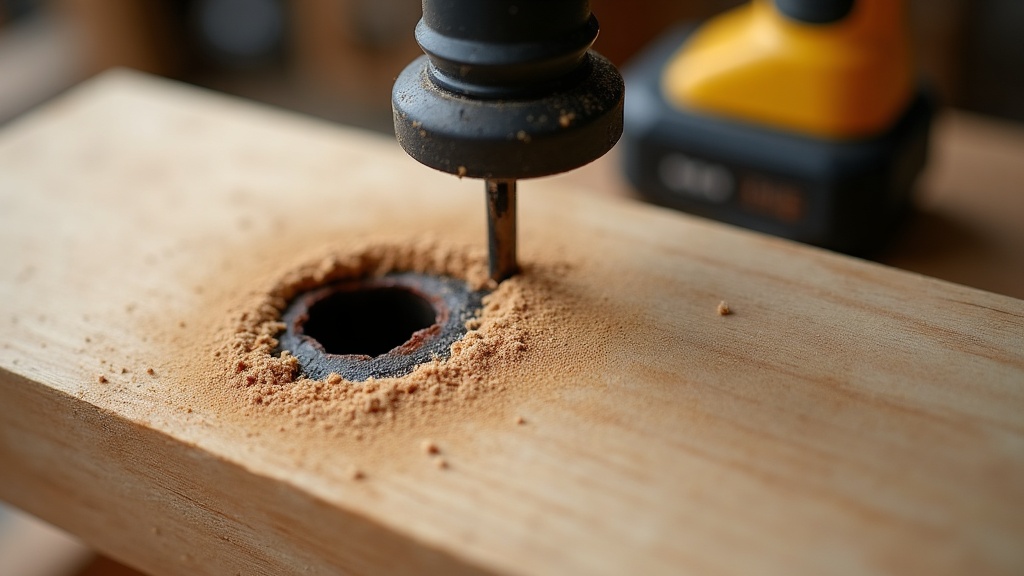
Featured image: Photo by Shixart1985, source, CC BY 2.0
