A featherboard is a spring-fingered jig that presses a workpiece firmly and consistently against a fence or table as it feeds through a cut. It keeps the stock tracking straight, stops it drifting or lifting, and lets you guide the wood from a position further from the blade.
What Does a Featherboard Actually Do?
A featherboard is a flat piece of wood or plastic with a row of thin, flexible fingers cut into one end at an angle. Those fingers flex when pushed against a workpiece, applying gentle, even pressure in one direction only. Because the fingers are angled, they let the wood slide forward through the cut but resist it moving backward.
That one-way pressure is the whole point. It holds the workpiece snug against the fence or the table so the cut stays consistent along its length, without you having to squeeze the wood by hand the entire way through.
Why Bother With One Instead of Just Holding the Wood?
Hand pressure is inconsistent. Grip tightens and loosens as your hand moves, and on a long or narrow piece it is easy to let the wood wander slightly away from the fence, which shows up as a wavy or uneven cut. A featherboard applies the same pressure at every point along the run.
The bigger reason is what it keeps you away from. On cuts like narrow rips, where the offcut ends up close to the blade, a featherboard lets you set the pressure point well back from the blade and guide the far end of the stock with a push stick instead of your fingers. Understanding what causes kickback makes it clear why steady, controlled feed pressure against the fence matters so much on cuts where the workpiece can twist or bind.
Where Do Featherboards Actually Get Used?
Featherboards show up most often on:
- Table saws, holding narrow rip cuts against the fence
- Router tables, holding an edge against the fence during profiling or edge-jointing passes
- Band saws, for resawing or ripping thin strips where the blade can wander without steady side pressure
In each case the job is the same: keep the workpiece in contact with a reference surface so the cut stays true, without the operator’s hand doing that work right next to the cutter.
Does a Featherboard Replace a Blade Guard or Riving Knife?
No. A featherboard is a feed-control aid, not a substitute for the machine’s built-in safety equipment. It does one job — steady pressure against a fence or table — and it does not stop the workpiece from contacting the blade or being thrown back if something goes wrong upstream of it.
Riving knives, blade guards and anti-kickback pawls are there to manage what happens at and immediately behind the blade, and a featherboard is used alongside them, not in place of them. If a particular cut seems to need the guard set aside to work, that is a sign to rethink the technique, use a different jig, or use a different tool for that cut rather than change how the guard is fitted. For more on how that hardware works together, see what a table saw’s riving knife is for.
How Do Featherboards Get Mounted to the Machine?
There are a few common mounting methods, and the right one depends on the machine and the cut:
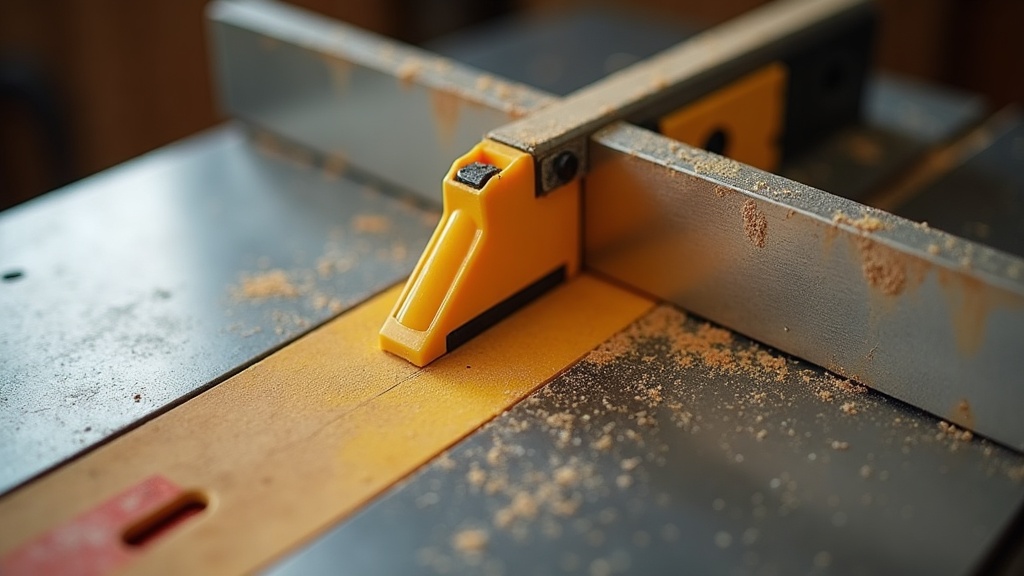
- Miter slot mounted: a bar on the underside of the featherboard slides into the saw’s miter slot and locks with a bolt, positioning the fingers against the workpiece from the side.
- Fence-clamped: the featherboard clamps directly to the top of the fence, useful for holding a workpiece down onto the table as well as sideways.
- Magnetic base: on cast-iron tables, a magnetic featherboard can be positioned almost anywhere without needing a slot, though it relies entirely on the strength and cleanliness of the magnetic contact.
Router tables and band saws typically use similar clamp-on or slot-mounted designs, scaled to the smaller table and fence.
How Do You Set One Up Safely?
A featherboard only helps if it is positioned and tensioned correctly:
- Set the fingers so they flex against the workpiece before the cut begins, not partway through, so pressure builds gradually rather than snapping suddenly onto the wood.
- Position it ahead of the blade, never alongside or behind it, so the fingers cannot contact a spinning blade or bit.
- Check that the angle of the fingers pushes the workpiece forward and against the fence, not into the blade.
- Re-check tension and position after changing workpiece thickness — a featherboard set for thick stock will not grip thin stock the same way.
Eye protection is worth wearing for any cut that throws off chips or dust, and hearing protection matters on any saw or router run of more than a few seconds. If the material is MDF, particleboard, or a hardwood known to produce fine dust, a proper dust mask or respirator is worth adding — see what fine dust actually is and why it matters more than sawdust. The safety and PPE section covers this in more depth for different machines and materials.
Store-Bought or Shop-Made?
Commercial featherboards are inexpensive, adjustable, and reusable across different workpiece widths, which makes them a reasonable first purchase for a table saw or router table. Shop-made versions cut from scrap plywood are common too, and many woodworkers keep several on hand sized for particular recurring jobs.
A shop-made featherboard is a good example of the broader idea covered in what a jig is and why people make their own — a simple, purpose-built aid that solves one repeatable problem better than doing the job freehand.
What Should You Compare When Choosing One?
A few practical differences are worth checking before buying:
- Mounting method: confirm it fits your machine’s miter slot width or fence profile before assuming compatibility.
- Finger material and flex: stiffer fingers hold thicker stock more firmly; more flexible fingers suit thin material without marking it.
- Adjustability: featherboards that pivot or slide let you fine-tune the angle and position for different cuts, rather than being fixed at one setting.
- Build quality of the locking mechanism: a mount that can shift under vibration defeats the purpose of steady pressure.
For a broader look at how to weigh specifications against real use rather than marketing claims, the buying tools guide covers the general approach, and the power tools section has more on the machines featherboards are typically paired with, including related accessories like the mitre gauge for crosscuts where a featherboard is not the right tool.
Find Tool publishes general information, not professional advice. Power tools, mains electricity and workshop machinery are genuinely dangerous, and the safe settings, guards and procedures differ between models — always follow the manual and the markings on the tool in front of you rather than a general guide. Never remove or defeat a guard or safety feature. Anything involving fixed wiring, gas or structural work belongs to a qualified tradesperson. Wear the eye, ear and respiratory protection the task calls for.
Related reading
The Tool Guide, What Is Silica Dust and Why Is It Regulated?.