A good workbench holds work still without fighting back, stays flat enough that measurements and glue-ups stay true, and doesn’t shift or bounce when you push, plane or hammer on it. That comes down to four things: mass, a flat top, solid work-holding, and a base that doesn’t rack.
None of that is about looks, and it’s rarely about price alone. A plain slab on four thick legs can outperform an expensive-looking bench with a wobbly base. The rest of this article breaks down what each of those four things actually means in a home workshop, and what’s worth comparing if you’re buying or building one.
What does a workbench need to do that an ordinary table doesn’t?
A table supports things. A workbench resists force in several directions at once — downward from hammering, sideways from planing or sawing, and twisting from clamped work being levered against. If the bench moves when the workpiece should move instead, every operation gets harder and less accurate.
That’s the core difference. A dining table has to hold a plate still. A workbench has to hold a chisel, plane or clamp still while you apply real force to the piece sitting on it — which is a much bigger structural ask than most furniture is built for.
How much does weight actually matter?
Mass matters more than most other single factors. A heavy bench absorbs the push of a hand plane or the tap of a mallet instead of sliding or bouncing. A light bench, even a well-built one, tends to creep across the floor under sustained lateral pressure.
- Solid timber tops and thick legs add useful weight without needing to be large.
- Some benches are deliberately anchored to a wall or floor, or loaded with sandbags or bricks in a lower shelf, specifically to add mass.
- A bench that’s bolted or screwed together rigidly behaves like a much heavier one than the same wood left loose-jointed.
Weight isn’t the only variable, but if a bench feels light enough to nudge with a knee, it will move under real work.
Why does a flat top matter so much?
A flat top matters because it’s the reference surface for everything measured or assembled on it. If the top has a twist or a hump, a square edge checked against it, a glue-up clamped flat to it, or a panel planed level on it will all inherit that error.
Checking flatness doesn’t need anything exotic — a straightedge or a reliable try square laid across the surface at a few points will show gaps and rocking. It’s worth learning to check this the same way you’d check a straightedge on any other reference surface; see what a try square is and how to check one for the method.
Solid wood tops move seasonally with humidity, which is one reason many benches use thick laminated strips rather than a single wide board — the movement of many narrow pieces partly cancels out. Understanding how timber responds to moisture is also why it’s worth reading up on what a moisture meter is telling you about timber before choosing benchtop stock.
What makes a vice actually useful, not just present?
A useful vice holds a workpiece rigidly, close to the bench surface, without marring it or letting it rack under pressure. Where it’s mounted, how wide it opens, and whether it has a quick-release mechanism all change how often it actually gets used.
A front vice mounted flush with the benchtop lets long boards be clamped on edge for planing. An end vice, often paired with bench dogs, clamps boards flat against the top for sawing, chiseling or sanding. Many workshops end up wanting both, because the two jobs — edge work and face work — come up constantly and aren’t interchangeable.
Jaw liners (cork, leather, or a sacrificial wood facing) protect finished surfaces from vice-jaw marks and are cheap to replace compared to gouging a good workpiece.
What are dog holes and holdfasts for?
Dog holes are round or square holes drilled through the benchtop that hold bench dogs or a holdfast, letting a workpiece be clamped flat to the surface without a vice at all. They’re what turns a flat top into a genuine work-holding system rather than just a flat surface.
Paired with an end vice, dogs let a board be pinched between a fixed dog and a moving vice jaw — useful for planing long edges or holding wide panels for sanding or scraping. A holdfast does a similar job from a single hole, pressing straight down onto the work, which is handy for holding something still while marking or chiseling. If you’re laying out repeat measurements across several dog-holed boards, a story stick can save re-measuring each one from scratch.
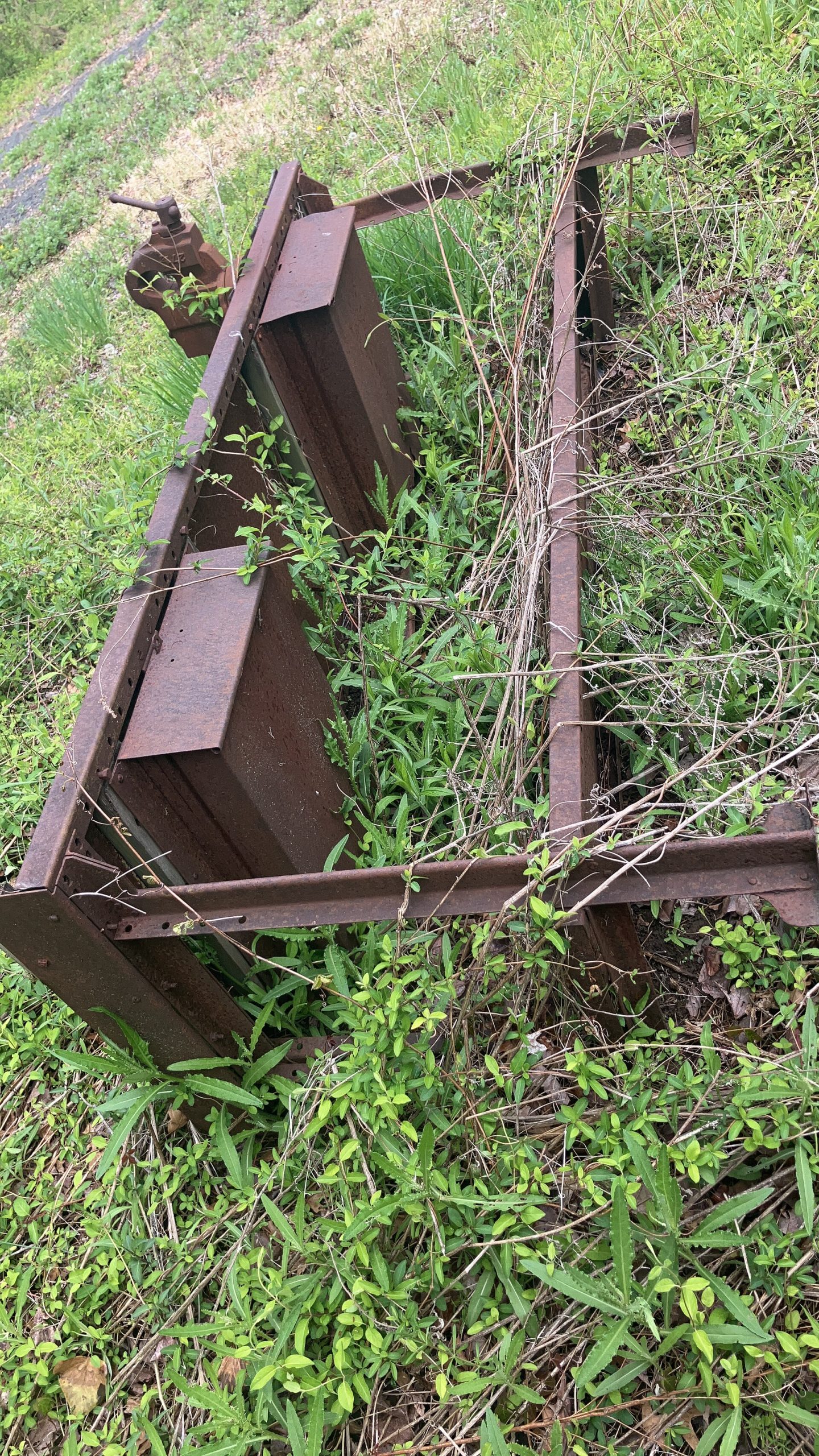
What height should a workbench actually be?
The right height depends on the task and the person, not a fixed number. Benches used mainly for hand planing tend to sit lower, so body weight can drive the plane forward. Benches used for fine chisel work, marking out or assembly are often set higher, closer to hip height, so the work is easier to see without stooping.
Rather than copying a figure from a book, it helps to stand at a bench-height surface with your arms relaxed and see where your knuckles or wrist naturally fall — that’s a starting point to adjust from, not a rule. Anyone building a bench from scratch can set legs to whatever height suits their own work and reach.
What should the top actually be made from?
Common choices are laminated hardwood strips, thick plywood, or MDF, sometimes as a sacrificial top over a more permanent base. Each trades off differently:
- Laminated hardwood is heavy, dense and dent-resistant, but expensive and needs periodic flattening as it moves with humidity.
- Thick plywood is more stable, cheaper, and easy to replace, but softer and more prone to denting under sustained hammering.
- MDF is flat and cheap, often used as a sacrificial skin that gets replaced when it’s chewed up, but it’s heavy to cut and produces very fine dust that needs a properly fitted dust mask or respirator when it’s sanded, drilled or cut — ordinary hardware-store dust masks are not rated for it.
Any of these can be planed, scraped or sanded flat again over time. A card scraper is a quiet, low-dust way to clean up a benchtop surface between major re-flattening jobs.
Does the base need to be as solid as the top?
Yes — a flat, heavy top on a flimsy base still racks and moves, because the base is what resists sideways and twisting force. Stretchers, aprons and diagonal bracing between legs are what stop a bench from swaying when it’s pushed rather than struck straight down.
Bolted or wedged mortise-and-tenon joints at the leg-to-apron connections tend to stay rigid far longer than butt joints held only by screws, because they resist the joint being levered open under lateral load. A bench that feels solid when pressed down but sways when pushed sideways has a top-heavy problem, not a mass problem — the fix is bracing the base, not adding weight to the top.
Does size matter more than features?
Size matters mainly in relation to the workshop and the work, not as a goal in itself. A bench too small to support a long board leaves it unsupported and prone to flexing or tipping mid-cut; a bench too large for the room becomes an obstacle that never gets walked around properly.
A smaller, well-built bench with a flat top, one good vice and a few dog holes will outperform a larger one that wobbles, has a twisted top, or crowds out space needed to actually move around the work. Matching the bench to the room and the typical size of project is usually more useful than chasing maximum surface area.
What should you actually compare when buying or building one?
Compare the things that affect stability and work-holding directly, rather than finish or styling. Worth checking or asking about:
- Total weight, and whether the base is designed to be anchored or weighted further.
- Top thickness and material, and whether it’s replaceable or sacrificial.
- Vice type, jaw width, and whether it’s a front vice, end vice, or both.
- Whether dog holes are included, and whether they match a holdfast or dog system you already own.
- Base joinery — bolted or wedged frames tend to stay rigid longer than screwed butt joints.
For a broader look at how to weigh up specifications like these across any tool or piece of equipment, the buying tools guide covers what actually drives cost versus what’s just marketing. The wider tool guide hub and hand tools archive are useful starting points for the tools that end up living on that bench day to day.
What PPE actually matters around a workbench?
Eye protection matters for any planing, chiseling or sanding done at the bench, since both hand tools and power sanders throw chips and dust. Hearing protection is worth it for any sustained power sanding or routing at the bench. A properly fitted dust mask or respirator matters most when cutting, drilling or sanding MDF, hardwood, or any manufactured board, since fine dust from these materials is a genuine long-term respiratory hazard, not just a nuisance. The safety and PPE archive covers how to match protection to the specific task rather than treating it as one generic checkbox.
Find Tool publishes general information, not professional advice. Power tools, mains electricity and workshop machinery are genuinely dangerous, and the safe settings, guards and procedures differ between models — always follow the manual and the markings on the tool in front of you rather than a general guide. Never remove or defeat a guard or safety feature. Anything involving fixed wiring, gas or structural work belongs to a qualified tradesperson. Wear the eye, ear and respiratory protection the task calls for.