A strimmer uses a spinning nylon line to tidy grass and light growth around edges and obstacles. A brushcutter is a heavier-duty version of the same idea, built to swing a metal blade through tough weeds, brambles and saplings. A lawn edger uses a fixed rotating blade to cut a clean vertical line between lawn and path or bed. They overlap in purpose but not in what they can safely cut.
What is the actual difference between a strimmer, a brushcutter and a lawn edger?
The difference comes down to the cutting head and how much force it is built to handle. A strimmer’s flexible nylon line flicks grass and soft weeds out of the way. A brushcutter swaps that line for a rigid metal blade and a stronger frame, so it can take on woody stems a strimmer would simply bounce off. A lawn edger is a different shape of tool entirely, designed to cut one straight line rather than clear an area.
All three sit in the same general category of powered garden cutting tools, alongside hedge trimmers and mowers, but each is matched to a different kind of growth and a different job in the garden.
What does a strimmer actually do that a mower can’t?
A strimmer reaches grass a mower cannot get to — around fence posts, tree trunks, walls and border edges — using a length of nylon line spinning fast enough to cut on contact. It is built for grass and soft-stemmed weeds, not for anything with real woody structure.
The line itself is the working part, and it is deliberately flexible. That flexibility is what lets it whip around obstacles without damaging bark or fence panels, and it is also why a strimmer struggles with anything tougher than grass — the line just deflects off a thick stem instead of cutting through it.
Most strimmers feed line automatically or with a bump-feed mechanism, and the cutting guard fitted above the head is there to stop flung debris and cut line coming back at the user. That guard should stay in place exactly as fitted; if a particular corner of the garden makes the guard feel awkward, that is a sign to change the approach — shorter passes, a different angle — rather than a reason to work without it.
What is a brushcutter for, and how is it different from a strimmer?
A brushcutter is built to cut through tougher growth than a strimmer can manage — brambles, thick weeds, young saplings and rough scrub — using a rigid metal or plastic blade instead of nylon line. It needs a stronger shaft, gearbox and harness because the loads involved are much higher than anything a strimmer sees.
Many machines are sold as combination tools, with interchangeable heads that let one power unit run either a line head or a blade attachment. The line head handles ordinary trimming, and the blade attachment is fitted for rougher clearance work. Swapping heads does not change the underlying rule: whichever head is fitted, the matching guard for that head stays on the machine, because the guard geometry is matched to what that particular attachment throws off during cutting.
Because a brushcutter blade is rigid and spinning at speed, contact with a hidden fence wire, a stone or a solid root can throw the whole tool back at the user. This is the main reason brushcutters are heavier, often carry a shoulder harness rather than a simple handle grip, and are generally used standing well braced rather than reaching or stretching.
What is a lawn edger actually cutting?
A lawn edger cuts one clean vertical line, typically between a lawn and a path, driveway or border, using a blade that runs edge-on rather than sweeping an area. It is a finishing tool for definition, not a general clearance tool.
Some edgers are dedicated machines built only for this job; others are an attachment or a rotated head on a strimmer or brushcutter, since the same motor can often drive either a horizontal cutting head or a vertical edging wheel. A standalone edger typically gives a straighter, more repeatable line because the depth and angle are fixed by the machine’s guide wheel rather than by hand control.
Edging is a lighter-duty job than brushcutting in terms of what the blade meets — soil and turf edge, not woody stems — but the blade is still exposed and spinning, so the same care around footing, loose debris and bystanders applies.

Can one tool do all three jobs?
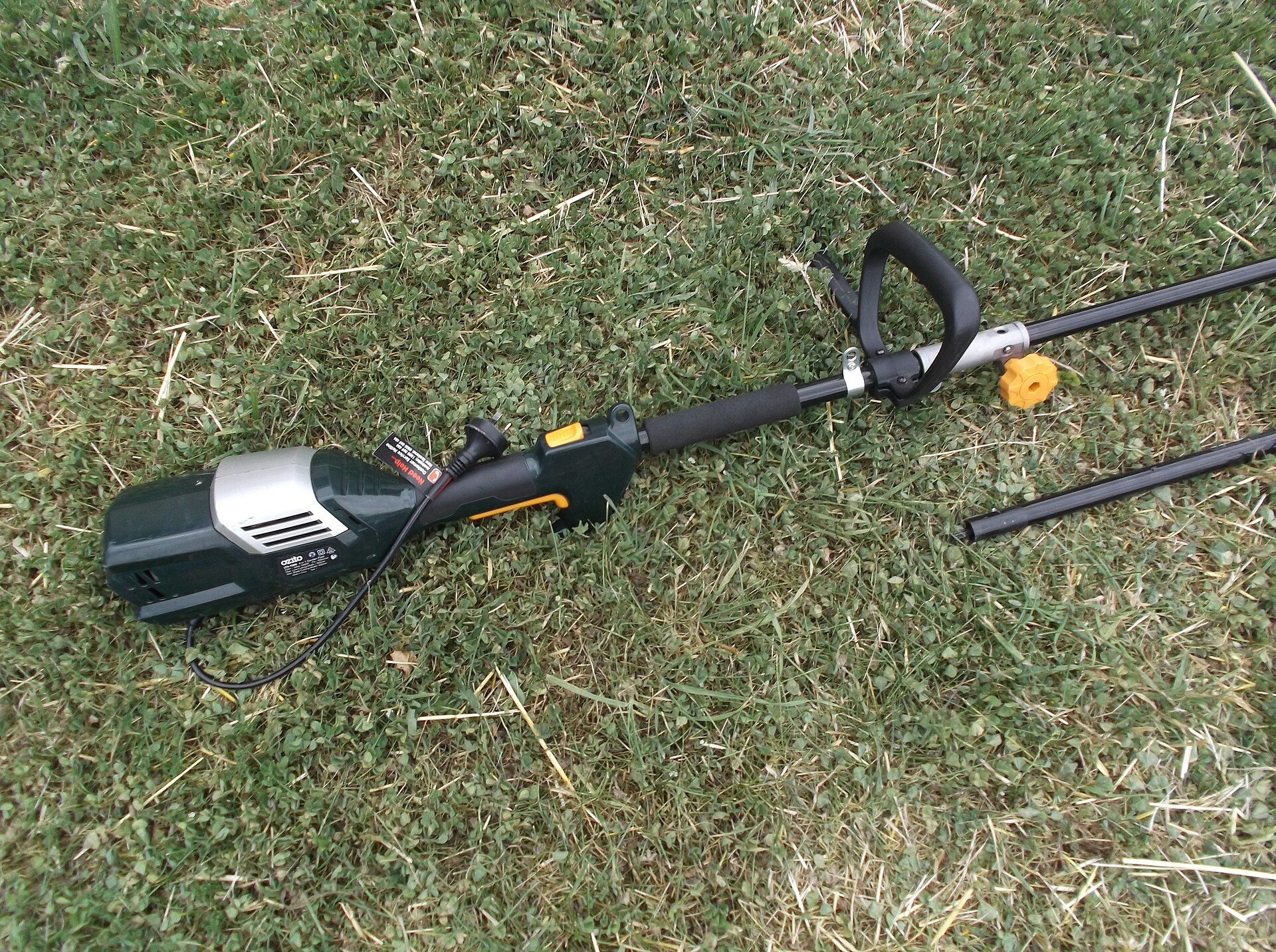
A combination machine with swappable heads can cover strimming, brushcutting and sometimes edging from a single power unit, which suits a garden with a mix of light and rough growth. A dedicated single-purpose tool is usually lighter and simpler for a garden that only ever needs one of the three jobs done.
The trade-off is mostly about weight, cost and how often heads get changed. A combination unit needs a stronger core motor and gearbox to run the heaviest attachment it accepts, which usually makes it heavier to carry even when it is fitted with the lightest head. A single-purpose strimmer built only for line trimming can be noticeably lighter for the same reach and cutting width.
For anyone comparing options across brands, it is worth reading how choosing a tool and comparing specifications generally works before settling on a combination unit versus separate machines — the headline power figure on the box is only part of what decides how a tool feels in use.
What should be compared when choosing between them?
The main things worth comparing are what the tool needs to cut, how it is powered, and how it sits and balances during use — not just the headline power figure on the box.
- What actually grows there — soft grass and weeds point toward a strimmer; brambles, scrub or saplings point toward a brushcutter; a defined lawn edge points toward an edger head.
- Power source — corded, cordless battery, or petrol each bring a different balance of weight, run time and maintenance. The trade-offs are covered in more detail in the piece on what actually decides corded versus cordless.
- Motor type — some cordless models use brushed motors, others brushless; the practical difference in how each holds up under load is explained in what brushed vs brushless actually buys you.
- Harness and handle setup — a shoulder harness spreads the weight of a brushcutter across the body rather than the wrists, which matters over longer sessions.
- Head compatibility — whether the machine is genuinely built to accept a metal blade, or is a line-only machine that should not have one fitted.
General buying trade-offs like these apply across most garden power tools, and the broader category is covered in the garden and outdoor tools archive alongside comparisons of other equipment in the tool comparisons section.
What safety gear does each of these actually need?
Eye protection is needed for all three, because line, blades and edging wheels all throw grit, cut grass and small stones at speed. Ear protection is needed for any session that runs longer than a few minutes, since the sustained engine or motor noise from strimmers, brushcutters and edgers sits well into the range where hearing protection matters — the general threshold is explained in what noise level makes ear protection necessary, and what an eye protection rating actually covers is set out in this guide to eye protection ratings.
Sturdy footwear and long trousers reduce the chance of a graze or cut from flung debris, and a brushcutter in particular calls for solid footing and a clear stance, since a blade meeting something solid can pull the whole machine sideways. The guard fitted to whichever head is in use — line or blade — is matched to that attachment and should stay fitted exactly as the manufacturer set it up; the manual for the specific machine is the reference for guard position, blade type and any adjustment it allows.
Anyone unsure which combination of guard, blade and head is correct for a given machine should check the model’s own documentation rather than relying on general guidance, since guard geometry and blade fitment vary between manufacturers. Wider reading on safety equipment for garden and workshop tools generally is collected in the safety and PPE archive.
Does it matter which one is bought first?
For most gardens, the deciding factor is what already grows there rather than which tool seems most versatile. A garden with mainly lawn, borders and the odd overhanging patch of grass rarely needs a brushcutter at all — a strimmer covers it. A boundary with brambles, nettles or young scrub growth is where a brushcutter blade earns its extra weight. An edger is worth adding once the lawn shape is established and a crisp line along paths and beds becomes the main remaining task.
Buying the heaviest, most capable combination machine on the assumption it will “cover everything” is not necessarily the right call if most sessions only ever need the lightest head. Working out what a garden actually needs first, then matching the tool to that, tends to give a better result than matching the tool to the biggest spec sheet.
Find Tool publishes general information, not professional advice. Power tools, mains electricity and workshop machinery are genuinely dangerous, and the safe settings, guards and procedures differ between models — always follow the manual and the markings on the tool in front of you rather than a general guide. Never remove or defeat a guard or safety feature. Anything involving fixed wiring, gas or structural work belongs to a qualified tradesperson. Wear the eye, ear and respiratory protection the task calls for.
Featured image: Photo by Andrewa, source, CC BY-SA 4.0