Drill bits stop cutting because the cutting edge has actually worn away, because heat has softened that edge, or because the flutes are packed with material and the bit is rubbing instead of cutting. Wrong speed, wrong bit for the material, and too little downward pressure all speed this up. It is rarely one single cause.
What actually blunts a drill bit?
A drill bit cuts with a sharp edge at the tip, much like a tiny chisel spinning very fast. That edge blunts the same way any edge does: through abrasion against the material, through heat that softens the steel, or through a chip that gets in the way and grinds the edge instead of being cleared.
Most home workshop bits are cutting mild steel, wood, or masonry, and each of those wears an edge differently. Wood fibres are relatively gentle but generate friction and heat if the bit spins too fast for too long in one spot. Metal is abrasive and generates heat quickly under pressure. Masonry chips rather than cuts, and the tip takes a battering rather than a clean wear pattern.
Why do bits go blunt so fast in metal?
Bits go blunt quickly in metal mainly from heat build-up at the cutting edge, usually because the speed is too high for the bit diameter and material, or because there isn’t enough steady pressure to keep the bit cutting rather than rubbing.
When a bit rubs instead of biting into the metal, friction generates heat right at the tip, which is the hardest-working and most heat-sensitive part of the bit. Standard high-speed steel bits lose their hardness once they get hot enough, and once that happens the edge rounds over. From that point the bit generates even more friction and heat, and the problem accelerates.
The speed that suits a given bit and metal is a genuine variable, not a fixed rule of thumb — it depends on the bit’s diameter, its material, and what’s being drilled. That is exactly the kind of figure the drill’s manual and any reference chart supplied with the bits should set out, rather than a number picked from memory. If a drill has variable speed control, understanding what variable speed actually changes on a power tool is a useful starting point before drilling anything unfamiliar.
Can a bit go blunt from packed-up chips?
Yes. If the flutes fill with swarf, sawdust or masonry dust instead of clearing it, the bit stops removing material efficiently and starts grinding against its own waste. This shows up as a burning smell, a change in sound, and a bit that seems to stall halfway through a hole.
Deep holes are the usual culprit. Pulling the bit back out periodically — sometimes called pecking — clears the flutes and lets the bit get back to cutting cleanly rather than packing tighter with every pass. This matters more in deep holes and in materials that produce fine, clingy waste, such as some plastics and MDF.
Drilling MDF and some engineered boards produces very fine dust that is worth taking seriously in its own right, separate from bit wear. Fine dust behaves differently from ordinary sawdust and is worth understanding before drilling boards of that kind indoors.
Is it the bit, or is it the wrong bit for the job?
Often it’s neither wear nor heat — it’s a bit designed for a different material being asked to do a job it was never shaped for. A twist bit meant for wood will struggle and dull quickly in masonry; a wood bit forced into steel will round over almost immediately.
Bits are ground differently for different jobs:
- Wood bits often have a centring point and wider flutes to clear soft, bulky waste.
- Metal bits have a different tip angle suited to shearing metal rather than tearing fibres.
- Masonry bits have a tungsten-carbide tip designed to withstand repeated impact rather than a fine cutting edge.
If a bit is dulling unusually fast on a particular job, it is worth checking whether it is actually rated for that material at all, rather than assuming the bit itself is faulty. The difference between a standard drill, a hammer drill and a rotary hammer also matters here — a bit designed for one action can wear rapidly, or simply fail to cut, when used in a tool delivering a different kind of motion. Whether a hammer drill is enough, or a rotary hammer is needed instead, is a genuinely useful distinction to understand before assuming a bit is at fault.
Does pressure matter as much as speed?
Yes — too little pressure lets the bit rub rather than bite, and too much pressure can overload the edge, flex the bit, or stall the drill. The right feel is steady, firm contact that keeps the bit cutting continuously, without forcing it.
A bit that is merely spinning against the surface, without enough downward pressure to let the cutting edge engage, generates friction and heat without removing much material. That’s a common reason a “blunt” bit is actually a bit being used too gently, especially in harder metals. Conversely, leaning on a bit too hard can cause it to flex, wander off the mark, or snap — particularly with smaller-diameter bits, which are more fragile than they look.
Getting a feel for this comes with practice, and it is one of several reasons a jig or guide is worth having on hand for repeat or precision holes. What a jig is, and why people make their own, is worth a look for anyone drilling the same hole pattern more than once.
Does the drill itself affect how fast bits wear?
Yes. A drill that can’t hold a steady speed under load, or one whose chuck doesn’t grip the bit squarely, will wear bits faster than a well-matched, well-maintained tool. A wandering or wobbling bit cuts an oversized, rough hole and takes far more abuse than one running true.
It’s also worth being clear about what kind of tool is actually in use. A cordless drill, an impact driver and a hammer drill are built around different motions, and asking a bit to do a job suited to a different tool is a common source of premature wear. The real differences between a drill, an impact driver and a hammer drill covers this in plain terms.
Chuck condition matters too. A chuck that’s collected dust and grit, or one whose jaws are worn, can let a bit run slightly off-centre even when it looks properly tightened. Keeping the chuck clean and checking that a bit seats squarely before drilling is a small habit that protects both the bit and the hole.
How can you tell wear from the wrong technique?
Wear tends to look and feel like a gradual decline: the same bit takes longer and longer to do the same job. The wrong technique or wrong bit usually shows up as a sudden problem on a specific material — burning, screeching, or a bit that simply won’t start a hole at all.
A few practical signs to watch for:
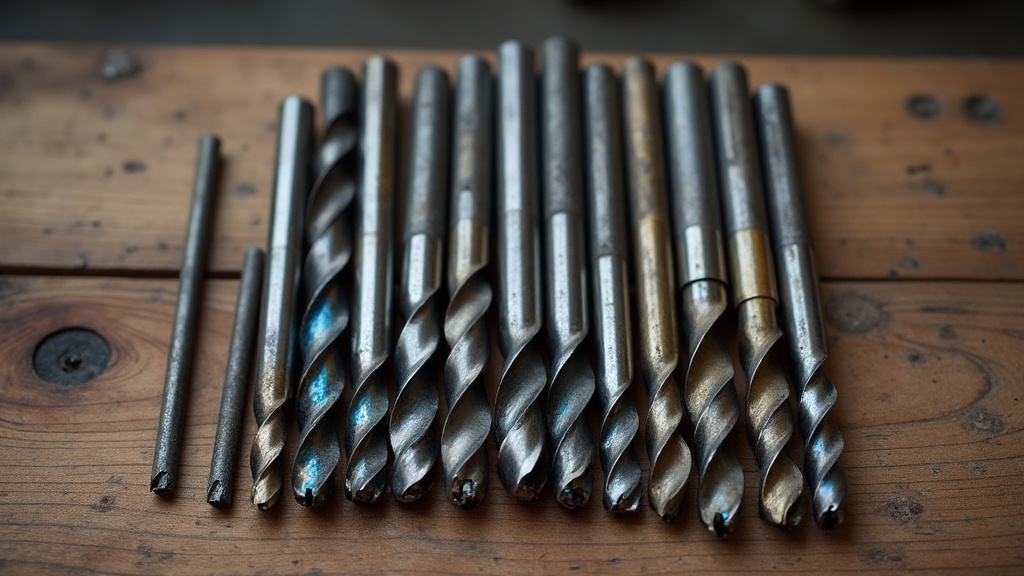
- Discolouration on the tip, especially a bluish or straw tint on steel bits, usually means the edge has been overheated and has likely lost its hardness there.
- A burning smell or smoke is a clear signal to stop, let things cool, and reassess speed and pressure before continuing.
- A bit that skates across the surface instead of biting is often a centring problem, not a sharpness problem — a punch mark or pilot hole usually solves it.
- A bit that cuts fine at the start of a hole but chokes partway through is usually a chip-clearance issue on a deep hole.
Can a blunt bit be sharpened, or does it need replacing?
Some bits can be resharpened with the right jig or grinding setup, particularly straightforward twist bits in common sizes. Masonry bits with a worn or chipped carbide tip, and small-diameter bits that have overheated badly, are usually more practical to replace.
Sharpening a drill bit by hand to a consistent, even angle is a genuine skill, and an unevenly sharpened bit can wander and cut an oversized or off-centre hole. A sharpening jig removes much of the guesswork for people who drill regularly enough to make it worthwhile. For anyone building out a wider sharpening or maintenance routine, the tool care and maintenance section covers related habits that extend the working life of edges generally.
How does storage affect how long bits stay sharp?
Bits stored loose in a drawer or a bag knock against each other and against other tools, which chips and dulls edges even when the bit has never touched a workpiece. Rust from damp storage adds friction and pitting that also blunts an edge over time.
Keeping bits in a case or index with a slot for each size, away from damp, avoids most of this entirely. How tools should be stored to stop them rusting applies just as much to a set of drill bits as it does to hand tools and blades.
What PPE actually matters when drilling?
Drilling throws chips, dust and occasional fragments, so eye protection is needed for essentially every drilling job, not just metal or masonry. Ear protection matters for any sustained drilling, especially with a hammer action, and a proper respirator or well-fitted mask is needed for fine dust from masonry, MDF or hardwood — a cloth or paper mask is not adequate for that kind of dust. Loose sleeves, gloves near a spinning chuck, and unsecured hair are worth thinking through separately, since rotating bits can catch loose material in ways that are easy to underestimate. The safety and PPE section covers this in more depth for different drilling and cutting tasks.
Where to go next
Understanding why a bit stops cutting is really about understanding heat, pressure, chip clearance and matching the bit to both the material and the drill. For a broader look at how drills, drivers and related power tools actually work, the tool guide hub is a good starting point, and the buying guide hub is useful when it’s time to compare bit sets or replacement drills rather than individual bits.
Related reading
Workshop Humidity: What It Does to Tools and Timber, What Is an Electric Brake on a Saw, and How It Works, What Is a Heat Gun Used for Besides Paint?
Find Tool publishes general information, not professional advice. Power tools, mains electricity and workshop machinery are genuinely dangerous, and the safe settings, guards and procedures differ between models — always follow the manual and the markings on the tool in front of you rather than a general guide. Never remove or defeat a guard or safety feature. Anything involving fixed wiring, gas or structural work belongs to a qualified tradesperson. Wear the eye, ear and respiratory protection the task calls for.