A heat gun’s temperature range exists because different jobs need very different heat, dwell time and airflow to work without damaging what’s underneath. The low end gently softens or shrinks materials like heat-shrink tubing and vinyl. The high end melts, chars or strips — paint, adhesive, plastics, frozen pipework.
A heat gun is really just a very controllable hot-air blower. What makes the temperature range useful isn’t the top number on the dial — it’s the fact that one tool can be turned down for delicate work and turned up for aggressive work, with everything in between.
What does a heat gun’s temperature setting actually change?
It changes how much energy is delivered to the surface per second, which determines whether a material softens, melts, chars or stays untouched. Fan speed and airflow interact with the heating element, so the dial (or stepped switch) is really adjusting a combination of heat and airflow, not just a thermostat number.
Two guns set to what looks like the same number on the dial can behave differently depending on nozzle shape, distance from the work, and how long the heat is held in one spot. This is why the manual and the markings on your own tool matter more than any figure quoted online — manufacturers test their own airflow and element combinations, and a number from a different model doesn’t transfer.
What is the low end of the range actually used for?
The low setting is for jobs where too much heat scorches, warps or ignites the material before it’s had time to soften properly. It’s gentle enough to work slowly without damage.
- Shrinking heat-shrink tubing over wire joints without melting the insulation underneath
- Softening adhesive on labels, stickers or vinyl wraps so they lift cleanly
- Loosening threaded plastic fittings or gently warming glued joints for disassembly
- Thawing frozen pipework or locks without applying open flame near the surface
Low heat also buys time. If a material is thin, painted, or bonded to something heat-sensitive underneath, a lower setting held a little longer is usually more forgiving than a high setting held briefly.
What is the high end of the range for?
The high setting is for jobs that need enough energy to break down a bond, melt a plastic, or lift old paint in workable sections rather than just warming the surface. It’s the setting most associated with stripping and shaping work.
- Softening old paint so it can be scraped rather than sanded
- Bending or forming certain plastics and plastic pipe
- Loosening old flooring adhesive or vinyl tiles before removal
- Plastic welding, where the material needs to reach a workable melt state
High heat is also where most damage happens if it’s misapplied — scorched wood, bubbled glass, melted window seals, or paint that chars instead of lifting. The high setting rewards a moving hand and a test patch, not a gun held still in one spot.

Why doesn’t a heat gun just have one fixed temperature?
Because the range of jobs a heat gun is asked to do is genuinely wide, and no single output suits all of them. A tool built only for paint stripping would be too aggressive for heat-shrink work; one built only for shrink tubing would be too weak to shift old adhesive.
The variable or stepped range is what lets a single tool cover both ends without needing two separate tools. It also means the setting has to be chosen deliberately for the job, rather than assumed to be “hot enough” by default.
Does distance from the nozzle matter as much as the temperature setting?
Yes. Distance and dwell time change the effective heat reaching the surface almost as much as the dial setting does, which is why two people using the same gun on the same setting can get different results.
Holding the nozzle close and still concentrates heat in one spot — useful for stubborn adhesive, risky for anything that scorches easily. Keeping the gun moving at a slightly greater distance spreads the same heat over a wider area and reduces the chance of a hot spot. Nozzle attachments — reflector, cone, fishtail — also change how that heat is directed, which is another reason the manual’s guidance matters more than a generic number.
What PPE does heat gun work actually need?
Heat gun work needs eye protection against flying paint chips and hot splatter, heat-resistant gloves against direct contact with the nozzle or heated surface, and respiratory protection against fumes — particularly from old paint or unknown coatings.
Paint stripping is the job most likely to be underestimated. Heating old paint can release fumes that shouldn’t be breathed in, and in older properties there’s a real possibility of lead-based paint under newer layers. Testing for lead paint and, where it’s confirmed, planning safe removal is a job for a suitably qualified professional — not something to work out on the day with a heat gun and an open window. A dust mask alone is not enough for that scenario; it needs proper assessment first.
For routine stripping of known modern paint, working in a ventilated space and wearing a respirator rated for fumes (not just a basic dust mask) is a sensible minimum, alongside eye protection and gloves rated for heat rather than just abrasion.
What are the real fire and burn risks with a heat gun?
The main risks are setting nearby material alight, burning skin on the nozzle or heated surface, and leaving a hot gun resting on something flammable while it’s still cooling.
A heat gun has no flame, which sometimes leads people to treat it as less risky than a blowtorch. The nozzle and airflow can still ignite sawdust, solvent residue, dry leaves or fabric, and the gun stays hot well after it’s switched off. Standing it on its heat-resistant stand, keeping the work area clear of loose combustible material, and never leaving it running unattended are basic precautions worth treating as fixed habits rather than optional extras.
How should a temperature range be compared when buying a heat gun?
Compare how the range is controlled — stepped switch versus a continuous dial — and how directly that control maps to a displayed or marked temperature, rather than comparing top-end numbers between models.
A stepped switch (often two settings) is simple and predictable, which suits occasional users doing familiar jobs like shrink tubing or basic stripping. A continuous dial, sometimes paired with a digital readout, gives finer control for varied work — useful if the tool will see plastic welding, delicate materials, or a wider mix of tasks. Neither is objectively better; the right choice depends on how varied the intended work actually is. A guide to which tool specifications are marketing rather than useful is worth reading before assuming a bigger number on the box means a better tool.
It’s also worth thinking about how long the tool will run per session. A gun used for short bursts of shrink-wrapping behaves very differently in daily use from one running continuously through a full afternoon of paint stripping — a question covered in more detail in the piece on what a tool’s duty cycle actually tells you.
Is a heat gun always the right tool for softening or removing material?
Not always. For fine detail work, awkward edges, or jobs where a rotating or oscillating action does the job more precisely, a different tool may suit better than raw heat.
Scraping paint from detailed mouldings, for example, sometimes goes better with a scraping attachment on an oscillating multi-tool than with heat alone, particularly on surfaces where scorching is a real risk. Choosing between heat, mechanical scraping, and chemical stripping is worth weighing before starting, rather than reaching for whichever tool is already out on the bench.
Where does a heat gun fit next to other workshop tools?
It sits alongside other tools that rely on heat, friction or abrasion to change a material’s state, rather than cutting it — which is a different category of risk and skill from blades or grinding wheels.
For a broader look at how tools in this category are chosen and compared, the buying tools guide and tool guide hubs cover the reasoning behind specifications generally, while the power tools archive and safety and PPE archive go into more detail on specific tools and the protective equipment each one actually calls for.
Whatever the setting, the same principle holds: the temperature range on a heat gun is a set of choices, not a single hot blast. Matching the setting, distance and dwell time to the material — and following the manual’s specific guidance for that model — is what keeps the work clean and the workshop safe.
Find Tool publishes general information, not professional advice. Power tools, mains electricity and workshop machinery are genuinely dangerous, and the safe settings, guards and procedures differ between models — always follow the manual and the markings on the tool in front of you rather than a general guide. Never remove or defeat a guard or safety feature. Anything involving fixed wiring, gas or structural work belongs to a qualified tradesperson. Wear the eye, ear and respiratory protection the task calls for.
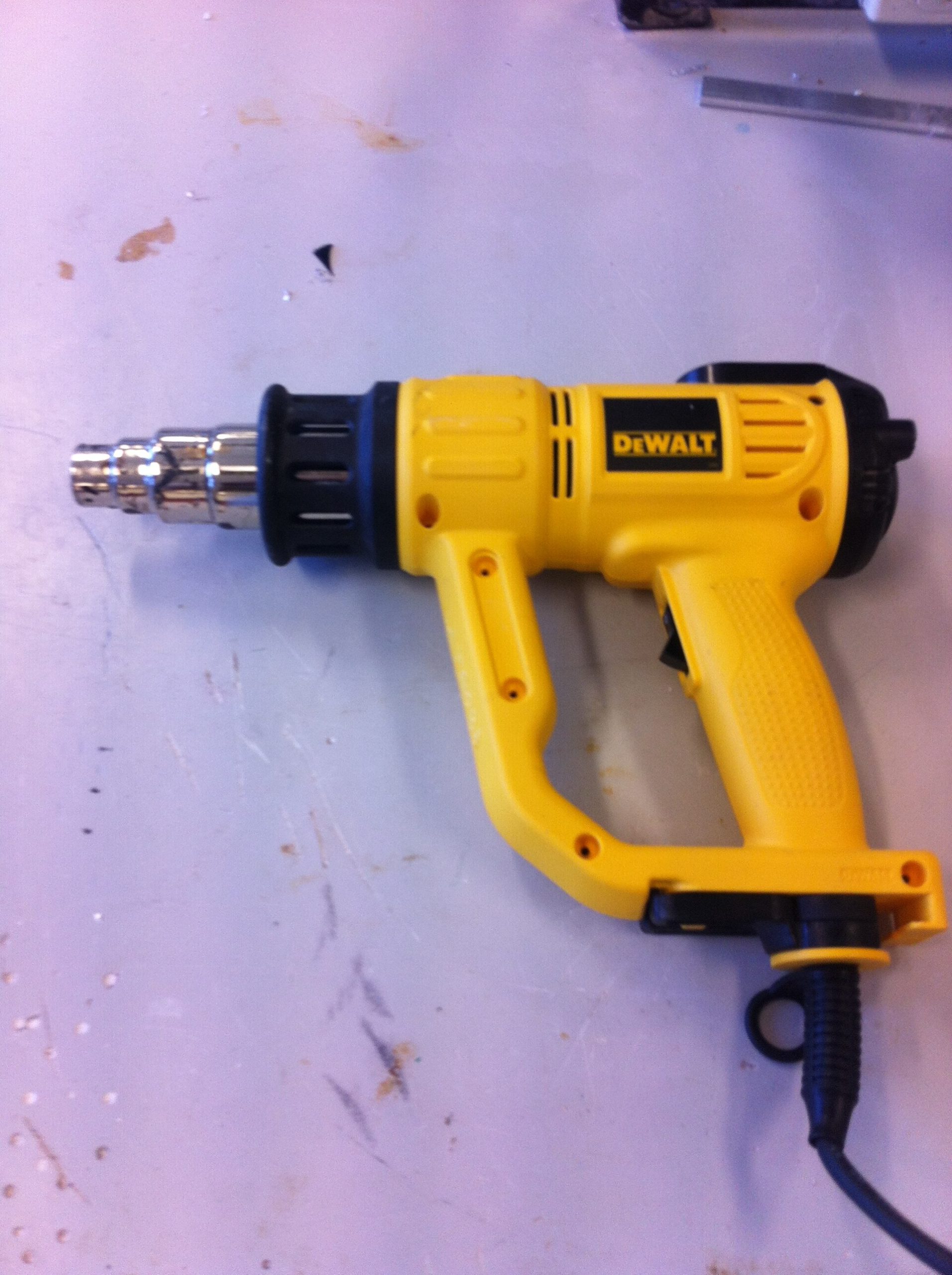
Featured image: Photo by Jmdestefanis, source, CC BY-SA 3.0