A jigsaw goes to the workpiece and cuts freehand curves in sheet material and boards of moderate thickness, with the blade able to exit and re-enter anywhere. A bandsaw is fixed, feeds the work to a continuous blade, and holds a tighter, cleaner curve through much thicker stock — but the workpiece has to reach the machine.
What actually changes between the two tools?
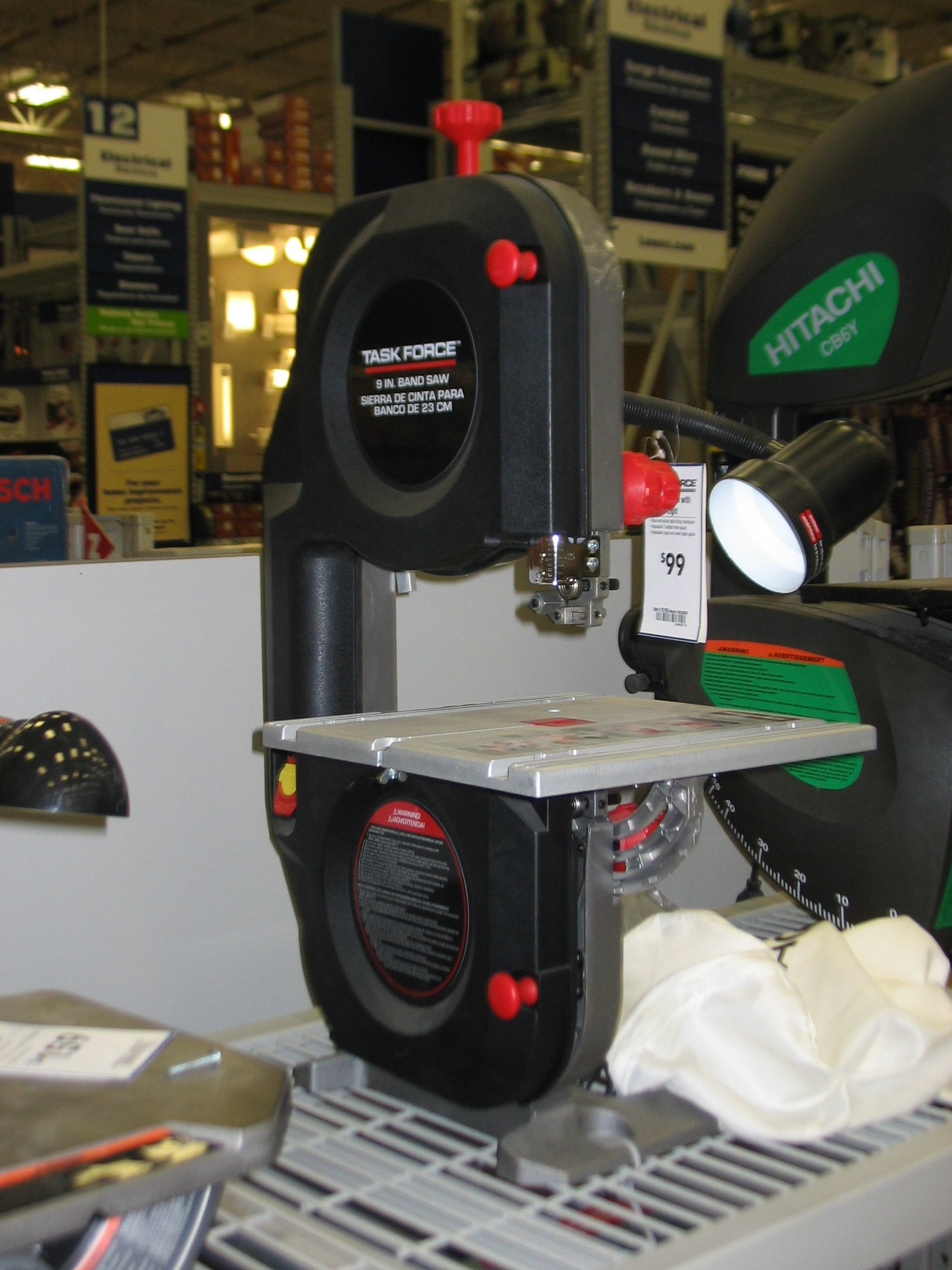
The core difference is which part moves. A jigsaw is handheld: the operator guides a short reciprocating blade along a marked line, so the tool travels to the cut and can start from an edge, a drilled hole, or partway along a board. A bandsaw is a stationary machine with a continuous loop blade running around two wheels; the operator moves the workpiece across a table and into the blade.
That single distinction drives almost everything else — how tight a curve each can follow, how thick a piece of stock it can manage, how clean the cut edge comes out, and how much of the workshop the job takes over. Neither tool is simply “better” for curves; they solve different shapes of problem. For background on how these saws are built and rated, the tool guide hub covers the general mechanics of power saws before getting into the specifics below.
Which one cuts tighter curves more cleanly?
A bandsaw generally follows a tighter, smoother curve than a jigsaw, because its blade is under constant tension and supported above and below the table, so it wanders less under load. A jigsaw blade is only clamped at one end and can flex sideways in thicker material, which shows up as a slightly bowed or rough cut on anything but gentle curves.
The tightness of curve a bandsaw can manage is set by the width of the blade fitted — a narrower blade turns a smaller radius, but narrower blades are also less rigid and more prone to drifting off a straight line. A jigsaw’s curve-following ability comes down to blade width too, plus how slowly and steadily the operator feeds it. Manufacturers publish minimum turning radius for their bandsaw blades, and that figure — not a guess — is what should decide blade width for a given pattern.
For very fine scrollwork, neither machine tool is really the answer; that territory belongs to fretsaws and scroll saws, which sit outside this comparison.
What changes with material thickness?
Thickness is where the two tools separate most clearly. A jigsaw is happiest in sheet goods and boards up to a moderate thickness, because the blade is only supported at the top and starts to deflect and lag behind the shoe as material gets thicker — the cut edge can end up visibly out of square. A bandsaw, with the blade running vertically through the table and often guided close to the workpiece by adjustable guides, holds a straighter, more square cut through much thicker stock, which is why resawing and cutting curves in solid timber blocks is bandsaw territory.
The trade-off is size of workpiece versus size of machine. A jigsaw can be brought to an awkward, oversized panel that will never fit on a bandsaw table. A bandsaw needs the piece to physically pass under its throat and between its guides, so very large sheets are a poor match unless there’s a way to support them level with the table.
What about starting a cut mid-panel?
A jigsaw can plunge or start a cut from a drilled pilot hole or a cut edge anywhere on a panel, which makes it the practical choice for internal cutouts — a sink hole, a decorative window, a shape cut from the middle of a board. A bandsaw cannot do this at all, because the blade is a closed loop; the workpiece has to be fed in from an edge, and any interior cutout needs a lead-in cut or the blade released and rejoined, which is a job for the machine’s own setup procedure, following its manual.
This is often the deciding factor rather than curve quality. If the shape needed is an enclosed hole, the jigsaw wins by default; if it’s an outer profile that can be approached from the edge of the stock, both tools are genuinely in contention.

Does portability matter for this choice?
Yes, and it cuts both ways. A jigsaw is light, cordless-capable, and goes wherever the work is — useful for cutting a curve in a fitted worktop or a panel already installed, where the piece cannot be lifted to a machine. Its downside is that accuracy depends entirely on a steady hand and a clear line, since there’s no table, fence or guide doing any of the work.
A bandsaw stays put and needs floor or bench space, dust extraction, and a stable base, but it gives the operator a fixed table, a rip fence for gentle curves, and often a mitre gauge for combined angled and curved work. For anyone still deciding between a cordless setup and a corded machine for this kind of job, the piece on what actually decides corded versus cordless is a useful place to work through the trade-offs.
What about blade choice and cut quality?
Both tools rely on picking a blade to suit the material and the tightness of curve, and this is one area where the manufacturer’s own chart, not a general rule, should decide the choice. Narrower blades turn tighter curves on a bandsaw but leave a rougher edge and are more prone to drifting; wider blades cut straighter and last longer but cannot follow a small radius. Jigsaw blades vary by tooth count and set in a similar way — finer teeth generally leave a smoother edge but cut more slowly, and the difference is covered in more depth in what tooth count actually changes on a saw blade.
A blade that has gone blunt behaves the same way on either tool: more effort for the same cut, more heat, and a rougher edge that tempts the operator to push harder rather than replace the blade. What actually dulls a saw blade over time — pitch, resin, contaminated stock, wrong feed speed — applies to both jigsaw and bandsaw blades and is worth understanding before assuming a machine problem is really a blade problem.
Which is safer for cutting curves?
Both are safe tools used as designed, and both carry real risks if pushed outside what they’re built for. A jigsaw’s main hazard on a curve is the blade binding or deflecting sideways in thick material and kicking the shoe off the line; keeping the cut speed matched to material thickness and letting the blade do the work, rather than forcing it, avoids most of that. Guards and blade guides fitted to either tool are part of what keeps the blade contained and predictable — they should stay in place and be used as the manufacturer intended.
A bandsaw’s risks are different: fingers working close to a moving blade while guiding a curve, and stock that can pinch or twist if fed unevenly. Keeping hands well clear of the blade line, letting the table and fence support the work, and never reaching across the blade are the habits that matter, alongside blade guides adjusted as the manual specifies.
Both tools throw fine dust and chips, and a bandsaw in particular runs for sustained periods at a noise level worth taking seriously — what noise level makes ear protection necessary explains how to judge that for a given machine. Eye protection rated for flying debris is needed for either tool, and the detail behind that rating is covered in what an eye protection rating actually means. Cutting MDF, hardwood or manufactured board on either machine also produces fine dust worth managing with proper extraction or a suitable respirator, a distinction explained in why MDF dust is treated differently from softwood dust. The broader safety and PPE archive covers the rest of the basics for a home workshop.
What should guide the choice for a home workshop?
The shape of the job decides it more than either tool’s general reputation. An interior cutout, a curve in a panel too big to move, or an occasional curved cut in otherwise straight-line work points to a jigsaw. Repeated curved work in solid timber, resawing, or cutting shapes that consistently need a clean, tight, repeatable edge points to a bandsaw — assuming there’s room and budget for a stationary machine.
Cost is rarely the deciding factor on its own, since a decent jigsaw and an entry-level bandsaw can sit in a similar price bracket once blades and a stand are counted in; what actually drives the price of a power tool is covered separately, and it’s worth reading before comparing two very different machines on price alone. For anyone weighing this purchase against other saws already in the shed, the buying tools guide hub and the wider power tools archive are the places to check what else a given spec sheet is actually telling you before deciding.
Find Tool publishes general information, not professional advice. Power tools, mains electricity and workshop machinery are genuinely dangerous, and the safe settings, guards and procedures differ between models — always follow the manual and the markings on the tool in front of you rather than a general guide. Never remove or defeat a guard or safety feature. Anything involving fixed wiring, gas or structural work belongs to a qualified tradesperson. Wear the eye, ear and respiratory protection the task calls for.
Featured image: Photo by Jomegat, source, CC BY-SA 3.0