A tool chest is worth the money when its drawer slides can take repeated full loads without sagging, its steel gauge resists denting and racking, and its load rating actually matches what gets put in it. Paint finish, drawer count and colour matter far less than what happens after the first year of daily use.
What separates a cheap tool chest from an expensive one?
The difference is almost never visible on day one. A budget chest and a well-built one can look identical in a showroom: similar paint, similar drawer count, similar handles. The gap shows up after months of drawers being loaded with sockets, opened one-handed, and occasionally leaned on.
What actually separates the two is buried in details that don’t photograph well: the thickness of the steel used for the drawer sides and the carcass, the type of slide mechanism behind each drawer, how the corners are welded or folded, and whether the whole unit sits level and stays that way once it’s loaded. None of that is obvious from a spec sheet unless you know what to look for.
Does drawer slide quality actually matter?
Yes, more than almost any other single feature. Drawer slides carry the entire working weight of the chest, over and over, and a poor slide is usually the first thing to fail — as sag, drag, or a drawer that no longer closes square.
Ball-bearing slides run smoother and stay smooth for longer than simple friction slides, especially once a drawer is loaded with something heavy like sockets or a compact impact driver. Full-extension slides let a drawer come all the way out so tools at the back are visible and reachable, rather than staying half-hidden. Cheaper chests often use partial-extension slides that save cost but leave the back third of every drawer as dead space.
A practical check when comparing chests in person: pull a drawer fully out, then push down gently on the front edge. A well-supported drawer resists that pressure with barely any give. One that dips noticeably is telling you something about how it will behave a year from now, loaded and opened dozens of times a week.
How much does steel gauge and construction matter?
Steel gauge determines how much the chest resists dents, dings and the kind of flex that eventually cracks paint and lets rust start. Thinner steel is lighter and cheaper to ship, but it also dents more easily from dropped tools and flexes more under load — both of which shorten the chest’s useful life.
Construction detail matters as much as raw thickness. Welded seams at the corners are generally more rigid over time than folded-and-riveted joints, because there’s no joint to work loose. A chest that racks — twists slightly when pushed from one corner — will eventually develop drawers that don’t sit flush, and gaps where moisture and dust can get in.
This is also where a load rating becomes genuinely useful information rather than a marketing number. A rating tells you what the manufacturer has judged the slides and structure can carry safely, drawer by drawer or for the unit as a whole. It’s worth comparing that figure against what actually needs to live in the chest — a drawer of wrenches and sockets adds up faster than it looks like it should.
Is a rolling cabinet worth it over a simple top chest?
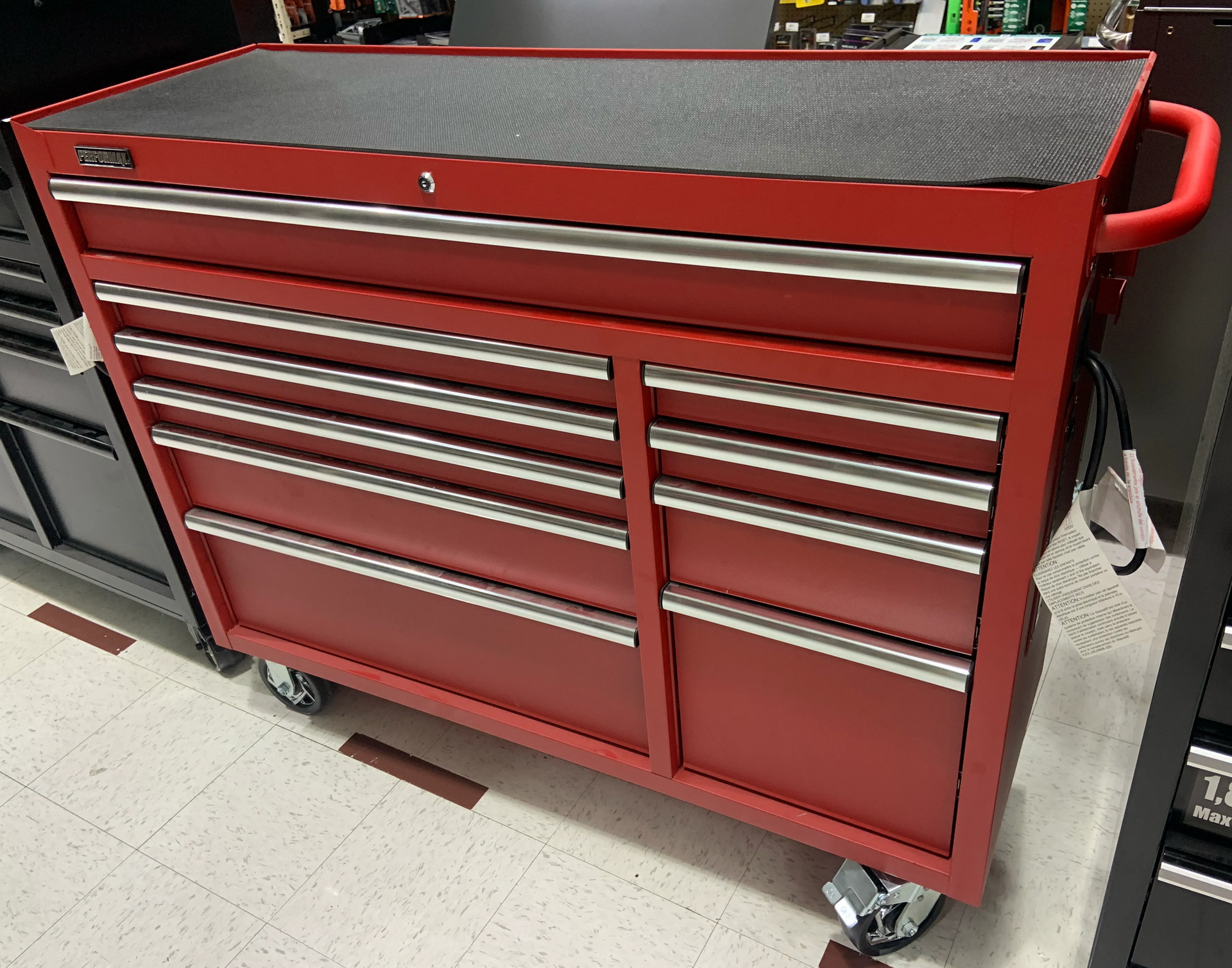
A rolling cabinet earns its extra cost when tools need to move around a garage or workshop with the user — parked next to a car, wheeled to a bench, then moved again. A stationary top chest is usually the better value when the tools stay in one place and floor space is limited.
Combination setups — a rolling base cabinet topped with a stacked chest — suit a workshop that’s actively growing its tool collection, since the two halves can be bought separately and the whole thing reorganised as needs change. The trade-off is footprint and cost: a combo unit takes up more floor space and typically costs more than either half bought alone.
Casters are worth a specific look on any rolling design. Locking casters that can be individually set stop a loaded cabinet drifting on a sloped floor, and larger-diameter casters roll more easily over uneven concrete than small ones. A heavy cabinet on poor casters is a genuine hazard if it can roll unexpectedly while someone is leaning on it or reaching into a drawer.
Does locking and security actually change the value?
Locking matters most in a shared garage, a shop unit, or anywhere tools are at risk of being borrowed or taken. A central locking bar that secures every drawer from one point is more useful day to day than individual drawer locks, because it’s the difference between locking up in one motion and fiddling with several.
For a private, single-user home workshop, locking is a smaller factor — nice to have, rarely essential. It’s one of the areas where it’s easy to overpay for a feature that doesn’t match how the chest will actually be used, which is exactly the kind of trade-off worth thinking through using a buying guide for tools rather than the marketing copy on the box.
Does drawer liner or foam organisation change the value?
Drawer liners and foam inserts protect tool edges and cushion the bottom of a drawer, which reduces the rattling that gradually loosens fasteners on the chest itself and dulls fine edges on hand tools like chisels. That’s a real, if modest, benefit.
Shaped foam that cuts a silhouette for each tool goes a step further: it makes a missing tool obvious at a glance, which matters in any setting where tools get borrowed or shared. For a home workshop where one person uses the chest, that benefit is smaller — useful, but not something worth paying a large premium for on its own.
Either way, keeping drawers organised and tools out of standing water or dust is part of ordinary tool care, and it does more for a tool’s working life than most people expect.
How do you compare tool chests without falling for marketing numbers?
Start by listing what actually needs to be stored — sockets and wrenches, larger power tools, measuring gear — and roughly how heavy that collection already is, since that’s the number a load rating should be checked against. Then compare the things that predict how the chest ages: slide type, steel gauge, weld quality at the corners, and caster quality if it rolls.
A few things to watch for that sound impressive but tell you less than they seem to:
- A very high headline weight capacity with no breakdown of how it’s distributed across drawers
- Drawer count alone, without checking how deep or wide each drawer actually is
- Glossy paint finish, which says little about the steel underneath it
- Bundled tool sets included “free” with a chest, which can hide a weaker chest behind an attractive overall price
It’s worth being deliberate about separating the container from its contents when pricing anything like this — a point covered in more detail when comparing a bundled kit against buying the tool on its own. The same logic applies to a chest sold with a starter set of tools thrown in.
Weight itself is also worth thinking about on its own terms, separate from capacity. A heavier empty chest usually means more steel and a more stable base, but it also means more effort to move if it isn’t on wheels — the kind of trade-off explored in general terms when looking at how a tool’s weight changes real-world use. Chest specifications that look purely like marketing rather than something to plan around are worth treating with the same scepticism covered in which tool specifications are marketing, not useful.
Is a cheap tool chest ever the right choice?
Yes — for light, occasional use, a smaller collection of tools, or a temporary setup, a basic chest is a reasonable choice and there’s little point paying for slide and steel quality that will never be tested. The calculation changes once a chest is loaded daily with heavy items or moved regularly around a workspace.
Second-hand chests can also be good value, since steel construction tends to age more predictably than motors or electronics. Checking for rust at the seams, drawer alignment when fully loaded, and smooth slide action covers most of what matters — a version of the same checklist worth running through when deciding what’s worth buying new and what’s fine second-hand.
Whatever budget a chest is bought at, the same basic test applies before money changes hands: open every drawer fully, load it if the seller allows it, and check that nothing sags, binds or rocks. That five-minute check tells you more than any spec sheet, and it’s the same instinct worth applying across the wider world of workshop and storage equipment, not just tool chests.
For a broader look at how to weigh up specifications generally — on chests or on any other piece of equipment — the buying and comparing archive covers the trade-offs in more depth than any single product page ever will.
Find Tool publishes general information, not professional advice. Power tools, mains electricity and workshop machinery are genuinely dangerous, and the safe settings, guards and procedures differ between models — always follow the manual and the markings on the tool in front of you rather than a general guide. Never remove or defeat a guard or safety feature. Anything involving fixed wiring, gas or structural work belongs to a qualified tradesperson. Wear the eye, ear and respiratory protection the task calls for.