A rotary tool is a small handheld motor that spins a narrow shaft at high speed, holding interchangeable bits in a collet or chuck. It is genuinely good at detail work — engraving, fine grinding, deburring, small cuts and polishing — and genuinely bad at removing large amounts of material fast. It is a precision tool, not a substitute for a drill or grinder.
What actually is a rotary tool?
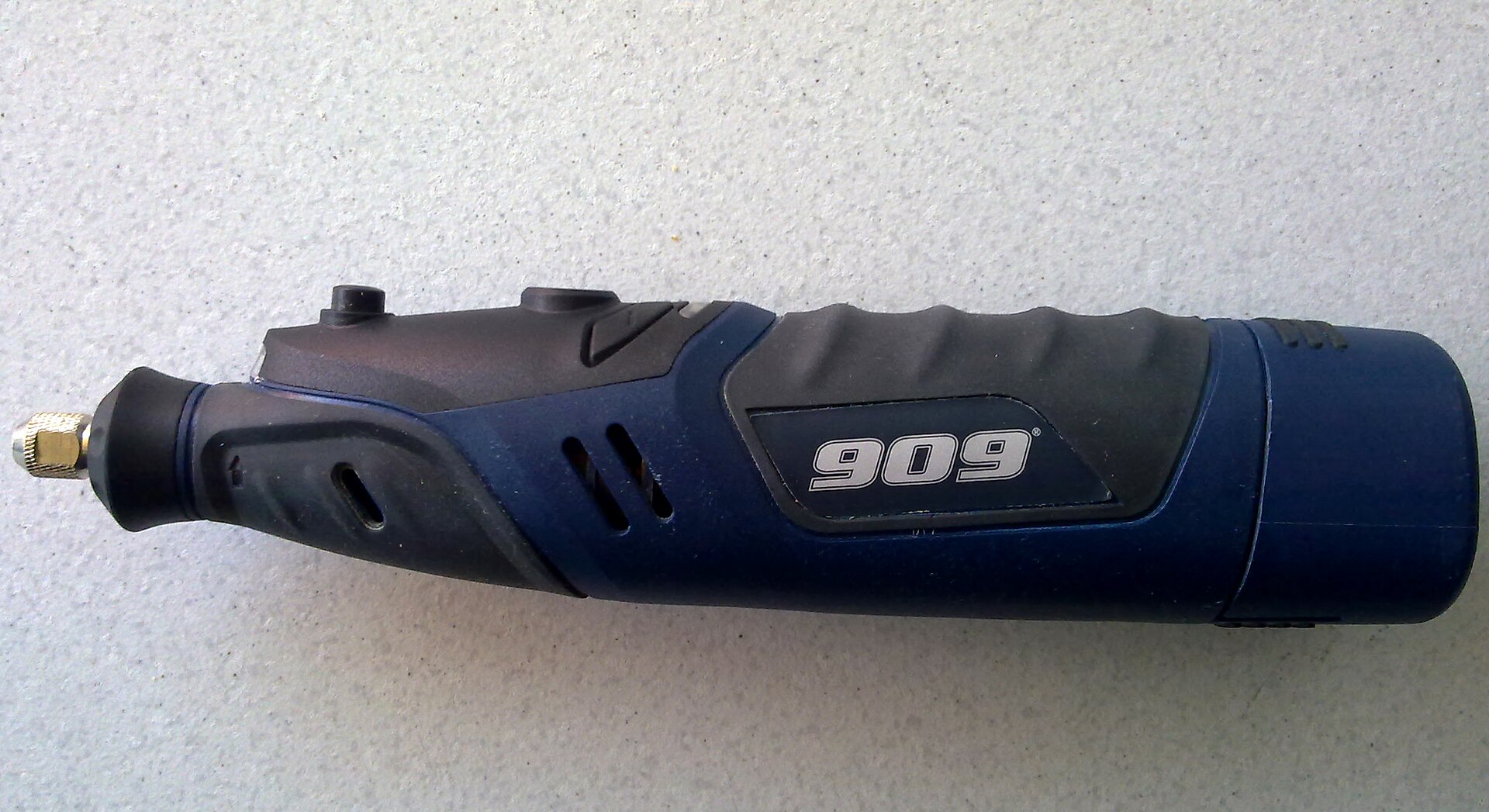
At its core, a rotary tool is a compact motor connected to a spindle that holds accessories in place with a small collet or chuck, similar in idea to a drill chuck but built for much smaller shaft diameters. The body is shaped to be held like a pen or a small screwdriver rather than gripped like a drill, which is the whole point — control at a small scale matters more than raw torque.
Most rotary tools run at variable speed, often much higher than a typical drill, because the work they do — grinding a burr, cutting a groove in glass, buffing a small area — relies on the accessory moving fast rather than pushing hard. The tool itself is rarely powerful in the way a drill or angle grinder is powerful; it is precise instead.
What accessories does a rotary tool actually take?
The range of accessories is the reason the tool has stuck around in home workshops. A single body can drive a wide variety of small heads, each suited to a narrow job:
- Small grinding stones and mounted points, for shaping metal or stone in tight spots
- Cut-off wheels, for slicing small-diameter rod, thin sheet or jewellery-scale stock
- Sanding drums and sanding bands, for shaping wood or plastic in curves a sander can’t reach
- Engraving bits, for marking metal, glass or wood
- Polishing and buffing wheels, for small areas of metal or plastic
- Small wire wheels or brushes, for spot cleaning rust or paint on a small area
Every accessory has its own maximum safe speed, and that number comes from the accessory’s own packaging, not from guesswork. Running a bit faster than it is rated for is one of the more common ways small abrasive wheels fail. If wire-end accessories are part of the plan, it’s worth understanding how a rotary wire wheel differs from a bench-mounted wire brush, since the two behave very differently in the hand.
What is a rotary tool genuinely good at?
A rotary tool earns its place on detail work — jobs where the area being worked is small, the shape is awkward, or the material needs a light touch rather than force. Typical genuine strengths:
- Engraving names, patterns or serial numbers into metal, glass or wood
- Deburring the edge of a drilled hole or a cut piece of metal
- Shaping small curves in wood, plastic or soft stone that a bigger sander can’t reach
- Cutting small slots, notches or openings in thin sheet material
- Polishing jewellery, small metal parts or plastic to a shine
- Cleaning rust or old paint from a small, detailed area rather than a whole panel
What links these jobs is scale. The tool is at its best where the workpiece or the detail being worked is measured in millimetres, not centimetres.

What is a rotary tool bad at?
It is a poor substitute for tools built to remove stock quickly or drive heavy fasteners. Asking a rotary tool to do the job of a drill, angle grinder or router is where frustration — and sometimes broken accessories — starts.
- Drilling structural holes or driving screws — a drill driver has the torque and chuck size for this
- Grinding welds or cutting steel plate — an angle grinder is built for sustained material removal
- Routing joints or edges in solid wood — a router holds a much larger bit far more rigidly
- Cutting a straight line of any real length — a jigsaw, circular saw or track saw will do it faster and truer
Trying to push a rotary tool past its intended scale usually means overheating the motor, snapping small accessories, or losing control of the cut. If the job is bigger than the tool, the honest answer is a different tool, not more pressure. The trade-offs between a general-purpose oscillating multi-tool and dedicated tools follow a similar logic — versatility at small scale, not a replacement for a purpose-built machine.
Corded or cordless — does it matter for a rotary tool?
It changes where the tool is comfortable to use, more than what it can do. A corded rotary tool typically runs at a steadier speed under load and doesn’t need charging, which suits a fixed bench setup. A cordless one trades a little run time and sometimes a little top speed for being free to move around a workpiece that can’t come to the bench — a car panel, a fence post, a large piece of furniture. Neither is a night in the workshop and forget about it; the choice depends on where the work actually happens, a question covered in more general terms by the guide to what corded versus cordless actually decides.
What does variable speed actually control?
Speed on a rotary tool controls how fast the accessory spins, and that in turn drives how aggressively it cuts, sands or grinds. A higher speed generally suits harder materials and smaller-diameter accessories; a lower speed suits softer materials, plastics that can melt from friction, or delicate work where control matters more than removal rate. The exact speed range of a given tool, and the recommended range for a given accessory, comes from the tool’s manual and the accessory’s packaging — not from a rule of thumb, since motor design and accessory construction both vary between manufacturers.
What PPE does rotary tool work actually need?
Small size does not mean small risk. Cutting and grinding accessories spin fast enough to throw material and, occasionally, to shatter, so eye protection is not optional for any cutting, grinding or wire-wheel work — a small fragment moving at that speed can reach an eye long before a hand can react. The specifics of what a rating on safety glasses actually means are covered in this guide to eye protection ratings.
Sanding and cutting wood, MDF, plastic or metal all produce fine dust or fine particulate, and a rotary tool’s small footprint means that dust is often generated right at face height. A dust mask is adequate for some dust but not all of it; the difference between a simple dust mask and a proper respirator is explained in this comparison of dust masks and respirators, and it is worth reading before working MDF or hardwood at length.
The noise from a rotary tool is usually lower than a router or angle grinder, but sustained use — engraving or polishing for an extended session — can still add up. What noise level actually calls for ear protection, and why, is covered in this explanation of noise and ear protection. Loose clothing, gloves not designed for rotating tools, and long hair near a spinning accessory all carry real risk with a rotary tool exactly as they do with any other rotating power tool.
Brushed or brushless motor — does it matter here?
It affects heat, run time on battery models, and how the tool behaves under sustained load, more than what the tool can physically do. A brushless motor tends to run cooler and more efficiently for a given size, which matters if the tool is doing a long polishing or engraving session rather than short bursts. The broader trade-offs are explained in this guide to brushed versus brushless motors, and they apply to rotary tools the same way they apply to drills and drivers.
What should be compared when choosing a rotary tool?
The comparison that actually matters is collet size and accessory compatibility, not the headline speed number on the box. A tool that only accepts one shank size limits which accessories fit it later; a tool sold with a wide range of standard-sized accessories keeps options open. Beyond that, worth comparing:
- Whether speed is a dial, a set of fixed stages, or a trigger-controlled variable range
- Whether the tool is corded, cordless, or offered in both, and how that suits the intended workspace
- What accessories are included versus sold separately, since accessory cost can outlast the tool
- How the tool balances in the hand for sessions longer than a few minutes
None of these determine which brand or model to buy — that decision depends on the specific work planned and the reader’s own hand and workspace. The general habits of comparing tools sensibly, rather than chasing a single spec number, are covered in the buying tools guide, and the wider mechanics of how power tools are built and rated sit in the tool guide hub.
Where does a rotary tool fit next to the rest of a workshop kit?
A rotary tool rarely replaces anything already in a basic kit — it fills the gap below a drill, a sander and an angle grinder, for jobs too small or too fiddly for any of them. It suits a modest home workshop well precisely because it is inexpensive to run, easy to store, and useful across wood, metal, plastic and glass in small doses. The rest of the power tool range it sits alongside is covered in the power tools archive, and general safe working habits around any spinning power tool are covered in the safety and PPE archive.
Find Tool publishes general information, not professional advice. Power tools, mains electricity and workshop machinery are genuinely dangerous, and the safe settings, guards and procedures differ between models — always follow the manual and the markings on the tool in front of you rather than a general guide. Never remove or defeat a guard or safety feature. Anything involving fixed wiring, gas or structural work belongs to a qualified tradesperson. Wear the eye, ear and respiratory protection the task calls for.
Featured image: Photo by Sciencefreak109, source, CC BY-SA 3.0