A spade has a flat, relatively short blade with a straight edge, built for cutting into soil and slicing straight-sided holes or edges. A shovel has a longer, scooped, often pointed blade, built for lifting and moving loose material — soil, gravel, sand, snow — from one place to another.
The two get used interchangeably by a lot of people, and in casual conversation that’s fine. But once a job actually matters — digging a straight-sided trench, edging a lawn, moving a pile of gravel, planting a hedge — the difference in blade shape stops being a technicality and starts being the reason one tool works and the other one fights back.
What is a spade actually for?
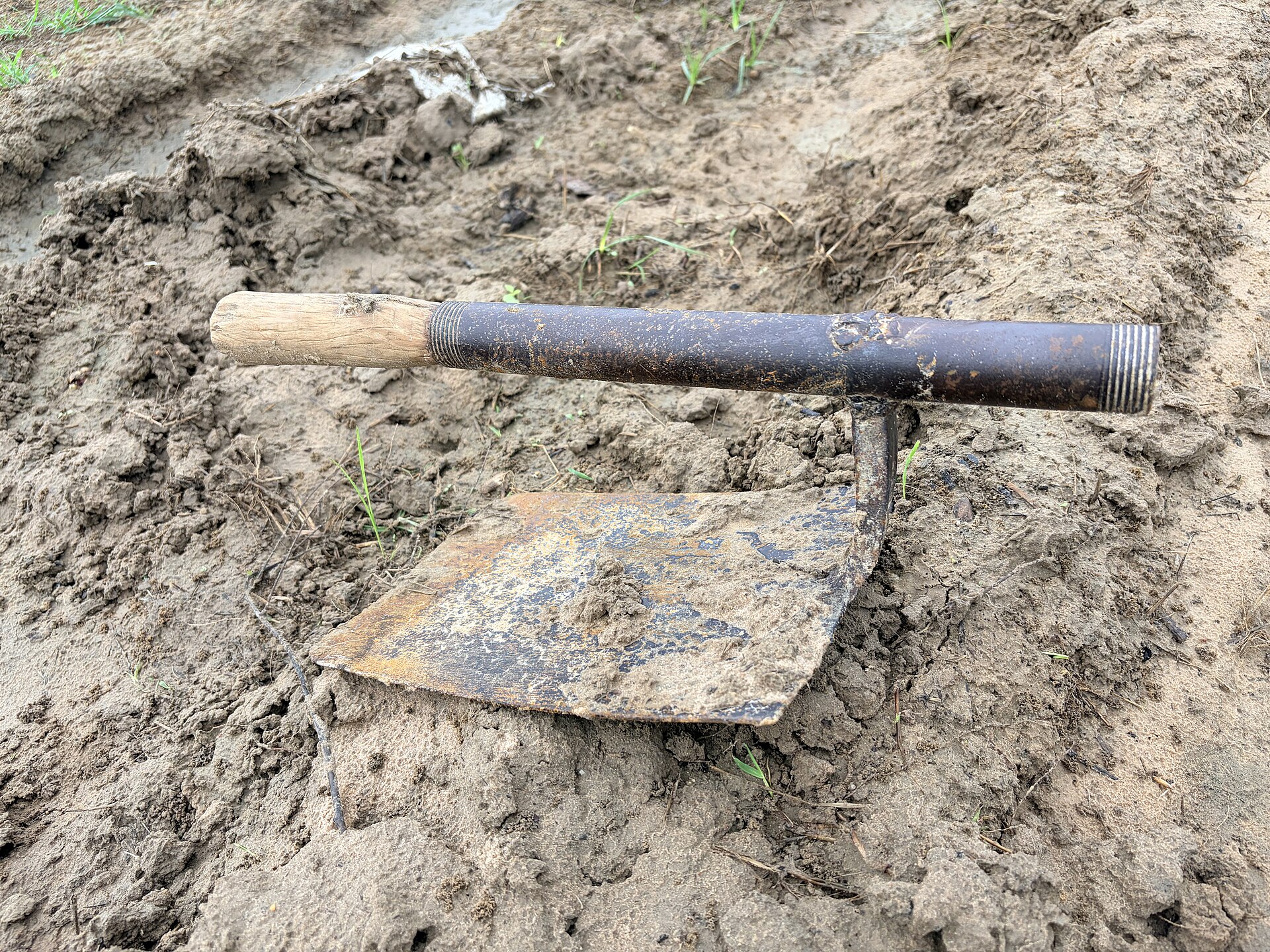
A spade is a cutting tool first and a lifting tool second. The blade is flat, usually rectangular or close to it, with a straight, often reinforced edge designed to slice cleanly through turf, roots and compacted soil.
That flat profile is what lets a spade cut a vertical, straight-sided edge — the kind you want when you’re defining a bed, cutting a lawn edge, or digging a trench with sides you actually intend to stay put. The blade doesn’t curve away from the cut the way a shovel’s does, so the sides of the hole come out close to plumb rather than sloped.
Spades are also the tool of choice for dividing perennials, cutting through root balls, and any job where the edge of the blade is doing the work rather than the face of it. A sharp spade edge behaves a bit like a chisel driven by body weight rather than a mallet.
What is a shovel actually for?
A shovel is a lifting and moving tool first. The blade is curved, often pointed or rounded at the tip, and angled to scoop material and hold it while it’s carried and tipped out somewhere else.
That curve is the whole point. It lets the blade slide under loose material — soil that’s already broken up, gravel, sand, mulch, snow — and cup it rather than let it spill straight back off a flat surface. A shovel is what moves the pile a spade just cut loose.
Pointed shovel blades are generally better at breaking into looser or mixed ground and getting a first bite started. Rounded, square-fronted shovels are better once material is already loose and the job is purely about scooping and shifting volume.

Can a spade cut and a shovel scoop at the same time?
To some extent, yes — most spades will scoop a bit and most shovels will cut a bit, which is exactly why the two get confused. But neither does the other tool’s job well, and pushing a tool outside its shape usually means more effort for a worse result.
Try to scoop loose gravel with a flat spade blade and most of it slides straight back off before it’s lifted. Try to cut a clean straight edge with a curved shovel blade and the curve fights the cut, leaving a rounded, uneven line instead of a plumb one.
The practical rule most gardeners settle on: reach for a spade when the job is defining an edge, cutting into ground, or working in a tight space where a straight vertical face matters. Reach for a shovel when the job is bulk — moving a pile, filling a barrow, clearing loose material off a path.
Does handle shape matter as much as blade shape?
Handle length and grip style change how the leverage and posture feel, and they’re worth checking alongside blade shape rather than as an afterthought.
Spades typically pair with a shorter shaft and a D-grip or T-grip handle. That shorter length suits the more upright, foot-on-the-shoulder pushing action a spade needs to drive its edge into ground — a longer handle would actually work against that motion.
Shovels more often come with a longer straight shaft, which suits the sweeping, lifting-and-throwing motion of moving loose material some distance, and gives more leverage when a scoop is heavy. Shorter-handled “border” versions of both tools exist for tight spaces, raised beds, or anyone who prefers working closer to the ground.
Neither handle length is “better” in general — it’s about matching the motion the job actually needs. The same logic applies across hand tools generally, and it’s covered in more depth in the tool guide hub, which looks at how hand tools and power tools are built around the motion they’re meant to perform.
Does blade material or thickness actually matter?
It affects how the edge holds up and how much force reaches the ground, but it’s not something with a single “better” number — it’s a trade-off worth understanding rather than a spec to chase.
A thicker, stiffer blade resists bending when it hits a stone or a root, which matters for anyone working heavier or stonier ground. A thinner blade is often lighter to swing over a long session and can still be perfectly durable if the steel and the treatment behind the edge are good — thickness alone doesn’t tell the whole story.
Stainless or coated blades resist soil sticking to the face, which matters more in clay-heavy ground than in light, sandy soil. None of this shows up as a headline number worth memorising; it’s the kind of trade-off explained more generally on the page on marketing specs versus useful ones and the buying guide hub, both of which are more about what a spec means in practice than about chasing a bigger number.
What should PPE and safe use look like for digging tools?
Digging tools are simple, but they’re still capable of causing real injury through blade contact, foot injuries and strain, so a few basics are worth taking seriously rather than assuming hand tools don’t need care.
- Sturdy, closed footwear with a solid sole — ideally with some toe protection — for any digging where the blade is driven down near the feet.
- Gloves that suit the grip, since a wet or worn handle under load can slip.
- Eye protection when clearing debris, roots or stony ground where material can fly up on impact.
- A digging technique that uses leg and body weight rather than the lower back, and stopping to reposition rather than twisting under load.
These aren’t power tools, so the risks are different in kind from what’s covered in the safety and PPE archive, but the same principle applies: match the protection to what the task can actually throw or do, rather than treating “be careful” as a substitute for it.
How should a spade or shovel be looked after?
Cleaning the blade after use and keeping it dry is most of the job — soil left to sit on steel, especially damp clay, is what starts corrosion and pitting on an edge that would otherwise last a long time.
A quick wipe or hose-off, a dry-off before storage, and an occasional light oiling of the blade face keeps rust from taking hold. What rust actually does to a tool’s edge and finish over time is explained on the page on rust and tool damage, and general storage habits that prevent it are covered under how tools should be stored to stop them rusting.
Handles are worth checking too — a loose head or a cracked shaft on a spade or shovel is a leverage failure waiting to happen under load, not just a cosmetic issue. A quick wobble-check before a heavy digging session costs nothing.
Is it worth owning both a spade and a shovel?
For most home gardens and small workshops, yes — the jobs they do well don’t overlap enough for one tool to cover both convincingly, and the difference in cost between the two is rarely the deciding factor.
A single well-chosen spade handles edging, planting, dividing and cutting into ground. A single well-chosen shovel handles moving soil, gravel, mulch or snow once it’s already loose. Between the two, most digging and shifting jobs around a house are covered without either tool being asked to do something its shape doesn’t suit.
Second-hand spades and shovels are often a reasonable buy, since blade steel doesn’t wear out the way a powered tool’s motor or battery does — what matters more is checking the edge isn’t badly pitted and the handle isn’t cracked or loose. The general trade-offs of buying used versus new tools are covered in what’s worth buying new versus fine second-hand, and anyone building out a first set of tools more broadly may find the first toolkit order guide useful for deciding what to prioritise. For everything else in the shed and garage worth knowing how it actually works, the hand tools archive is the wider starting point.
Find Tool publishes general information, not professional advice. Power tools, mains electricity and workshop machinery are genuinely dangerous, and the safe settings, guards and procedures differ between models — always follow the manual and the markings on the tool in front of you rather than a general guide. Never remove or defeat a guard or safety feature. Anything involving fixed wiring, gas or structural work belongs to a qualified tradesperson. Wear the eye, ear and respiratory protection the task calls for.
Featured image: Photo by రవిచంద్ర, source, CC BY-SA 4.0